
Congress Leader Criticizes Modi Government Over Economic Concerns
Congress leader Jairam Ramesh has sharply criticized the Modi government, claiming it is in a state of panic over the current economic situation. He highlights the government's plan to amend the Income Tax Act, which could eliminate long-term capital gains tax for foreign investors. Ramesh argues that despite record corporate profits, private investment remains weak, attributing this to stagnating wages and rising inequality. He warns that temporary measures will not resolve the deeper structural issues affecting the economy. Read on for a detailed analysis of his statements and the implications for India's economic landscape.
| Jun 4, 2026, 13:33 IST
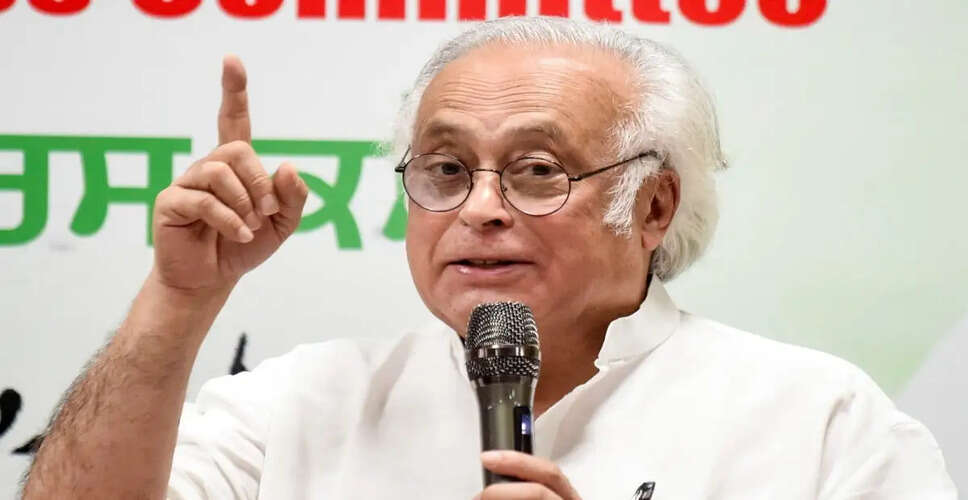

Jairam Ramesh's Critique of the Government
On June 4, Congress leader Jairam Ramesh expressed strong criticism of the central government, accusing the Modi administration of being in a state of panic due to the current economic conditions. In a post on X, Ramesh stated that the government is evidently anxious and surrounded by its own mechanisms regarding the prevailing economic situation. He referenced a news report aired on television, which indicated that the government is contemplating an ordinance to amend the Income Tax Act, aiming to completely eliminate the 12.5% long-term capital gains tax on investments made by Foreign Portfolio Investors (FPIs) in Indian government securities.
Proposed Ordinance and Its Implications
According to a report from a television channel associated with the ruling party, Ramesh noted that the Modi government plans to issue an ordinance to amend the Income Tax Act, which would abolish the long-term capital gains tax for FPIs. This tax rate was established in the central budget for July 2024. He described the proposed measure as a temporary fix that fails to address the underlying structural issues of the economy.
Concerns Over Private Corporate Investment
Ramesh emphasized that despite record corporate profits, private corporate investment in India remains weak, highlighting a decline in investment relative to GDP. He pointed out that the real issue is the sluggish nature of private corporate investment in the country. Those who could and should invest in India are either investing abroad or avoiding domestic investments. While corporate profits are at an all-time high, the rate of private corporate investment as a percentage of GDP has seen a significant drop. Although temporary ordinances may attract attention, they do not address the structural reasons behind the low rates of private corporate investment.
Factors Contributing to Investment Slowdown
Additionally, he identified several factors contributing to the investment slowdown, including stagnation in real wages, increasing income and wealth inequality, the growing concentration of economic power, and a climate of fear stemming from the alleged misuse of investigative agencies. He further elaborated that these issues, along with the continuous rise in imports from China, have exacerbated the challenges faced by domestic investment.
Stay Updated with National News
For the latest updates on politics, current events, and major news across the country, read National News in Hindi.