
Congress Launches Nationwide Movement Against G-RAMG Act: What You Need to Know
Congress's Nationwide Agitation Against G-RAMG Act
New Delhi: On Saturday, the Congress party declared a nationwide protest against the G-RAMG Act, set to commence on January 8. They claim this legislation threatens the Mahatma Gandhi National Rural Employment Guarantee Act (MNREGA) and jeopardizes the legal right to work for rural citizens.
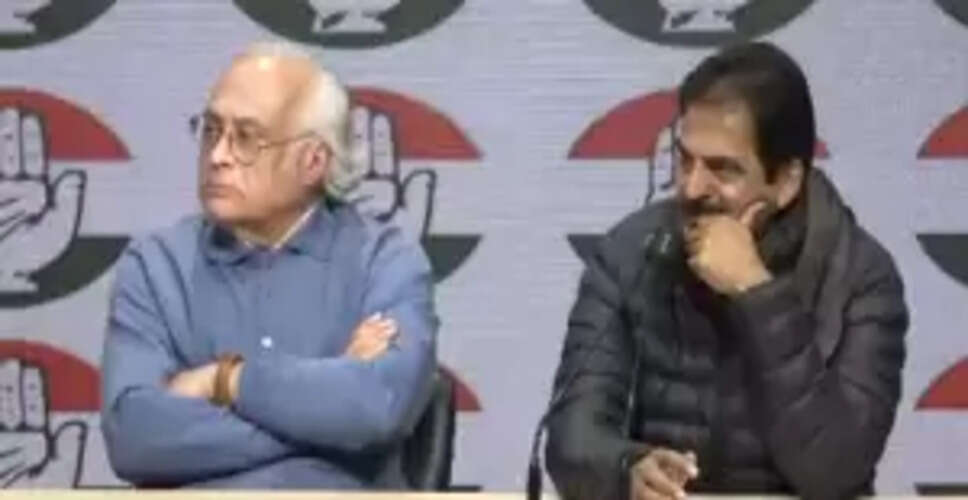
During a press conference at the Congress headquarters in New Delhi, party general secretary K. C. Venugopal and senior leader Jairam Ramesh outlined their strategy.
Venugopal stated that the Congress has devised a comprehensive plan to safeguard MNREGA through a campaign named ‘MNREGA Bachao Abhiyan’. He emphasized, “G-RAMG is a law introduced by the Indian government. After extensive discussions, the Congress National Committee resolved to initiate a vigorous campaign across the nation to protect MNREGA.”
He criticized the new law, asserting, “This legislation aims to dismantle MNREGA. Thanks to MNREGA, hunger has decreased, migration has lessened, and infrastructure such as roads, canals, and dams have been developed. During the COVID crisis, MNREGA served as a safety net for the populace.”
Venugopal further contended that the G-RAMG framework strips away the guarantee of employment. “Under G-RAMG, employment is not a right anymore. Work will only be allocated through panchayats, not directly by the government. Unlike MNREGA, which was demand-driven, G-RAMG imposes budget limitations, effectively undermining the legal right to work,” he explained.
Jairam Ramesh cautioned that the decentralized structure of MNREGA is being eroded. “MNREGA was designed to be decentralized. Now, decisions will be made in Delhi, adversely affecting villages. Numerous panchayats may receive no funding at all,” he remarked.
Ramesh also claimed that the law contravenes constitutional mandates. “Article 258 of the Constitution stipulates that this framework should be established through consultation between state and central authorities. However, this was not adhered to, as decisions were made unilaterally. This is a constitutional violation,” he stated.
Drawing a comparison to the farmers' protests, Ramesh noted, “While the farmers' agitation was focused on Delhi, the MNREGA Bachao Abhiyan will be grassroots-oriented, taking place at state, district, block, and panchayat levels.”
He reminisced about the inception of MNREGA, which was enacted in 2005 with widespread political agreement and thorough committee evaluation. “This new law represents not Viksit Bharat, but Vinash Bharat. We demand the reinstatement of MNREGA to protect rural India,” Ramesh asserted.
He outlined the campaign's timeline, stating it would kick off on January 8 and last for 45 days. “This will evolve into a national movement. If necessary, we will pursue legal action. The outcome will mirror that of the three controversial farm laws,” he concluded.