
Congress Holds Midnight Meeting to Strategize Kerala Elections
In a significant midnight meeting, Congress leaders, including Rahul Gandhi, strategized for the upcoming Kerala Assembly elections. The discussions focused on candidate selection, emphasizing a systematic approach over traditional methods. With a notable decision to not field sitting MPs, the party aims to secure a strong position in the elections. Community representation was also a key topic, with a focus on Christian candidates. However, internal dissent regarding women's representation in the candidate list raises concerns. This meeting reflects Congress's commitment to the Kerala elections and its strategic planning for success.
| Mar 21, 2026, 10:32 IST
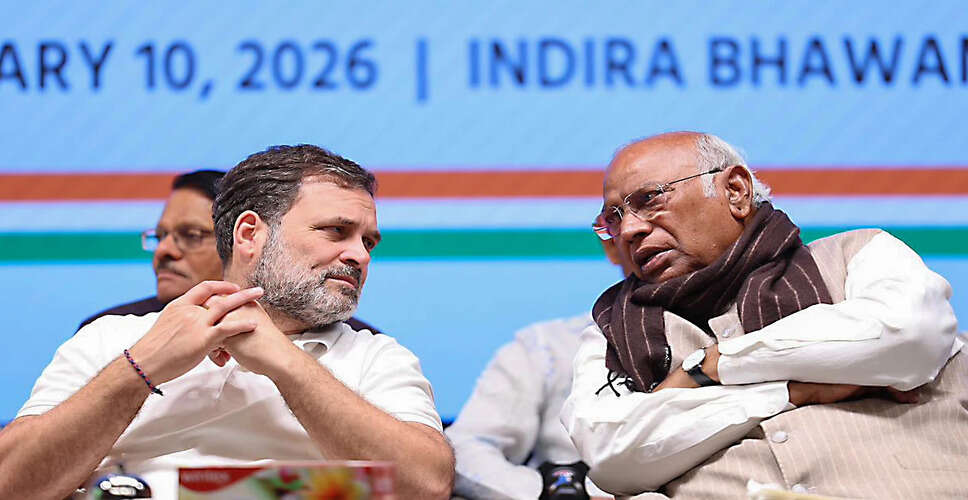
Strategic Discussions in Congress
In the realm of politics, it is often said that elections are won not just in the field but also through strategic discussions behind closed doors. A scene reflecting this was witnessed on Wednesday night at 10 Rajaji Marg, the residence of Congress President Mallikarjun Kharge. This 'midnight meeting' was convened following Rahul Gandhi's dissatisfaction with the candidate list for the Kerala Assembly elections, sending a significant message within the party.
Key Meeting Highlights
Curious about the developments, I made some calls and learned that a crucial meeting of the Congress Central Election Committee (CEC) was about to commence. Reports indicated that Rahul Gandhi, the Leader of the Opposition in the Lok Sabha, expressed his displeasure regarding the ticket distribution process in Kerala. According to sources, he emphasized the need for a more systematic approach to presenting candidates, taking into account caste equations, winning potential, and electoral records, rather than relying solely on names suggested by the state unit.
Late-Night Meeting Outcomes
The meeting, which began around 10:30 PM, extended until 2:30 AM. During this lengthy discussion, Rahul Gandhi, Kharge, and other senior leaders meticulously reviewed the candidates and made a significant decision: no sitting MPs would be fielded in the assembly elections.
Significance of the Meeting
Such late-night discussions are rare in Congress, at least in the past five years of my reporting experience, highlighting the importance the party places on the Kerala elections. These types of meetings are more commonly seen in the BJP, where late-night gatherings are frequent due to the involvement of high-profile figures like the Prime Minister, Home Minister, and Defence Minister.
Dominance of Venu Gopal's Faction
A source connected to the Kerala Congress electoral machinery informed a media channel that approximately 60% of the candidates can be considered close to Lok Sabha MP and party General Secretary (Organization) K.C. Venugopal. Of the initial list of 55 candidates released for Kerala, around 17 were from Venugopal's faction, nine from Ramesh Chennithala's, and five from V.D. Satheesan's group.
Candidates' Background
Several MPs also managed to secure one or two seats for their associates. According to sources, Shashi Tharoor did not request tickets for any of his candidates and largely refrained from interfering in the ticket distribution process. A Congress leader who attended the CEC meetings mentioned that while names were proposed by leaders from various states, tickets were only granted after thorough investigations, including survey ratings and feedback from district Congress committees.
Electoral Strategy
The party anticipates contesting approximately 95 out of 140 seats in collaboration with its alliance partners. Among the 22 sitting MLAs, the party has re-nominated 19 candidates and is confident of victory following the ticket distribution.
Community Representation in Ticket Distribution
This time, Congress appears to be heavily relying on the Christian community, having allocated 22 tickets to Christian candidates, with 10 going to the Syro-Malabar community alone. The Nair community received 21 tickets, while 20 tickets were given to Ezhava candidates.
Inclusivity Concerns
While Muslims were allotted 12 tickets, the Congress also provided three tickets to the Brahmin community to maintain its social balance. With a slight reduction in the age limit, 52 out of the 92 declared candidates are under 50 years old.
Firm Stance Against MPs Running
At least five MPs, including K. Sudhakaran, Adur Prakash, and Shafi Parambil, expressed interest in contesting the Kerala Assembly elections. However, Rahul Gandhi remained firm that fielding MPs would necessitate by-elections for several Lok Sabha seats and could create confusion regarding the Chief Ministerial candidate.
Future Possibilities
A Congress source indicated that if the party secures a majority, the legislators could still propose an MP for the Chief Minister position, and such proposals would be considered.
Internal Discontent
Despite the extensive preparations, discontent persists within the party. Congress spokesperson Shama Mohammed raised concerns about the low representation of women in the ticket distribution. She noted that only nine out of the 92 declared seats were allocated to female candidates. Tagging Rahul Gandhi on X (Twitter), she urged him to intervene and address this issue, which she described as the party's indifference towards women in Kerala. Sources revealed that Shama herself was seeking a ticket from Kannur on the condition that the sitting MP K. Sudhakaran would not contest from that seat, and she is now dissatisfied with the state leadership.