
Congress Faces Leadership Debate as Imran Masood Advocates for Priyanka Gandhi as PM Candidate
The Congress party is currently embroiled in a leadership debate following Imran Masood's call for Priyanka Gandhi to be considered as a Prime Ministerial candidate. This statement has sparked discussions about the party's direction and whether it is ready to embrace new leadership beyond Rahul Gandhi. Robert Vadra, Priyanka's husband, has noted the growing demand for her political involvement, emphasizing the need to focus on pressing public issues. As Priyanka Gandhi raises concerns about violence against minorities in Bangladesh, her supporters are keen to position her as a decisive leader. The implications of this debate could significantly impact Congress's strategy moving forward.
| Dec 23, 2025, 18:05 IST
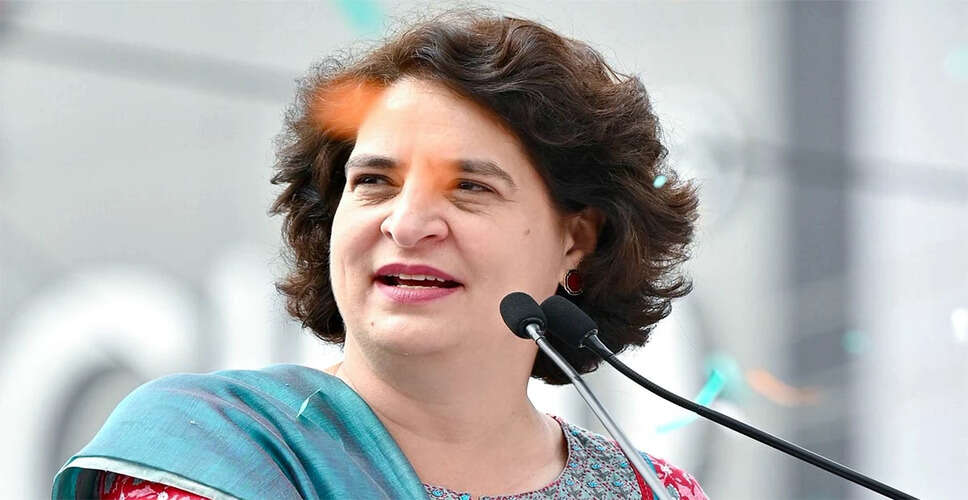
Leadership Dynamics in Congress Spark Debate
Once again, discussions regarding leadership and the future of politics within the Congress party have intensified. This surge in debate follows a statement made by party MP Imran Masood, who has advocated for Wayanad MP Priyanka Gandhi Vadra to be considered as a candidate for the Prime Minister's position. This declaration has prompted questions both within and outside the Congress about whether the party is seriously contemplating a new face apart from Rahul Gandhi.
Reacting to this situation, Priyanka Gandhi's husband, Robert Vadra, mentioned that there is a growing demand from various parts of the country for Priyanka to step forward. He also noted that there are calls for her to enter politics herself. However, he emphasized that the priority should be on addressing real issues affecting the public rather than debating individual names. Previously, Imran Masood had stated in an interview that if Priyanka Gandhi were to be nominated as a candidate for Prime Minister, she would be capable of responding firmly, much like her grandmother, former Prime Minister Indira Gandhi. His comments were made in defense of Priyanka Gandhi's response to the rising violence against religious minorities in Bangladesh. He remarked that Indira Gandhi had inflicted significant damage on Pakistan during her tenure, a legacy that is still felt today, and that Priyanka Gandhi embodies that tradition of leadership.
Traditionally, Rahul Gandhi has been viewed as the primary face of the Congress party, especially in light of the strong position held by the Bharatiya Janata Party. Therefore, Imran Masood's remarks appear to diverge from the established party line, fueling speculation about internal dynamics. It is noteworthy that Priyanka Gandhi Vadra recently called on the central government to adopt a firm stance regarding the violence against Hindu, Christian, and Buddhist minorities in Bangladesh. She expressed her concerns on the social media platform X, stating that the brutal murder of Hindu youth Deepu Chandra Das by a mob is extremely alarming and that violence based on religion, caste, or identity is a crime against humanity. She urged the Indian government to take this issue seriously and to raise the question of minority protection firmly with the Bangladeshi government.
This entire episode reveals the underlying restlessness and search for direction within Congress. While the party officially recognizes Rahul Gandhi as its leader, the repeated emergence of Priyanka Gandhi's name suggests that Congress is still in search of charismatic leadership. Statements from leaders like Imran Masood are not made lightly; they reflect the sentiments of party workers and supporters.
In recent years, Priyanka Gandhi has displayed a noticeable aggressiveness in her language and demeanor. By addressing the issue of violence against minorities in Bangladesh, she has not only touched upon the humanitarian aspect of foreign policy but has also attempted to unsettle the ruling party in domestic politics. This is why her supporters wish to present her as a decisive leader. Robert Vadra's acknowledgment that there is widespread demand for Priyanka to enter politics speaks volumes in itself.
Nonetheless, the political implications of this development could be far-reaching. Firstly, the debate over leadership within Congress has resurfaced. Secondly, linking Priyanka Gandhi's name to the Prime Ministerial candidacy strengthens her position as an alternative face on the national stage. If Congress decides to give Priyanka a more prominent role in the future, it would signify a significant shift in the party's strategy. Conversely, if the party attempts to suppress this debate, discontent may continue to simmer beneath the surface. Clearly, this controversy extends beyond a mere statement; it raises profound questions about the direction and future of Congress.