
Congress Demands Parliamentary Discussion on Great Nicobar Island Development Project

Call for Debate on Ecological and Tribal Concerns
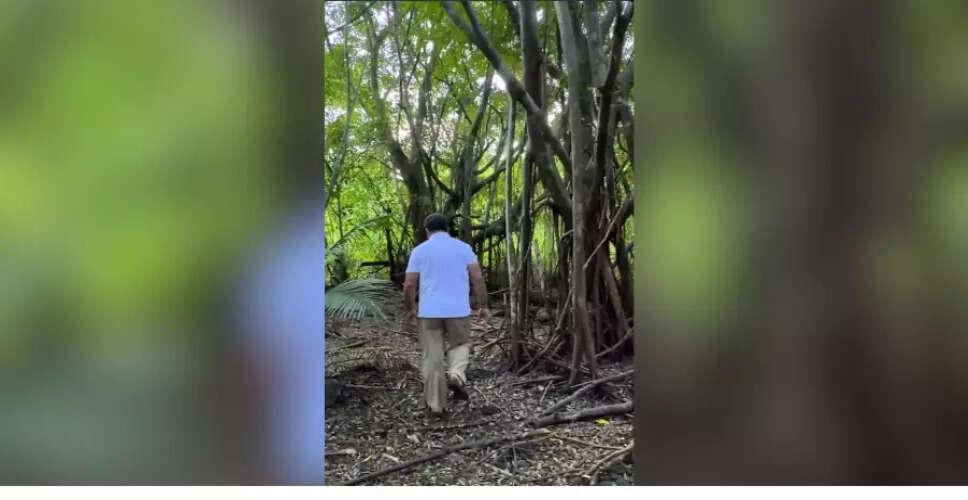
Screengrab from a video of Rahul Gandhi during his visit to a forest in Great Nicobar. (Photo - @RahulGandhi / X)
Guwahati, May 3: On Sunday, the Congress party urged for an extensive parliamentary discussion regarding the Great Nicobar Island Development Project, expressing worries about its environmental effects, implications for tribal rights, and the transparency of the approval process, alongside national security issues.
The opposition party accused the central government of being in a state of “damage control” following Rahul Gandhi's visit to Great Nicobar on April 28.
In a comprehensive statement, Jairam Ramesh, Congress's general secretary for communications, criticized the government's recent press release about the project, stating it fails to address significant concerns raised by local communities, environmentalists, anthropologists, and civil society experts.
He mentioned that these issues had already been formally communicated to the Union Environment Minister back in September 2024.
During his visit, Gandhi referred to the project at Campbell Bay as “one of the largest scams and a severe crime against the nation’s natural and tribal heritage.”
In response to the criticism, the government issued a statement on May 1, claiming that the project is a strategic initiative to enhance India’s presence in the Andaman Sea while ensuring development aligns with environmental protections and the safeguarding of indigenous communities.
However, Ramesh challenged these assertions, emphasizing that the ecological distinctiveness of Great Nicobar makes even minimal land use impactful. He argued that the government’s claim of only 1.82% land usage is “misleading,” as it disregards the island’s rich biodiversity.
He also highlighted that Galathea Bay, designated as the port site, is classified as a Coastal Regulation Zone (CRZ-1A) area, which hosts over 20,000 coral colonies and serves as a crucial nesting site for the Giant Leatherback turtle.
Ramesh alleged that there were procedural irregularities, claiming that institutions like the Wildlife Institute of India and the Zoological Survey of India faced pressure during the environmental clearance process and were subsequently awarded related projects, raising concerns about conflicts of interest.
He criticized the composition of the committees overseeing the project, stating they lack independence.
Regarding tribal rights, Ramesh noted that the Nicobarese community had retracted its no-objection certificate in 2022, claiming they were misled about the extent of forest diversion.
He also expressed concerns for the Shompen tribe, a Particularly Vulnerable Tribal Group, questioning how their informed consent was secured given their limited interaction with the outside world.
Ramesh further pointed out transparency issues, mentioning that crucial reports and discussions related to forest and environmental clearances remain undisclosed.
He questioned the practicality of the proposed international airport, which is expected to accommodate 10 million passengers annually, significantly surpassing the current traffic at Port Blair.
On security matters, he referenced former Navy chief Admiral Arun Prakash (Retd), who argued that enhancing the Andaman and Nicobar Command should be considered separately from the development project.
“There is no need to merge India’s security needs with a large-scale development initiative that includes a township, tourism infrastructure, and a transshipment terminal,” Ramesh stated, alleging that the government is trying to stifle legitimate debate by invoking national security.
He reiterated that the project’s extensive implications require thorough examination in Parliament.