
Congress Criticizes Modi's Nuclear Bill Amid US Relations
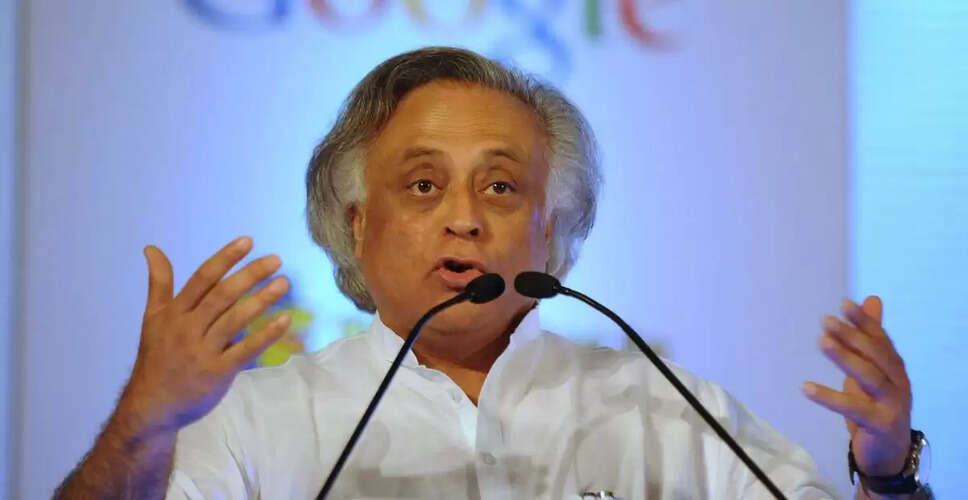
Congress Accuses Modi of Legislative Maneuvering
On Saturday, the Congress party accused Prime Minister Narendra Modi of hastily pushing through a new bill in Parliament that opens the nuclear sector to private investment, allegedly to mend ties with US President Donald Trump.
Jairam Ramesh, a general secretary of Congress, stated that the Sustainable Harnessing and Advancement of Nuclear Energy for Transforming India Bill, abbreviated as SHANTI, was enacted to restore 'SHANTI' or peace with Trump, who was once considered a close ally.
Ramesh pointed out that Trump recently signed the National Defence Authorization Act for 2026, which includes a mention of a collaborative assessment between the US and India regarding nuclear liability regulations.
He suggested that this was the motivation behind the passage of the SHANTI Bill on December 18, which eliminated significant provisions from the 2010 Civil Liability for Nuclear Damage Act. Ramesh humorously referred to the SHANTI Act as the 'TRUMP Act'—the Reactor Use and Management Promise Act.
The bill aims to allow private firms, joint ventures, and government entities to obtain licenses for the construction, ownership, operation, or decommissioning of nuclear power facilities.
One of the controversial aspects of the bill was the removal of a clause from the 2010 Act that permitted nuclear plant operators to pursue legal action against suppliers if their equipment was implicated in an accident.
This provision was seen as a barrier to foreign investment in India's nuclear sector, despite the Indo-US nuclear agreement.
President Trump has just signed the National Defence Authorization Act for the US Fiscal Year 2026.
— Jairam Ramesh (@Jairam_Ramesh) December 20, 2025
The Act is 3100 pages long. Page 1912 has a reference to the joint assessment between the United States and India on Nuclear Liability Rules.
Now we know for sure why the Prime… pic.twitter.com/bGdAOXh9pA
Relations between New Delhi and Washington soured in August when Trump raised tariffs on Indian imports to 50% due to India's purchases of Russian oil amid the ongoing conflict in Ukraine.
The US president has accused India of contributing to Russia's military actions in Ukraine through its imports. However, India has asserted that its oil purchases are driven by market dynamics and are essential for the country's energy security. The foreign ministry expressed disappointment over the US imposing additional tariffs on India for actions that many other nations are also undertaking in their national interests.