
Congress Criticizes Government Over Pakistan's Role in US-Iran Peace Talks
The Congress party has criticized the BJP-led government for its handling of Pakistan's involvement in the US-Iran peace talks, labeling it a significant diplomatic setback for India. Congress General Secretary Jairam Ramesh emphasized the need for a complete overhaul of India's diplomatic strategy, pointing out the growing influence of Pakistani Army Chief Asim Munir in international discussions. Ramesh's comments reflect concerns over India's failure to isolate Pakistan and the implications for Modi's foreign policy. This article delves into the political ramifications of these developments and the calls for a strategic shift in India's diplomatic approach.
| Apr 20, 2026, 18:37 IST
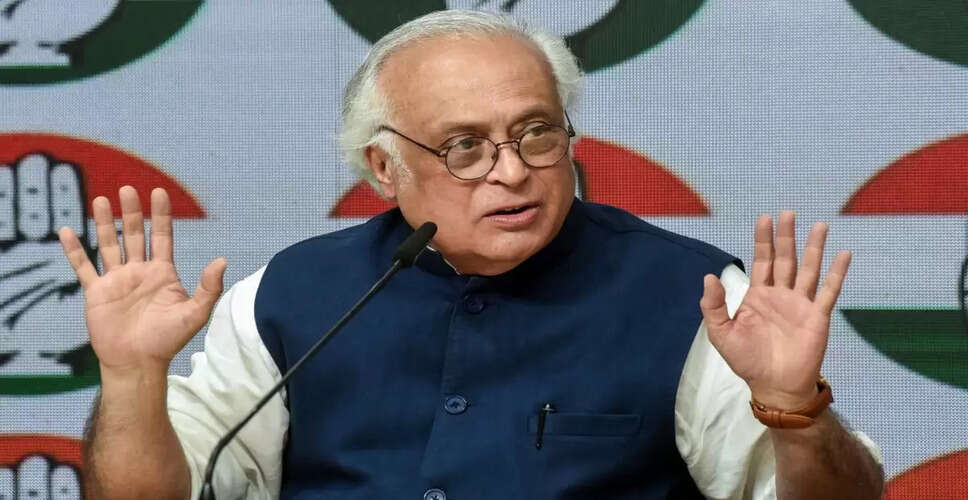

Congress's Critique of Government's Diplomatic Strategy
The Congress party launched a fresh attack on the BJP-led central government on Monday regarding Pakistan's involvement in the US-Iran peace negotiations. The party asserted that Islamabad's hosting of the second round of talks represents a significant diplomatic setback for India. They emphasized that the growing prominence of Pakistani Army Chief Asim Munir in discussions with US President Donald Trump highlights the urgent need for a complete overhaul of India's diplomatic strategy.
Congress General Secretary Jairam Ramesh took to social media platform X to express that the country labeled as a 'broker' by the External Affairs Minister is now facilitating the second round of the US-Iran peace talks. He further criticized Prime Minister Narendra Modi's inability to adapt to such diplomatic shifts. Ramesh's remarks referenced a previous statement by External Affairs Minister S. Jaishankar, who indicated that India cannot assume the role of a mediator in global geopolitics, particularly in light of Pakistan's involvement in the talks.
Ramesh also pointed out that despite Pakistan's history of harboring terrorists like Osama bin Laden and its involvement in the bombing in Afghanistan, it is now playing a crucial diplomatic role. He stated that it is evident that Modi's efforts to isolate Pakistan regionally and globally have failed, resulting instead in a new 'branding' for the country. According to Ramesh, the government led by Dr. Manmohan Singh successfully isolated Pakistan following the terrorist attacks in Mumbai in November 2008.
Ramesh highlighted that Field Marshal Asim Munir, whose provocative statements contributed to the Pahalgam terrorist attack, has become a favored figure for President Trump. This development poses a particularly serious challenge for India. It is clear that Munir and his associates have managed their connections with Trump and his circle far more effectively than India has. Ramesh claimed that this situation represents a significant blow to Modi's foreign policy, asserting that India requires a fundamental change in its diplomatic engagement strategy, which Modi seems incapable of executing.