
Congress Criticizes E20 Ethanol Blend Policy Impacting Consumers

Concerns Over E20 Ethanol Blend Policy
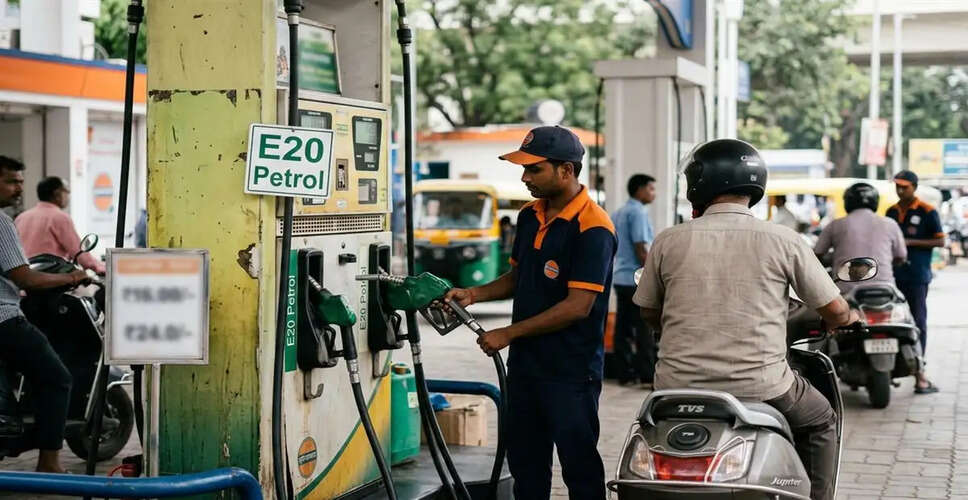
New Delhi, August 5 - The Congress party has raised concerns on Wednesday regarding the implementation of a 20% ethanol blend (E20) in petrol, claiming it has deprived the common and middle-class citizens of their fuel options. Party General Secretary Jairam Ramesh took to social media to assert that starting March 2025, petrol stations across the country will predominantly supply only E20 petrol. He accused the Union Minister for Road Transport and Highways of previously stating that the ethanol blend would reduce diesel prices to ₹50 per litre and petrol to ₹55 per litre, which has not materialized.
Ramesh further claimed that an independent analysis indicated that consumers would bear an additional burden of approximately ₹88,234 crores due to reduced mileage from ethanol-blended fuel between April 2023 and March 2026. He pointed out that consumers are now paying more for E20 petrol compared to the previous standard petrol. He stated, 'The government could have compensated for the loss in mileage by reducing the retail price of E20, but this has not been done.'
Additionally, he mentioned that the NITI Aayog's ethanol roadmap recommended tax and financial incentives to ease the burden on consumers using E10 and E20 fuels. Instead, he alleged that the central government approved over ₹4,000 crores in subsidies for ethanol producers, benefiting the industry rather than the consumers. As of now, there has been no response from the government regarding these allegations from Congress.