
Concerns Rise Over Tiger Mortality in Kaziranga National Park
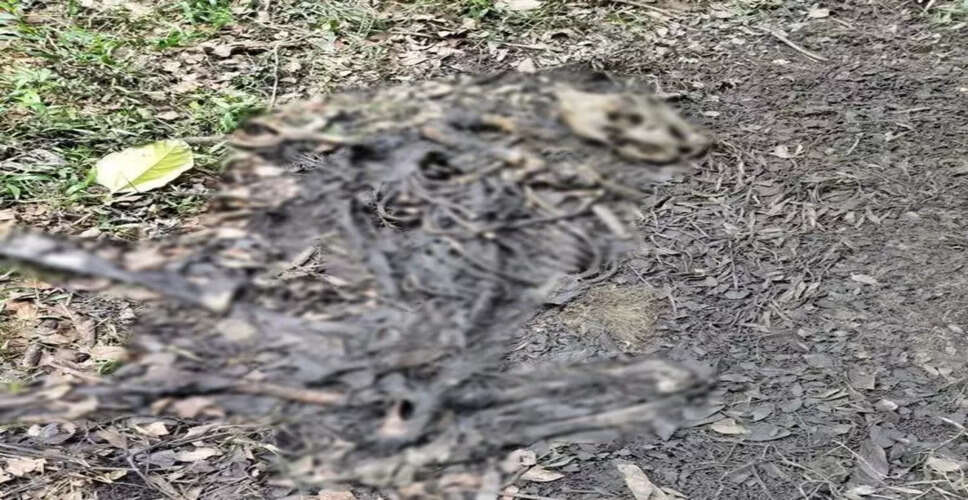

Discovery of Tiger Carcass Raises Alarm
The 4-day-old carcass was discovered on Saturday evening during routine surveillance in Kohora's Mihimukh area. (Photo:IANS)
Guwahati, June 1: A sub-adult tiger's carcass was found in the Mihimukh region of Assam's Kaziranga National Park and Tiger Reserve (KNPTR), as confirmed by park officials on Sunday. This incident has raised new concerns regarding the mortality rates of big cats in one of India's renowned wildlife sanctuaries.
A senior official from KNPTR reported that the carcass, which was four days old, was located on Saturday evening during routine monitoring by forest staff in the Kohora area of Kaziranga Range.
Upon its discovery, park authorities conducted an examination of the carcass and initiated the necessary protocols as per wildlife protection guidelines.
KNPTR Director Sonali Ghosh established a committee to manage the post-mortem examination and the disposal of the carcass, following the Standard Operating Procedure (SOP) set by the National Tiger Conservation Authority (NTCA).
The post-mortem took place on Sunday, but the advanced decomposition of the carcass posed significant challenges.
According to the official, "The cause of death could not be determined during the post-mortem due to the advanced state of decomposition." Ongoing investigations are being conducted.
This incident marks the fifth reported tiger death in KNPTR since the beginning of the year, highlighting a concerning trend of big cat fatalities within the reserve.
On January 14, a young male Royal Bengal tiger, estimated to be two to three years old, was found dead at Thute Chapori in the Eastern Range of Gamiri, under the Biswanath Wildlife Division of KNPTR.
A preliminary veterinary assessment suggested that the death might have resulted from natural causes or infighting.
Just four days later, on January 18, a tigress aged around three to four years was discovered dead in the Kathpora area of the Bagori Western Range, with post-mortem results indicating infighting as a likely cause of death.
On February 7, a male tiger, approximately 12 to 13 years old, was found deceased near the Mandir Baneshwar Anti-Poaching Camp in the Burapahar Range at Ghorakati. Initial post-mortem findings again pointed to infighting as the probable cause.
Kaziranga National Park and Tiger Reserve, recognized as India's seventh UNESCO World Heritage Site, is celebrated for housing the iconic 'Big Five' species: the greater one-horned rhinoceros, Bengal tiger, Asian elephant, wild water buffalo, and eastern swamp deer.
Current estimates indicate that the park is home to 2,613 greater one-horned rhinoceroses, 104 Bengal tigers, 1,228 Asian elephants, 2,565 wild water buffaloes, and 1,129 eastern swamp deer.
The ongoing incidents of tiger deaths are likely to attract increased attention from wildlife conservationists and authorities as investigations into the latest case proceed.