
Concerns Rise Over Security Lapses Following Pahalgam Terror Attack
Three months after the Pahalgam terror attack, concerns about security lapses are mounting as the attackers remain at large. The NIA has arrested two individuals linked to the incident, revealing connections to the banned group TRF. Amidst this, the local community is eager for tourism to rebound, determined to not let terrorism define their spirit. With upcoming pilgrimages, authorities are implementing strict security measures to ensure safety. This article delves into the implications of the attack and the resilience of Pahalgam's residents.
| Jul 23, 2025, 16:32 IST
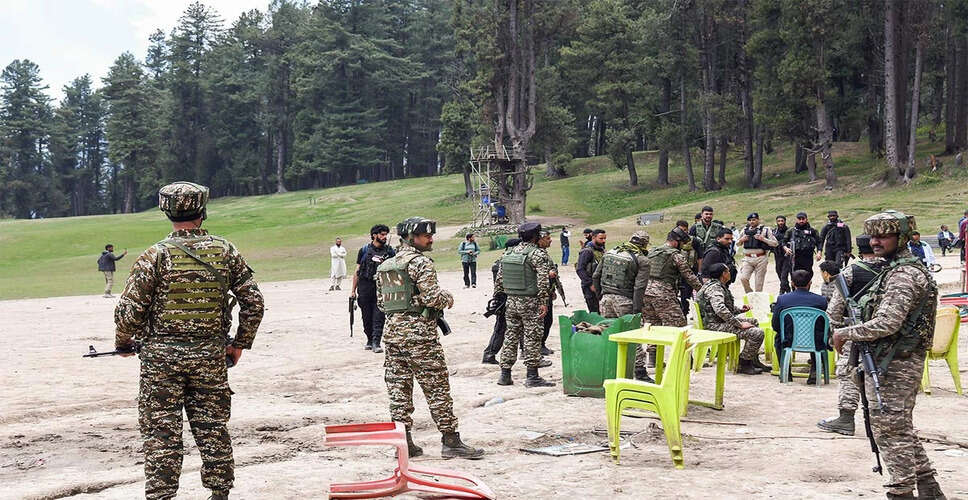
Security Concerns Post Pahalgam Attack
Three months after the terrorist attack in Pahalgam, worries about security lapses have intensified due to the continued evasion of the attackers. There is a growing demand for accountability in this matter. The National Investigation Agency (NIA) has made two arrests related to the incident that occurred on April 22. It is believed that those apprehended provided logistical support to the assailants, while the actual terrorists remain at large. On June 22, the agency arrested two individuals: Parvez Ahmed Jothar from Batkot and Bashir Ahmed Jothar from Hill Park in Pahalgam. The NIA confirmed that the arrested suspects are currently in custody. They have identified three armed terrorists involved in the attack, confirming their Pakistani nationality and links to the banned group 'The Resistance Front' (TRF), which is associated with the terrorist organization Lashkar-e-Taiba (LET) operating from Pakistan. According to the NIA's investigation, Parvez and Bashir deliberately sheltered the three armed terrorists in a hut located in Hill Park before the attack. The agency stated that both individuals provided food, shelter, and equipment to the terrorists, who targeted tourists based on their religious identity on the day of the incident.
Official Reactions and Security Measures
Meanwhile, Lieutenant Governor Manoj Sinha, who is set to complete his five-year term next month, has labeled the incident a 'security failure.' His acknowledgment has been praised by Chief Minister Omar Abdullah, who has also called for accountability. Officials have indicated that intelligence agencies were alerted to the potential for a terrorist attack, but the information was utilized at a location nearly 90 kilometers away from the attack site, leading to significant security oversights. Security officials reported that the terrorists, members of the TRF unit known as 'Falcon Squad,' infiltrated the Pahalgam area dressed in military uniforms and were equipped with military-grade weapons and communication devices, including camera-equipped helmets. It is alleged that the attack was orchestrated by Saifullah Kasuri, also known as Khalid, a top commander of Lashkar and a personal aide to internationally designated terrorist Hafiz Saeed.
Impact on Tourism and Future Security Plans
Security officials have indicated that the attackers were traced online to safe havens near Karachi and Muzaffarabad, suggesting their connections to the Lashkar-e-Taiba network in Pakistan. They noted that the reliance on decentralized and less detectable operatives, such as those trained under the 'Falcon Squad,' poses an increasing threat to regional security and civilian safety in Jammu and Kashmir.
On the other hand, residents of Pahalgam are eagerly awaiting the revival of tourism, which has been severely affected since the April 22 attack, coinciding with the ongoing Amarnath Yatra. They are determined that 'the spirit of Pahalgam will not be held hostage by terrorism.' The annual pilgrimage to the Amarnath cave temple lasts for 38 days and takes place via the Pahalgam and Baltal routes in Anantnag and Ganderbal districts. Following the attack, hotels in the area, which had been nearly empty, are now beginning to see some tourists returning to enjoy their vacations in Pahalgam.
Additionally, the police have devised plans to ensure the peaceful conclusion of upcoming annual pilgrimages, such as the Kailash Yatra, Manimahesh, and Machail Yatra, which will commence in the coming weeks. There is a careful deployment of Central Reserve Police Force (CRPF) and other paramilitary forces along the pilgrimage routes. These forces are working in coordination and are prepared to act swiftly upon receiving any information regarding suspicious individuals.