
Concerns Rise Over Radicalization Efforts Amid Ongoing Israel-US-Iran Conflict
Escalating Tensions and Radicalization Threats
New Delhi, March 5: The conflict involving Israel, the US, and Iran has been ongoing for nearly a week, ignited by the assassination of Iran’s Supreme Leader, Ayatollah Ali Khamenei. In response, Iran has targeted US and Israeli interests across various regions in West Asia.
As the situation escalates, Indian intelligence agencies have detected increased communication on platforms aimed at radicalizing the youth within the country. Reports indicate a renewed effort to initiate a radicalization campaign, particularly in states like Uttar Pradesh, Jammu and Kashmir, and Kerala.
An official from the Intelligence Bureau revealed that radical groups are utilizing Artificial Intelligence (AI) to produce and disseminate propaganda videos in multiple languages. For instance, videos tailored for Kerala are created in Malayalam, while those aimed at the Kashmir audience are in Kashmiri, and Hindi is used for Uttar Pradesh.
Moreover, AI-generated content is also being developed in Urdu and other regional languages, suggesting that these radical factions are attempting to broaden their influence by leveraging the ongoing conflict.
These groups are not exclusively targeting Shia Muslims; they are also reaching out to Sunni communities. The objective is to radicalize young individuals and incite them to commit acts of violence within India.
In light of Khamenei's death, the Indian government issued a warning indicating that radical elements might infiltrate prayer gatherings and solidarity events to influence the youth.
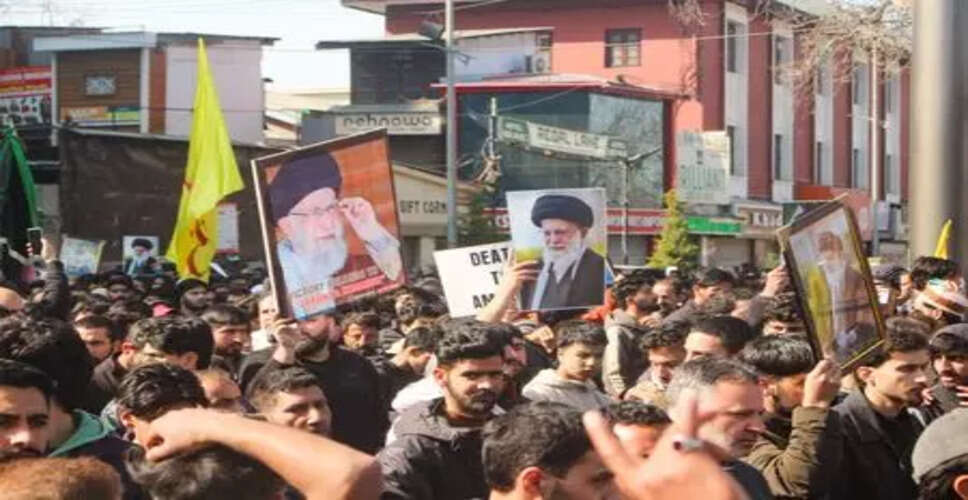
Shia communities have already organized mourning processions in cities like Hyderabad, Mumbai, Lucknow, and Delhi, with officials anticipating more such events. These gatherings are seen as potential targets for radicalization efforts.
In addition to the AI-generated videos, authorities are monitoring online influencers who manage religious and cultural channels. These individuals may subtly introduce incendiary messages aimed at inciting youth, focusing on themes like Shia persecution and attacks on the Umma.
Despite the Islamic State's opposition to Shia Muslims, it is expected to exploit the current situation to further its agenda. Both the Islamic State and Al-Qaeda have historically leveraged global conflicts to promote their interpretations of Islam.
Intelligence agencies have noted that these groups will likely portray the US and Israel as adversaries of Islam, using this narrative to radicalize Indian youth.
Furthermore, platforms such as X, WhatsApp, and Telegram are being utilized to propagate radical ideologies in India. Current messaging appears subtle, indicating that these groups are gauging reactions. As the conflict intensifies, it is anticipated that their rhetoric will become more aggressive, potentially inciting violence.
Agencies are also closely monitoring encrypted communications that provide guidance through these messaging platforms, as well as tracking financial transactions linked to these activities.
Elements backed by the ISI are also involved in this scheme. The ISI's primary goal is to destabilize India, supporting factions that exploit the Iranian conflict to promote extremism. Their strategy aims to foster homegrown radicalism, ultimately leading to lone wolf attacks.
This is a long-term strategy, with the intention of cultivating a significant number of individuals influenced by the Iran situation before executing larger-scale attacks in India.