
Concerns Rise Over New Transgender Law: Is Surveillance the New Norm?
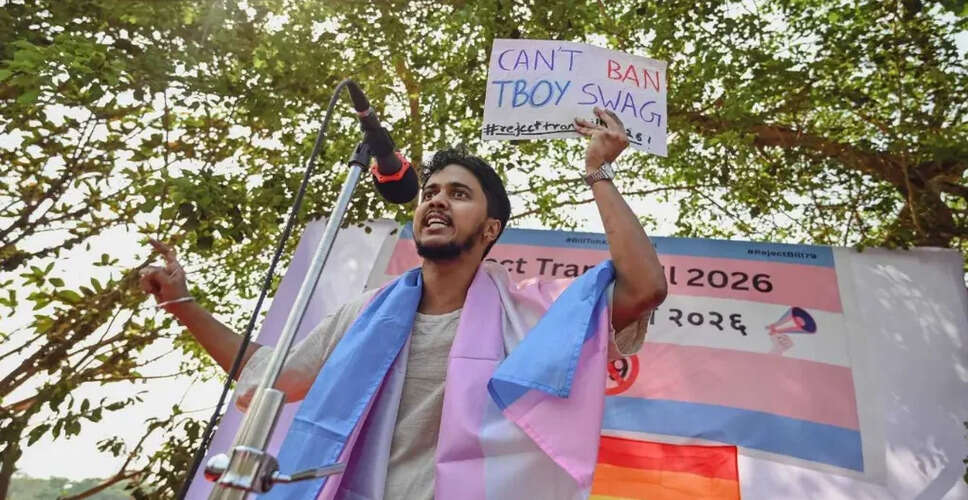
New Legislation Sparks Alarm in Transgender Community
New Delhi: The recent amendments to the transgender law have raised significant concerns regarding potential surveillance among community members, who fear they may face ongoing scrutiny, harassment, and invasive verification processes.
Activists highlight that the anxiety extends beyond merely appearing before a medical board for certification. With the removal of self-identification provisions, many worry they will be compelled to repeatedly validate their gender identity to various authorities, including police and employers.
The Transgender Persons (Protection of Rights) Amendment Bill, 2026, was approved by Parliament on March 25 and received the President's approval on March 30.
Ritu, a non-binary transfeminine individual, expressed that the law could lead to constant scrutiny and harassment throughout a transgender person's life. She emphasized that the risk of being subjected to police harassment or invasive checks is now a reality.
The potential for identity challenges at work, in healthcare settings, or elsewhere is a daily concern. This ongoing surveillance has historically plagued the community, she noted.
In defense of the new certification process, a government official argued that self-identification could be exploited, necessitating some form of verification. They cited extreme scenarios where individuals might misuse the law to evade accountability.
Laxmi Narayan Tripathi, a prominent transgender activist and the first from the Asia-Pacific region to speak at the UN General Assembly, revealed that a petition has been submitted to the Supreme Court to advocate for the rights of the transgender community, aiming to ensure the implementation of the NALSA (National Legal Services Authority) judgment.
The landmark 2014 NALSA ruling recognized transgender individuals as a third gender in India, affirming their right to self-identify without medical verification, thereby upholding fundamental rights to equality and dignity.
Anish Gawande, a leader from NCP(SP), criticized the necessity for medical board certifications, questioning the government's focus on such invasive measures.
He shared that he has been inundated with calls from transgender individuals expressing fear about their future, highlighting the mental health crisis stemming from these new regulations.
Gawande recounted the story of Kabir Mann, a Dalit Transman who, despite having all necessary certifications to teach, has been unable to secure employment due to the amended law, which could hinder many from accessing education and job opportunities.
When a person's documents do not align with their gender identity, it can lead to lost opportunities, forcing them back into secrecy or into survival modes like begging or sex work.
Meera Parida, a transgender activist and politician, voiced the community's distress over the swift passage of the Bill, arguing it contradicts international gender equality standards and fundamental rights outlined in the Constitution.
She expressed hope that Prime Minister Narendra Modi would address the community's concerns and take corrective measures.
Parida also noted that fears of misuse regarding the certification process are exaggerated, asserting that any fraudulent activity should be dealt with under existing laws without penalizing the entire transgender community.
The UN Human Rights Council has voiced its apprehension regarding the Bill, stating it could undermine the hard-fought rights of transgender individuals and lamenting the lack of adequate consultation before its passage.
The amendment has created significant unrest within the community, with many feeling that the progress made after the repeal of Article 377 has been reversed, leading some to regret their openness about their identities.
Rights activist Yogita Bhayana warned that the amended law could push some transgender individuals back into begging or sex work, undoing years of efforts to integrate them into society.
Bhayana also criticized the medical certification requirement, deeming it unnecessary and ineffective.
She emphasized that an individual's internal understanding of their gender should be paramount, advocating for self-declaration without medical validation.
CPI(M) General Secretary M A Baby condemned the amended law as objectionable and inhumane, expressing concern that it could force transgender individuals back into secrecy and potentially into survival modes like begging.
Social Justice and Empowerment Minister Virendra Kumar stated that the amended Bill aims to protect those facing discrimination based on biological factors while ensuring legal recognition for transgender individuals.
Several MPs from various parties opposed the Bill, urging the government to refer it to a select committee for further stakeholder input.