
Concerns Rise Over Kulsi River Hydropower Project's Environmental Impact

Environmental Concerns Surrounding the Kulsi Hydropower Project
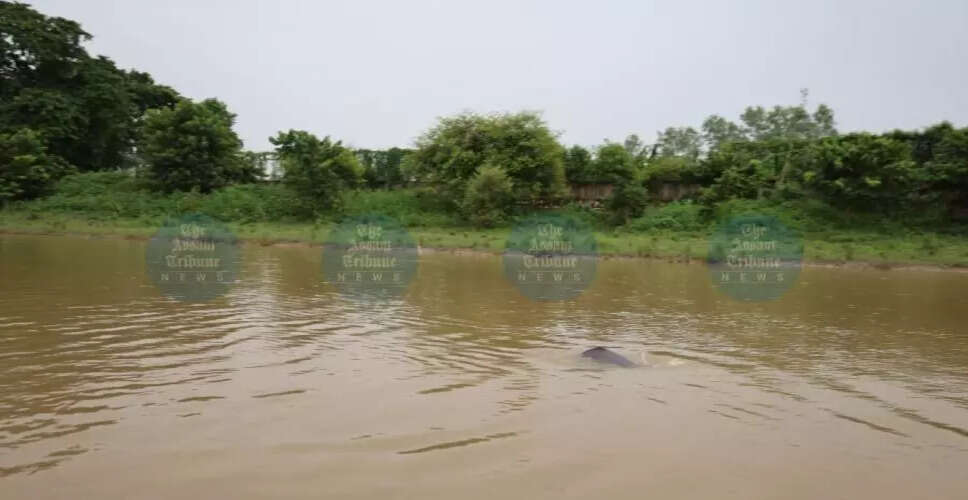
A river dolphin spotted in Kulsi River
Palasbari, Aug 5: The proposed 55-MW hydropower project on the Kulsi River, located near Ukiam along the Assam-Meghalaya border, has sparked significant concerns regarding its potential effects on the river's ecosystem, particularly the habitat of river dolphins and traditional livelihoods reliant on river resources.
This ambitious project plans to construct a dam standing 60 feet tall across the Kulsi River, aiming for a hydropower generation capacity of 55 MW. Additionally, it is designed to irrigate approximately 26,000 hectares of farmland and assist in flood mitigation. The total estimated investment for this initiative is around Rs 1,454.95 crore.
The project site encompasses areas in Kamrup district of Assam and the Ri-Bhoi and West Khasi Hills districts of Meghalaya. The Kulsi River is vital for local aquatic life and supports the livelihoods of numerous communities residing along its banks.
Environmental activists and local organizations have voiced their apprehensions that the dam's construction and alterations to the river's natural flow could disrupt the ecological balance and threaten aquatic species, including the river dolphin.
Moreover, they fear that modifications to the river's flow and sediment dynamics could adversely impact traditional sand-related activities, jeopardizing the livelihoods of those dependent on the river.
These concerns were highlighted during recent press conferences in South Kamrup, where various organizations expressed strong opposition to the project and urged the government to reconsider its plans due to potential environmental and social repercussions.
The Kulsi River Dam Resistance Committee held a press conference opposing the project, warning of a mass democratic movement if construction proceeds. Other groups, including the Chhaygaon Anchalik Committee of the Nikhil Rabha Students’ Union and the All Assam Koch Rajbongshi Students’ Union, have also joined in the opposition.
Opposition intensified following the Brahmaputra Board's formal transfer of the Detailed Project Report (DPR) and related documents to the Assam Power Generation Corporation Limited (APGCL) on July 30. The Brahmaputra Board, under the Union Ministry of Jal Shakti, was responsible for preparing the DPR.
This handover ignited renewed protests among communities and organizations in the areas affected by the proposed project.
Recently, the Assam-Meghalaya Joint Protection Committee organized a large protest along the banks of the Kulsi River at Ukiam, uniting residents and representatives from various organizations across Assam and Meghalaya.
During the gathering, Committee president Biswajit Rabha stated that the movement had previously been paused after assurances from Chief Minister Himanta Biswa Sarma that the dam would not be built without local consent.
Rabha expressed that the community was once again agitated upon learning of the DPR's transfer to APGCL on July 30, warning that the proposed dam could become a “water bomb” for local residents and accusing both Assam and Meghalaya governments of betraying the community.
Local residents and various organizations have repeatedly submitted memoranda to both state governments regarding their concerns.
Opposition to the project has been growing for years, with Khasi communities in Meghalaya and Garo, Bodo, and Rabha communities in Assam uniting with student organizations and civil society groups against the dam.
The protesters have declared that the project will not be permitted under any circumstances and warned that their agitation could escalate if the government continues with the project despite widespread public dissent.