
Concerns Rise Over Kulsi Hydropower Project's Impact on Endangered River Dolphins

Threat to River Dolphins from Hydropower Development
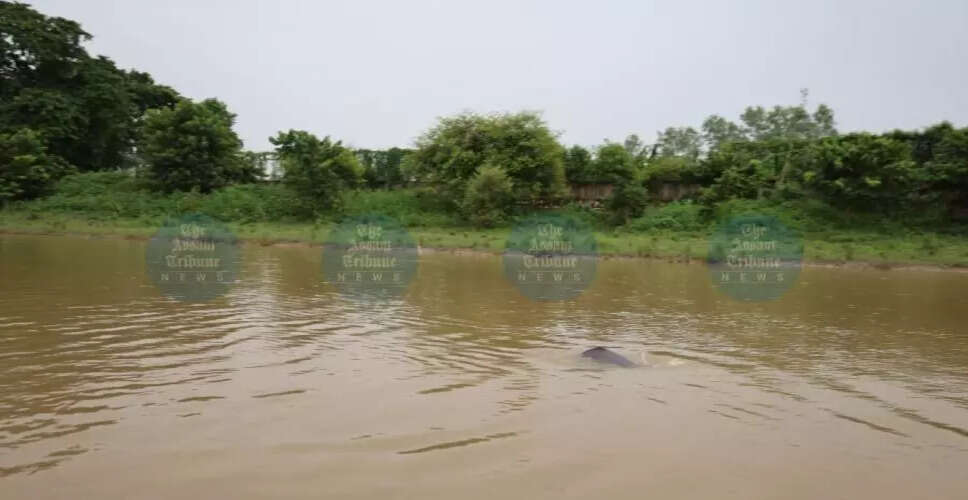
A river dolphin spotted in Kulsi River
PALASBARI, Sept 7: The Assam government’s push for the conservation of the endangered Gangetic river dolphin faces a significant challenge with the proposed 55-MW Kulsi hydropower project located at Ukiam, near the Assam-Meghalaya border.
The Kulsi river, especially the Kukurmara stream, is recognized as a vital habitat for river dolphins.
Recent statistics from the Wildlife Institute of India (WII) in Dehradun indicate that the population of river dolphins in the Kulsi river has dwindled to just 20, a decrease from 29.
The Kukurmara stream, where it converges with the Batha river, is locally referred to as Do-Mukhiya and is known as a hotspot for river dolphins. This area was once celebrated for having one of the highest concentrations of river dolphins in Southeast Asia. However, habitat degradation and river shrinkage have contributed to their declining numbers.
Environmental advocates have expressed concerns that the construction of the proposed hydropower project could severely threaten the dolphins by disrupting the river's natural flow and destroying their habitat. This project is planned near the confluence of the Kulsi river, a crucial habitat for the species.
Designated as Assam’s State Aquatic Animal in 2008 and India’s National Aquatic Animal in 2009, the Gangetic river dolphin is classified as endangered by the International Union for Conservation of Nature (IUCN) Red List. It is afforded the highest legal protection under the Wildlife (Protection) Act of 1972.
Conservationists have criticized the lack of adequate protection and monitoring for river dolphins compared to other prominent species like the one-horned rhinoceros, despite their protected status.
Experts warn that the construction of a dam could have dire implications for the river's aquatic ecosystem. River dolphins rely on sound and echolocation for navigation, hunting, and communication. Alterations in the river's flow, increased underwater noise, and disturbances from hydropower infrastructure could hinder these essential functions, jeopardizing their survival.
Environmentalists have pointed to the adverse effects of hydropower projects on aquatic ecosystems in other parts of the state as a cautionary tale, advocating for a comprehensive ecological evaluation of the Kulsi project before any construction begins.
The proposed dam could also disrupt the seasonal flow patterns of the Kulsi river. Excessive water release during monsoon seasons could lead to increased flooding downstream, while reduced flow in dry periods might result in critically low water levels in downstream areas. Such changes could negatively impact both local communities and aquatic life.
These concerns are particularly pressing given the region's history of severe flooding. The 2004 flash flood in Balbala, Goalpara, reportedly resulted in numerous fatalities and extensive damage to livestock and farmland. Similarly, a significant flood in the Kulsi river in South Kamrup in 2006 caused widespread devastation.
With the river dolphin population in the Kulsi already down to 20, environmentalists and local residents are calling on the government to conduct a thorough ecological assessment of the proposed project to ensure the survival of the remaining dolphin population.