
Concerns Rise Over Iran's Nuclear Developments at Pickaxe Mountain

Iran's Uranium Enrichment Activities Under Scrutiny
Israeli intelligence sources suggest that Iran has relocated thousands of uranium enrichment centrifuges to the fortified Pickaxe Mountain facility, situated near the Natanz nuclear site, as reported by a leading news outlet. This intelligence has been communicated to officials in the United States, although it remains uncertain if any actions will be taken in response.
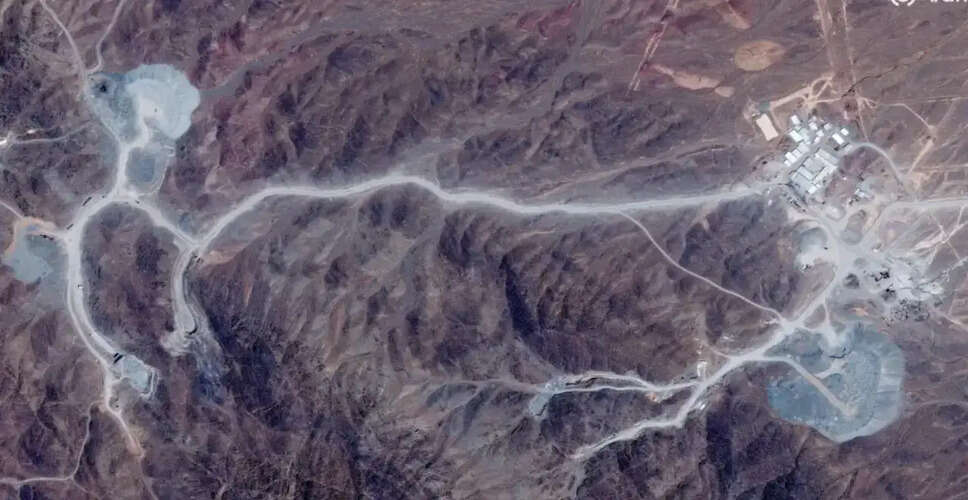
Pickaxe Mountain, located close to Natanz—one of Iran's critical nuclear installations—was previously targeted in US airstrikes in June 2025. Experts indicate that this underground facility is buried between 300 to 450 feet beneath solid rock, making it significantly more challenging to attack compared to surface facilities.
The transfer of centrifuges has heightened alarms among Israeli and Western officials, who fear that Iran may be able to maintain or quickly restore elements of its nuclear program, even after potential damage to other sites. Satellite images have indicated ongoing construction and activity around the mountain for over a year.
David Albright, head of the Institute for Science and International Security, remarked that the Israeli assessment appears credible given the persistent activity at the location. Earlier this year, Rafael Grossi, Director of the International Atomic Energy Agency, noted that Iran had informed the agency in 2021 about its plans for nuclear-related activities at Pickaxe Mountain, but further details have not been disclosed by Tehran.
Western officials are particularly concerned about Iran's stockpile of 60% enriched uranium, which is nearing weapons-grade levels. Analysts warn of a potential 'covert breakout' scenario, where Iran could shift its enrichment efforts to a concealed or hard-to-inspect site, advancing its nuclear weapons capabilities.
Nate Swanson, a former official on the White House National Security Council focusing on Iran policy, emphasized that the lack of verification regarding activities at the site underscores the necessity for international inspections. This report emerges as the United States intensifies its military operations against Iran, with recent strikes targeting Iranian military command centers, missile and drone launch sites, and air defense systems, aiming to diminish Iran's capacity to threaten commercial shipping in the Strait of Hormuz.
Iran has yet to publicly address the allegations regarding the relocation of centrifuges to the Pickaxe Mountain facility.