
Concerns Rise Over Hydrocarbon Exploration in Dehing Patkai Rainforests

Opposition to Oil Exploration in Dehing Patkai
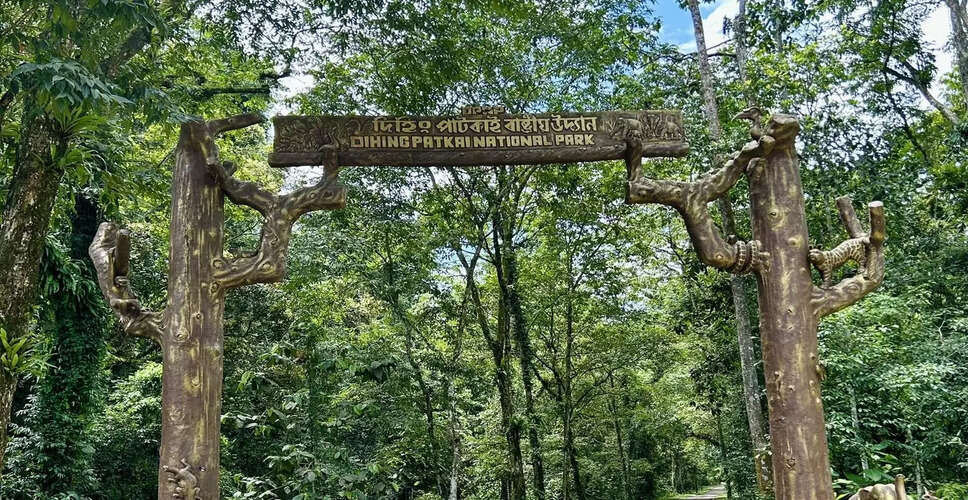
Dehing Patkai National Park( Photo: 'X')
Guwahati, June 10: The Kaziranga Wildlife Society (KWS) has voiced strong opposition to the recent authorization granted to Oil India Limited (OIL) for hydrocarbon exploration in the Upper Dehing Reserve located in Tinsukia district. They are advocating for a complete ban on mining and drilling activities in biodiversity-rich areas.
According to KWS, the Dehing Patkai rainforests represent Assam's last significant expanse of life-sustaining rainforests, which have faced numerous threats such as coal mining, oil exploration, encroachment, and illegal logging. These harmful activities have led to the degradation of extensive rainforest areas, and any additional industrial activities could severely damage this delicate ecosystem, resulting in long-lasting and irreversible consequences.
The approval, issued under the Forest (Conservation) Act of 1980, permits the diversion of approximately 4.9 hectares of forestland within the Digboi Forest Division. This area is part of the Dehing Patkai Elephant Reserve, a vital habitat and movement corridor for wild elephants.
KWS emphasized that safeguarding the remaining natural forests in the state is not only an environmental responsibility but also crucial for maintaining ecological balance and ensuring a sustainable future for upcoming generations.
The Dehing Patkai region is home to a diverse array of wildlife and plant species, including eight different cat species, various herbivores and carnivores, and numerous bird species, many of which have yet to be documented.
Environmental activist Mowsam Hazarika has also condemned the decision to allow oil drilling in the Dehing Patkai rainforests, labeling it “deeply alarming.” He pointed out that the region is already experiencing increased human-elephant conflicts due to habitat fragmentation and food shortages.
Hazarika cautioned that permitting drilling in such a sensitive ecosystem would hinder elephant movement and exacerbate conflicts, posing significant threats to both wildlife and local communities. He noted that the project would necessitate the removal of around 135 trees in an area characterized by a canopy density of 0.8 (Eco-class I), indicating a dense and relatively undisturbed forest ecosystem. “The destruction of such a rich natural habitat for hydrocarbon extraction raises critical environmental and ethical concerns,” he stated.
Highlighting the ecological significance of the area, Hazarika mentioned that the Dehing Patkai landscape is home to over 500 elephants and 47 mammal species, including various primates and wild cats. The forest also shelters rare and endangered species such as the tiger, clouded leopard, Chinese pangolin, and Himalayan black bear, along with nearly 293 bird species.
Often referred to as the ‘Amazon of the East,’ the Dehing Patkai rainforest is one of the last remaining tropical rainforests in Assam. Experts have consistently warned that disturbances in nearby forest areas could lead to cascading effects on the ecological stability of the Dehing Patkai National Park.
Raising additional concerns, Hazarika pointed out the long-term environmental risks associated with the project, including the construction of access roads, drilling pits, and waste disposal. He warned that drilling operations, which involve deep boreholes, carry the risk of oil spills and contamination, potentially causing severe harm to the region's fragile biodiversity.
While compensatory afforestation has been suggested in another district, Hazarika argued that such measures cannot offset the irreversible loss of a mature rainforest ecosystem. He also questioned the effectiveness of environmental safeguards, noting that such conditions are often poorly enforced.
Calling for immediate action, Hazarika urged the Ministry of Environment, Forest and Climate Change and other relevant authorities to reconsider the decision in the interest of ecological conservation and sustainable development.