
Concerns Rise Over Adulterated Mustard Oil in Jaipur Markets
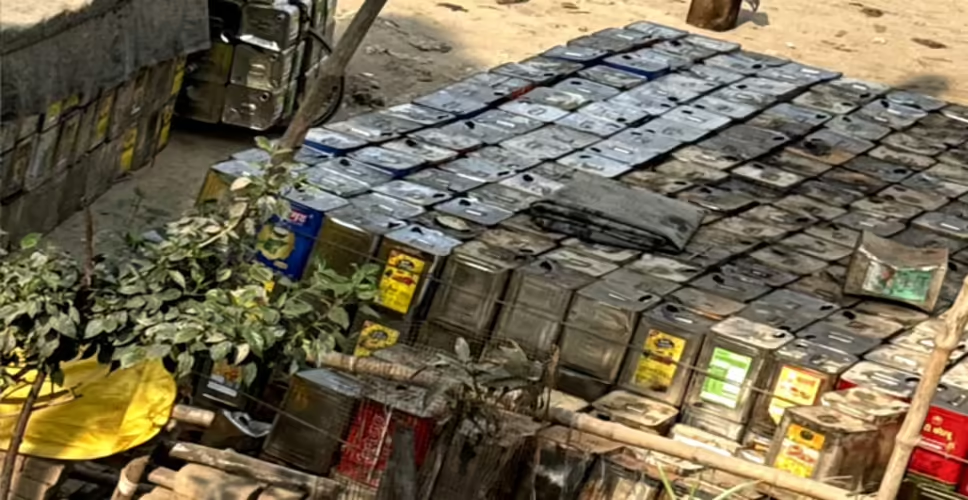
Daily Consumption of Mustard Oil Raises Health Concerns
In Jaipur, the daily consumption of both pure and adulterated mustard oil reaches approximately 15 tons. Reports indicate that certain unscrupulous traders near Herbert Bhande are still producing and selling adulterated mustard oil, jeopardizing public health.
These traders appear to operate without fear of law enforcement. Some have connections that protect them, while others face legal action. With the upcoming Holi festival, those involved in the adulteration of mustard oil have become increasingly active in the district and surrounding areas. They are importing palm oil from Nepal at ₹80 per liter, mixing it with chemicals and essences to create counterfeit mustard oil, which is then sold for ₹150 to ₹160. The use of yellow coloring and chemicals that mimic the aroma of mustard oil makes the adulterated product look remarkably authentic. These traders are reportedly distributing around five tons of this fake oil daily.
The ongoing issue of mustard oil adulteration in Jaipur poses serious health risks to the public.
Jaipur, February 26, 2026: Approximately 15 tons of both pure and adulterated mustard oil are consumed daily in the city's markets. Sources reveal that traders around Herbert Bhande are openly manufacturing and selling adulterated mustard oil, which poses a significant health threat to the community.
These adulterators mix cheaper oils like palm oil and rice bran oil with mustard oil, creating a counterfeit product that can increase the risk of heart disease and cancer with prolonged consumption. Reports suggest that some of these major traders have alleged connections with police and local authorities, allowing them to continue their illegal operations without fear. Those without such connections occasionally fall victim to raids by food safety officials or police.
In recent months, the Food Safety and Drug Administration has conducted significant operations under the "Pure Food Adulteration Campaign" in various areas of Jaipur, such as Chaksu, Muhana, and Jhotwara. For instance, 1155 kilograms of adulterated mustard oil were seized in Chaksu, while thousands of liters of suspicious oil have been confiscated elsewhere. The problem intensifies during festival seasons when demand for oil surges, prompting more adulterators to enter the market.
Local residents express that the low-priced mustard oil sold openly (priced between ₹135-155 per kilogram) seems appealing, but it carries a higher risk of adulteration compared to branded packaged oils (priced between ₹172-225 per kilogram). Experts recommend that consumers always purchase FSSAI-certified, packaged, and branded oils. Assessing the quality of open oils can be challenging, so it is advisable to avoid them.
There are calls for the administration to increase regular raids in sensitive areas like Herbert Bhande and to take strict legal action against adulterators to safeguard public health. Currently, investigative agencies are monitoring the situation closely.