
Concerns Rise as Japanese Encephalitis Claims Lives in Assam

Rising Cases of Japanese Encephalitis in Assam
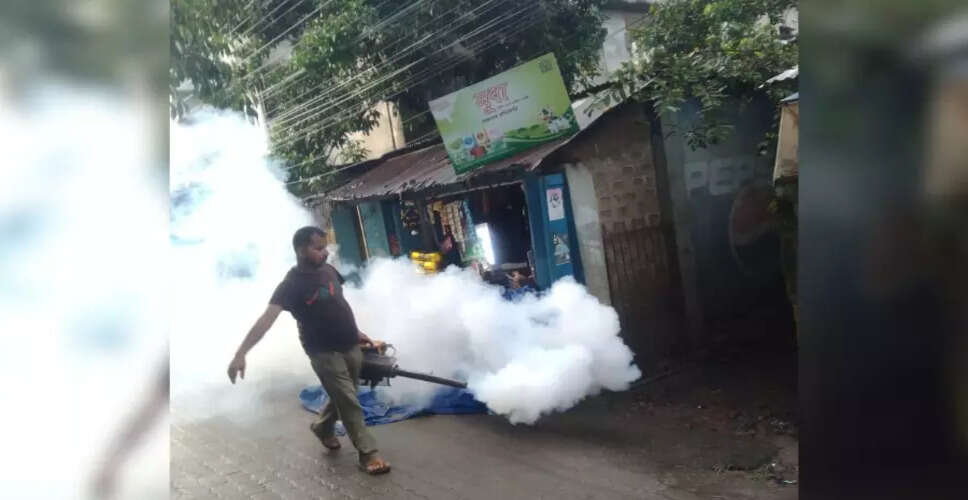
File image of fogging carried out by GMC (Photo: @gmc_guwahati/X)
Guwahati, June 13: The outbreak of Japanese Encephalitis (JE) has resulted in four fatalities at the Gauhati Medical College and Hospital (GMCH) this year, raising alarms about the spread of this mosquito-borne illness across Assam as new cases emerge from various districts.
Dr. Abhijit Sharma, the Superintendent of GMCH, reported that since April, the hospital has admitted a total of 11 patients diagnosed with JE.
As of Friday, four individuals have succumbed to the disease, while three others have been discharged after successful treatment, according to Dr. Sharma.
Currently, four patients remain hospitalized, comprising two children and two adults.
To address the situation, GMCH has established a specialized JE ward within its Intensive Care Unit for adult patients.
Dr. Sharma noted, "We have created a dedicated JE ward in the ICU for adult patients, where the two adult cases are being treated. The pediatric ward is currently caring for the two children."
The majority of this year's cases have been reported from Kamrup district, with six out of the 11 patients originating from Kamrup Rural, specifically from areas like Chaygaon, Jyotikuchi, and Mirza.
Additionally, the hospital has treated one patient each from Darrang, Mangaldoi, and Morigaon, while only one case from Kamrup Metropolitan district was recorded this year. This patient, Nar Bahadur Chhetri from Gandhinagar in Panikhaiti, tragically passed away on Friday night.
Dr. Sharma explained that Chhetri initially exhibited fever and neurological symptoms, leading to his admission at a private facility on June 3. His condition worsened, prompting a transfer to GMCH, where tests confirmed JE on June 4.
This death has intensified concerns in the Chandrapur-Panikhaiti region, where residents have noted a significant rise in mosquito populations.
A local resident expressed, "The mosquito problem has escalated in our area, and people are anxious. Fogging was only conducted once after a JE case was reported, but no further action has been taken since then."
Many locals have claimed that fogging efforts only commenced following the detection of the JE case and have urged authorities to enhance mosquito control initiatives, health monitoring, and awareness campaigns in at-risk areas.
In addition to JE cases, GMCH is also managing a considerable number of patients suffering from Acute Encephalitis Syndrome (AES), which encompasses a range of neurological disorders, including JE.
Dr. Sharma mentioned, "Currently, around 23 to 24 AES patients are receiving treatment at GMCH."
Japanese Encephalitis is caused by a virus spread through infected Culex mosquitoes and can result in brain inflammation. Severe cases can be fatal, particularly among children and those with compromised immune systems.
Health officials are vigilantly monitoring the situation as Assam approaches the monsoon season, a time typically linked to a heightened risk of mosquito-borne illnesses.