
Concerns Raised Over Maharashtra Government's Response to Agricultural Crisis

Maharashtra's Agricultural Challenges Amidst Regional Conflicts
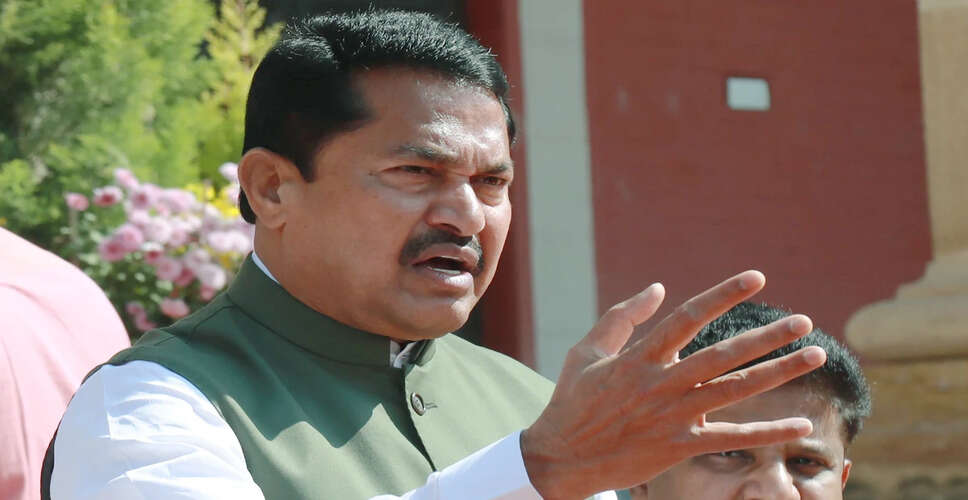
Congress leader Nana Patole has expressed serious concerns regarding the Maharashtra government's handling of various crises, particularly the significant damage to farmers' crops due to conflicts in West Asia. He highlighted that the stagnation of agricultural products is causing substantial losses for traders and contributing to an increase in farmer suicides. Speaking to the media, Patole noted that the ongoing conflict involving the US, Iran, and Israel has resulted in widespread crop destruction for many farmers. He pointed out that there are long queues for the export of vegetables and rice, and traders are facing severe financial setbacks. The government should take steps to compensate them by facilitating the sale of goods. Discussions were held regarding the need to ensure justice for both farmers and traders, as the halted agricultural stock is leading to further losses and rising suicide rates among farmers.
Allegations Against the Government Regarding Education Funding
Patole also accused the government of providing false information and lacking funds for education. He stated that this issue has been brought to the government's attention. While there is a focus on education, he claimed that ministers are not being truthful about the situation. He mentioned the absence of teachers in district council municipalities and criticized the recruitment process for teachers through online portals. Patole remarked that the ongoing conflict between the BJP and the Shinde faction is wasting an entire generation. He pointed out that while the state government claims to lack funds, it has lured farmers with promises. There is no money allocated for education, and payments are being made through overdrafts. He also noted that there are millions owed in stamp duty in Mira Bhayandar, calling it a scam that they intend to expose.
Recent Military Actions in the Region
On February 28, coordinated airstrikes by the US and Israel targeted several Iranian cities, focusing on military command centers, air defense systems, missile sites, and key governmental infrastructures. These attacks reportedly resulted in the deaths of Iranian Supreme Leader Ayatollah Khamenei and four senior military and security officials, with significant explosions reported in Tehran and other major cities. In retaliation, Iran launched ballistic missiles and drones against US assets and allies across the region, including Israel, Bahrain, Kuwait, Qatar, Saudi Arabia, the UAE, and Jordan, escalating tensions in the Middle East and posing increased risks to both civilians and migrants.