
Concerns Raised Over Andhra Pradesh's Proposed Population Policy
Congress MP Questions New Population Policy
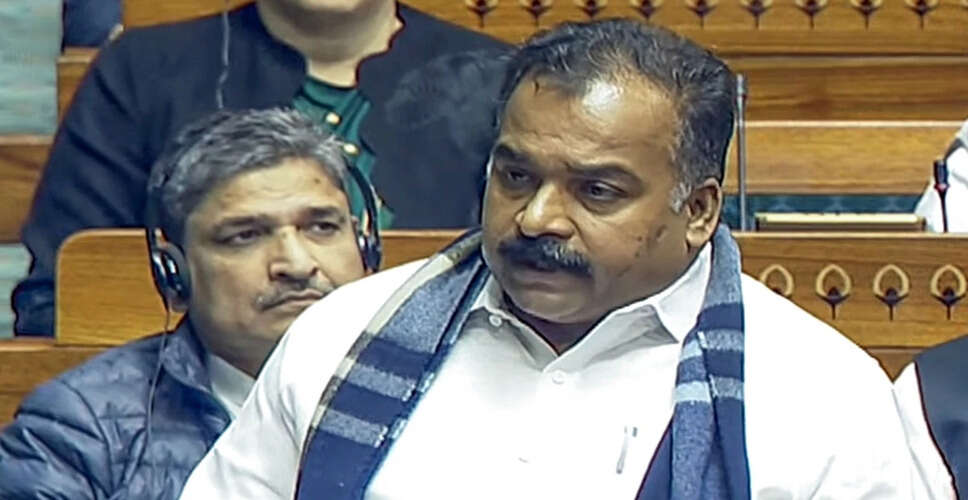
On Friday, Congress MP Manickam Tagore expressed his apprehensions regarding the proposed population policy announced by the Andhra Pradesh government. The policy suggests offering a financial incentive of ₹25,000 to families having three or more children. Tagore took to social media to challenge the rationale behind this policy, emphasizing that the government's focus should be on cultivating a skilled workforce capable of adapting to the rapidly evolving global economy driven by technologies like artificial intelligence, robotics, and automation. He pointed out that while the Andhra Pradesh government is proposing financial incentives to encourage larger families, this initiative raises serious concerns about the direction of the policy, especially at a time when countries worldwide are preparing for a future where many traditional jobs may become obsolete due to technological advancements.
The Need for Quality Education and Skills
In his post on social media, Tagore highlighted that the Andhra Pradesh government, led by N. Chandrababu Naidu, has introduced a draft population policy that includes incentives for families with a third child. This raises a critical and troubling question. As artificial intelligence, robotics, and automation continue to transform the global economy, nations are gearing up for a future where numerous traditional jobs may vanish. The real challenge for governments today is to prepare skilled citizens who can thrive and succeed in this new economy.
Tagore argued that India is already the most populous country in the world and is expected to remain among the most populous nations for decades to come. He stated that the true challenge lies not in the size of the population but in the lack of quality education, skills, employment, and opportunities for millions of young people entering the workforce each year. Instead of focusing on enhancing human capital through better education, healthcare, and job creation, the policy promotes population growth through monetary incentives, reflecting short-term political thinking rather than visionary governance.