
Concerns Raised by House Democrats Over Trump's Critical Minerals Agreements

House Democrats Express Alarm Over Mineral Agreements
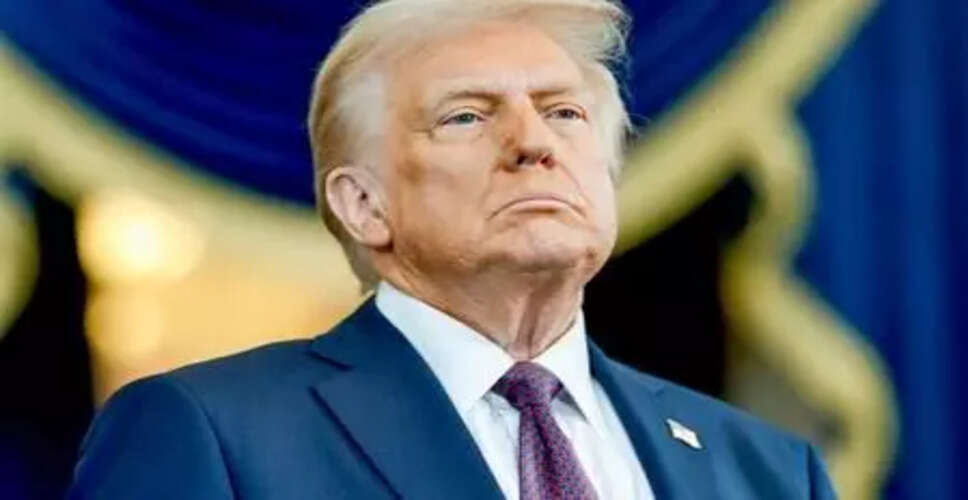
A file image of US President Donald Trump (Photo: IANS)
Washington, Aug 18: A group of over 50 House Democrats has voiced serious concerns regarding the Trump administration's agreements related to critical minerals. They fear these deals could financially benefit politically connected families, potentially lead to taxpayer losses, and diminish congressional oversight.
In a letter directed to four high-ranking officials in the administration, the 54 lawmakers raised questions about the agreements that pertain to mining, processing, and trading of critical minerals. They highlighted issues surrounding transparency, labor rights, environmental safeguards, and the allocation of public funds.
The correspondence was sent to US Trade Representative Jamieson Greer, Secretary of State Marco Rubio, Commerce Secretary Howard Lutnick, and Treasury Secretary Scott Bessent.
The lawmakers pointed out that companies associated with President Donald Trump and Lutnick's families might gain from a US-supported critical minerals deal in Kazakhstan, referencing recent reports from a major news outlet.
“Without robust transparency and accountability measures, these investments and loan guarantees pose risks of conflicts of interest, self-dealing, preferential treatment, and diminished oversight,” they stated.
They expressed that these agreements could obligate US taxpayers to billions in direct loans and guarantees from the Development Finance Corporation and Export-Import Bank, while also questioning federal equity investments in mining and processing firms.
“If these projects are successful, the companies reap the rewards; if they fail, taxpayers bear the losses,” the letter emphasized.
This initiative was spearheaded by Jared Huffman, the ranking member of the House Natural Resources Committee, Linda Sánchez, the ranking member of the Ways and Means Trade Subcommittee, and Congressman Jonathan Jackson. Indian American lawmakers Ro Khanna and Shri Thanedar were also among the signatories.
The Democrats affirmed their support for enhancing US mineral supply chains for clean energy and technology sectors, aiming to reduce dependence on China. They also criticized agreements involving countries such as the Democratic Republic of Congo, Zambia, Malaysia, Argentina, Ecuador, Cambodia, and Bangladesh.
They alleged that the State Department had pressured Zambia into signing a minerals agreement by threatening to withhold HIV medications and other aid. Additionally, they raised alarms about a US-backed paramilitary force overseeing mining operations in Congo.
The letter pointed out that critical minerals clauses in trade agreements with Argentina, Ecuador, Cambodia, and Bangladesh required these nations to facilitate US mining investments without binding commitments to environmental, labor, or human rights standards.
“Given these issues, we demand a transparent and accountable negotiation process, along with a firm commitment to promoting sustainable critical minerals mining and processing,” the lawmakers wrote.
They posed ten questions to the administration, addressing human rights, environmental evaluations, taxpayer protections, potential conflicts of interest, and suggested price floors. The lawmakers cautioned that price-support mechanisms could lead to antitrust issues and inadvertently favor companies linked to the Chinese state.
Critical minerals are vital for electric vehicles, batteries, semiconductors, renewable energy technologies, and advanced defense systems. China currently dominates the processing and refining of many of these minerals, prompting the US to explore alternative supply chains through international agreements and domestic investments.
The authority over trade has historically been a contentious issue between Congress and the executive branch. While the Constitution grants Congress control over international commerce, successive administrations have utilized executive agreements to achieve trade and supply chain goals. The letter also noted bipartisan criticism of the Biden administration’s minerals agreement with Japan for circumventing Congress.