
Concerns Over Supply Chain Disruptions Amid West Asia Conflict Raised by Congress MP
Call for Diplomatic Solutions Amid Supply Chain Issues
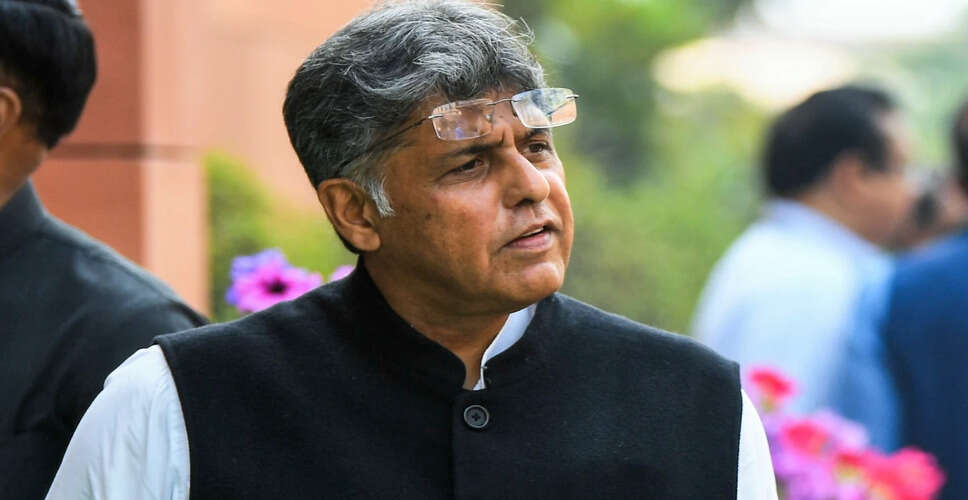
On Monday, Congress MP Manish Tewari expressed his worries regarding the disruptions in the supply chain caused by the ongoing conflict in West Asia. Speaking to the media, he highlighted the challenges faced by energy-consuming nations, citing the impact on the supply chains of crude oil, natural gas, fertilizers, food items, and medicines.
Escalating Tensions in the Region
Tewari noted that the conflict appears to have entered one of its most perilous phases. Currently, around 3,000 ships are stranded in the Gulf of Oman and the Persian Gulf. He emphasized the need for all parties to de-escalate tensions and allow diplomacy to take precedence. The situation is becoming increasingly dire for energy-dependent countries, as it extends beyond just crude oil and natural gas to essential items like fertilizers, food, and life-saving medications. The entire supply chain has been disrupted, particularly following three weeks of hostilities among Iran, the United States, and Israel.
Prime Minister Modi's Response
On Sunday, Prime Minister Narendra Modi chaired a meeting of the Cabinet Committee on Security to discuss ongoing and proposed mitigation measures in light of the West Asia conflict. According to the Prime Minister's Office, the Cabinet Secretary provided a comprehensive presentation on the global situation and the measures taken and planned by all relevant ministries and departments of the Indian government regarding the conflict.
Discussion on Economic Impacts
The meeting addressed the anticipated effects on agriculture, fertilizers, food security, petroleum, electricity, small and medium enterprises (MSMEs), exporters, shipping, trade, finance, and the supply chain, along with the measures taken to address these issues. Discussions also covered the overall economic landscape of the country and the steps to be taken moving forward. A thorough assessment was made regarding the availability of essential needs for the common man, including food, energy, and fuel security, considering short-term, medium-term, and long-term perspectives.