
Concerns Arise Over Bangladesh's 'Greater Bangladesh' Map Amidst Regional Tensions
Rising Tensions Following Bangladesh's Statement
Recently, Muhammad Yunus, the head of Bangladesh's interim government, made a statement during his visit to China that raised alarms in India regarding the northeastern region. Shortly after, a group claiming to be 'Sultanate of Bangla' released a map depicting 'Greater Bangladesh,' which controversially included parts of India. This development has sparked new questions about regional politics and security.
Bangladesh Government's Response
In response, the Bangladeshi government clarified that there is no substantial evidence of the existence of the 'Sultanate of Bangla' organization, and the map was merely part of a historical exhibition held at Dhaka University. Nevertheless, such incidents are a cause for serious concern. Given the geographical sensitivity and socio-political dynamics of India's northeastern states, any expansionist or separatist ideologies could pose significant risks.
Foreign Influence and Security Measures
It is noteworthy that foreign entities, such as Turkey's 'Turkish Youth Federation,' are linked to this controversy, indicating that attempts to create instability in the region may not be limited to local actors. Consequently, India must enhance its border security and focus on cyber surveillance and intelligence cooperation to counter any potential misinformation swiftly.
Minister's Assurance on National Security
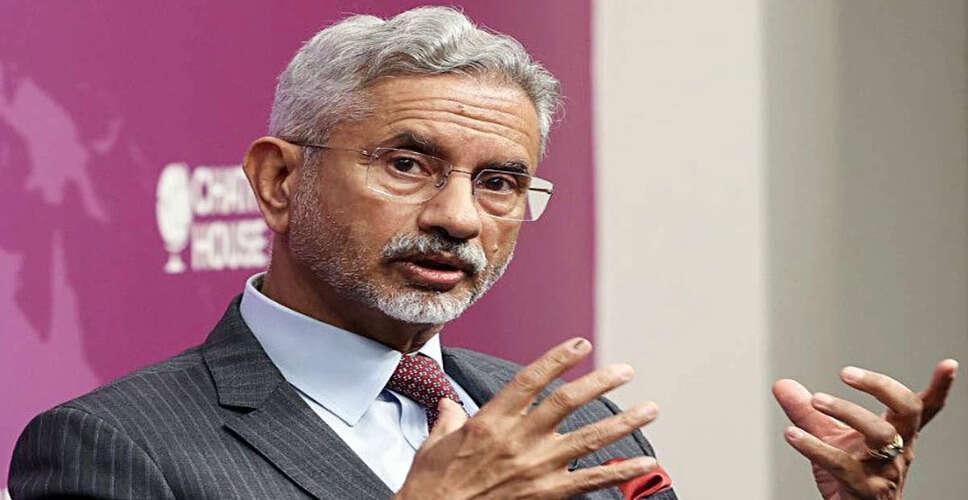
External Affairs Minister S. Jaishankar informed Parliament that the 'Sultanate of Bangla' had released a map showing parts of India as part of 'Greater Bangladesh,' allegedly with support from the Turkish NGO. The Bangladeshi government's fact-checking platform, 'BanglaFact,' stated that there is no concrete evidence of such an organization operating in Bangladesh, and the map was intended to showcase the ancient Bengal Sultanate during a historical exhibition held on April 14, 2025, coinciding with the Bengali New Year 'Pohela Boishakh.' The organizers emphasized that they have no ties to any foreign political organization.
Monitoring Developments
Jaishankar assured that the Indian government remains vigilant regarding all matters related to Bangladesh that could impact national interests. He emphasized India's commitment to taking necessary actions. This incident is significant on two fronts: national security and diplomatic relations.
Strained Relations and Future Implications
The relationship between India and Bangladesh has been tense over the past year, and such disputes could further widen the rift between the two nations. However, the swift denial from the Bangladeshi government indicates its seriousness about maintaining relations with India. It is crucial for India to continuously monitor such activities.
Concerns Over Foreign Organizations
The mention of a Turkish NGO raises concerns that some foreign organizations may attempt to instigate instability in South Asia. It is essential for India to strengthen regional cooperation and intelligence partnerships to thwart such efforts. The ease with which symbols like maps can go viral on social media to incite political fervor is alarming. This incident serves as a reminder for India to bolster its strategies for cyber surveillance and misinformation prevention. While the 'Greater Bangladesh' map issue currently appears limited to an exhibition, it serves as a cautionary signal for India.