
Comparative Military Strength: Pakistan vs. Taliban Amid Rising Tensions
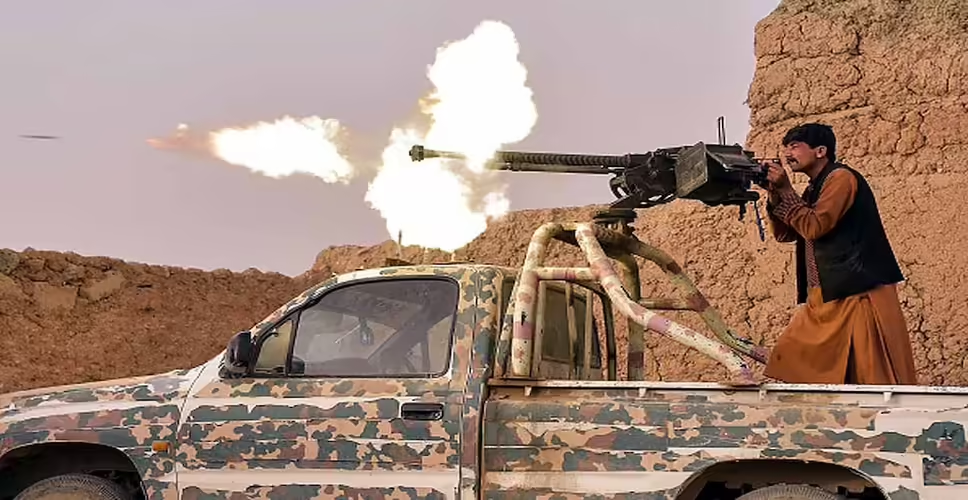
Escalating Tensions Between Pakistan and Afghanistan
Tensions are intensifying between Pakistan and Afghanistan under Taliban rule, raising a significant question amidst recent border disputes: How does the military strength of both nations compare in conventional warfare?
According to a recent report from a news media outlet dated February 26, 2026, the Pakistani military holds a substantial advantage over the Afghan Taliban in traditional combat scenarios. Let's delve into the statistics:
- Troop Numbers: Pakistan boasts approximately 660,000 active personnel (with 560,000 in the army), while the Taliban has only about 165,000 to 172,000 fighters. This gives Pakistan nearly four times the strength of the Taliban.
- Tanks and Armored Vehicles: The Pakistani arsenal includes 2,677 tanks and over 59,000 armored vehicles, whereas the Taliban possesses merely 100-200 outdated tanks and a few thousand American Humvees, most of which are in poor condition.
- Air Force: Pakistan's air force comprises 1,399 aircraft, including over 400 modern fighter jets (F-16, JF-17). In contrast, the Taliban has only 6-9 old planes and 23 helicopters, most of which are not operational.
- Navy: Pakistan maintains a robust navy (including frigates and submarines), while the Taliban lacks any naval capabilities due to Afghanistan being a landlocked country.
- Additional Capabilities: Pakistan is equipped with modern drones, missile defense systems, nuclear capabilities, and strong logistics. The Taliban primarily relies on outdated American weapons (like the M4 rifle) but faces significant shortages in maintenance and ammunition.
What Would Happen in Conventional Warfare? The report suggests that in the event of open conflict, Pakistan could seize control of Afghan airspace within 1-2 weeks and inflict severe damage on the Taliban through airstrikes. The Taliban would struggle to withstand tank engagements or aerial assaults. According to the Global Firepower Index 2026, Pakistan ranks 14th globally, while Afghanistan is positioned at 121st.
What is the Taliban's True Strength? The Taliban's resilience, religious motivation, guerrilla warfare capabilities in mountainous regions, and local support (especially from Pashtuns) empower them in prolonged asymmetric warfare. Elite units like Badri-313 and Red Unit can conduct commando operations. The Taliban, which managed to draw the U.S. into a 20-year conflict in Afghanistan, could also pose significant challenges to Pakistan, particularly if they receive support from the TTP (Tehrik-i-Taliban Pakistan) and the war drags on.
Conclusion: In conventional warfare, Pakistan clearly holds the upper hand; however, the Taliban is unlikely to concede defeat easily—they could inflict substantial losses on Pakistan through guerrilla tactics and ambushes. Recent airstrikes and border skirmishes between the two nations are exacerbating these tensions. Is this heading towards war? The situation remains precarious.