
Commemorating the Legacy of ʻAbdu'l-Bahá: A Look at His Life and Impact
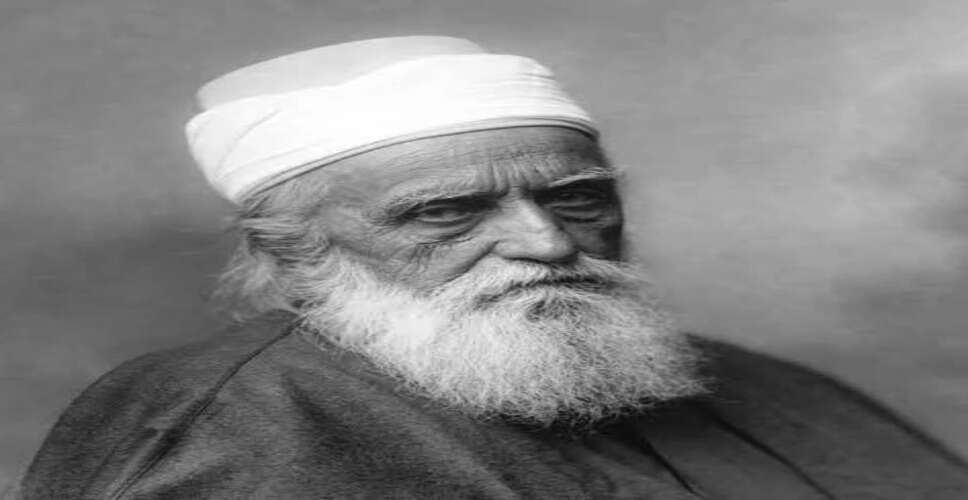

The Significance of ʻAbdu'l-Bahá's Ascension
On November 28, 2026, the Bahá'í community will commemorate the Ascension of ʻAbdu'l-Bahá, which begins at sundown on November 26. This day marks the anniversary of his passing in 1921 at the age of 77 in Haifa. As the eldest son of Baháʼu'lláh, the founder of the Baháʼí Faith, he was appointed as the successor and interpreter of its teachings.
Bahá'ís typically gather for devotional readings and prayers, including the recitation of the Tablet of Visitation for ʻAbdu'l-Bahá, often concluding around 1:00 AM, the time of his passing. Unlike other Bahá'í holy days, work is not suspended on this occasion.
Born on May 23, 1844, in Tehran, ʻAbdu'l-Bahá was the son of Baháʼu'lláh and Navváb. His birth coincided with the night the Báb declared his mission.
Early Life and Influences
His given name was ʻAbbás, named after his grandfather, a notable nobleman. Depending on the context, he was referred to as Mírzá ʻAbbás or ʻAbbás Effendi. Throughout his leadership of the Baháʼí Faith, he preferred the title ʻAbdu'l-Bahá, meaning 'Servant of Bahá'.
His formative years were influenced by his father's significant role in the Bábí community. He cherished memories of interactions with the Bábí leader, Táhirih, who left a lasting impression on him.
Growing up in a privileged environment, he enjoyed a joyful childhood alongside his siblings, Bahíyyih and Mihdí. Their family home was not only comfortable but also beautifully decorated.
Challenges and Exile
At the age of eight, his father was imprisoned during a crackdown on the Bábí Faith, leading to the family's impoverishment. They relocated to Baghdad, Iraq, where they lived for a decade before being moved to Istanbul and later confined in Edirne and ʻAkká.
ʻAbdu'l-Bahá remained imprisoned until the Young Turk Revolution in 1908. Following his release, he traveled to the West to share the Baháʼí message, although World War I restricted his movements to Haifa from 1914 to 1918.
Due to his life of exile, formal education was limited. Noble children like him typically received home education, focusing on scripture, rhetoric, and basic mathematics.
Marriage and Family
Speculation about his marriage arose during his youth, but he was initially reluctant. However, at the age of 28, he married Fátimih Nahrí, a woman from an upper-class family.
Fátimih was brought to ʻAkká after both Baháʼu'lláh and his wife expressed their desire for the union. Their marriage produced nine children, though many died young, causing him great sorrow.
The surviving daughters included Ḍíyáʼíyyih K͟hánum, who became the mother of Shoghi Effendi, and others who lived into the later 20th century.
Legacy and Commemoration
On November 28, 2026, Bahá'ís worldwide will observe the 105th anniversary of ʻAbdu'l-Bahá's passing, celebrating his legacy of love and service. Observances will occur at 1:00 AM in each time zone, uniting Bahá'ís in prayer and reflection.
Following World War I, ʻAbdu'l-Bahá was recognized by the British Mandate for his humanitarian efforts, receiving the title of Knight Commander of the Order of the British Empire.
He passed away on November 28, 1921, leaving behind a legacy of peace and unity. His funeral drew thousands from diverse backgrounds, reflecting the profound impact he had on humanity.