
Colombia Faces Surge in Violence Following Deadly Bombing
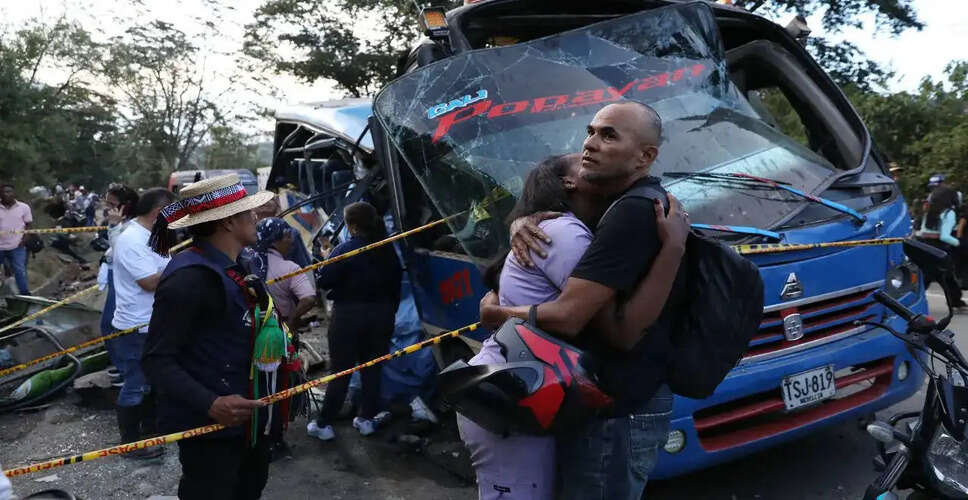

Tragic Bombing in Cauca
A devastating roadside bombing in one of Colombia's most dangerous areas has resulted in the deaths of at least 14 individuals, with many others suffering serious injuries. The explosion occurred on a highway in the Cauca department, a region notorious for coca cultivation and a long history of armed conflict.
OctavioGuzmanGu
2048111938144764141
Governor Octavio Guzman shared a video on social media depicting the aftermath, with victims lying on the ground and vehicles destroyed. Eyewitnesses reported that the blast was so intense it propelled people several meters away. Additional footage revealed significant craters in the road.
As of now, Guzman has confirmed that 14 lives have been lost, and over 38 individuals have sustained injuries.
Accusations Against FARC Dissidents
Who Is Being Blamed
Authorities quickly attributed the attack to FARC dissidents, who are remnants of the disbanded guerrilla group that rejected a peace agreement with the Colombian government in 2016 and continue to operate throughout the nation.
petrogustavo
2048131227333374011
President Gustavo Petro condemned the perpetrators on social media, labeling them as "terrorists, fascists, and drug traffickers," and called for the deployment of elite military forces against them. He specifically linked the bombing to Ivan Mordisco, identified as Colombia's most wanted criminal, whom Petro has likened to the infamous drug lord Pablo Escobar.
A Broader Context of Violence
Part of a Wider Wave of Violence
This incident is part of a troubling trend. Just a day prior, a bomb exploded at a military base in Cali, injuring two people. Military chief Hugo Lopez reported that 26 separate attacks had occurred across the Valle del Cauca and Cauca departments within a mere two days.
OctavioGuzmanGu
2048180685509124143
In response to the escalating violence, Defense Minister Pedro Sanchez announced that both military and police presence would be increased in the affected regions.
Implications for Upcoming Elections
Violence and the Upcoming Election
The timing of these attacks is particularly concerning, as Colombia's presidential election is set for May 31. Armed groups have a history of using violence to influence or disrupt elections, and FARC remnants are actively trying to undermine stalled peace negotiations with the Petro administration.
Security has emerged as a critical issue in the electoral campaign. The threat to candidates became glaringly apparent last June when Miguel Uribe Turbay, a young conservative candidate, was shot while campaigning in Bogota.
The three leading candidates—leftist Senator Ivan Cepeda, right-wing Abelardo de la Espriella, and Paloma Valencia—are all facing their own security challenges, having reported receiving death threats and campaigning under heavy protection.
A Nation at a Crossroads
A Country at a Crossroads
Colombia's armed groups thrive on drug trafficking, illegal mining, and extortion, providing them with both the means and motivation to continue their violent activities. With the presidential election approaching and violence escalating in two of the country's most troubled regions, the pressure on the next president to establish stability will be immense.
For the families of the 14 victims of the bombing in Cauca, the need for resolution and peace is urgent.