
Cold Wave Predicted for Delhi and NCR Amid Improved Air Quality
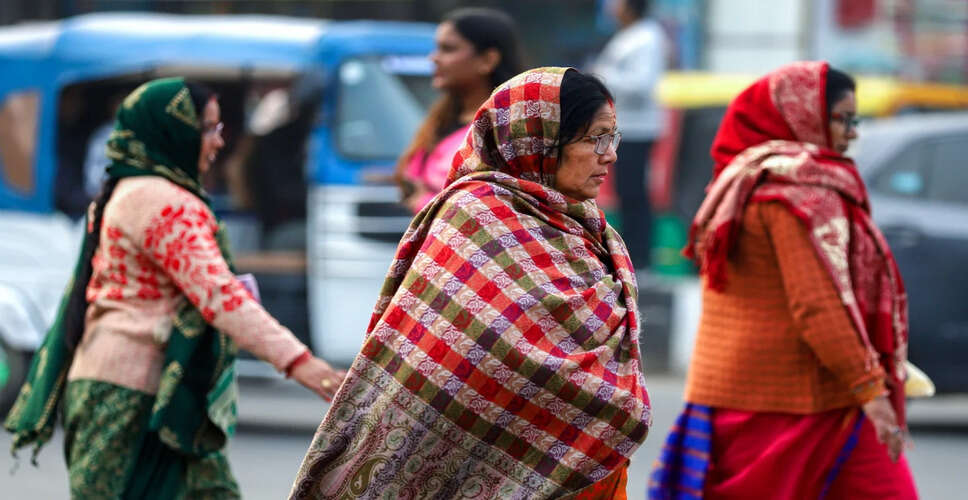
Cold Weather Forecast for Delhi and NCR
The India Meteorological Department (IMD) has announced that temperatures are expected to drop in Delhi and the National Capital Region (NCR), with a cold wave predicted in the coming days. While the temperature is set to decline, there has been a notable improvement in air quality across the city.
According to the IMD, cold wave conditions may occur in certain areas of Delhi between January 2 and January 5. A cold wave is declared when the minimum temperature falls between 4.5 to 6.5 degrees Celsius below the normal average.
Dense Fog Expected in Delhi
The IMD also indicated that dense to very dense fog is likely to persist in various parts of Delhi during the night and morning hours until January 6. Similar cold wave conditions have been forecasted for Rajasthan, Punjab, and Haryana until January 5.
Air Quality Index Improves to 302
As temperatures have decreased, the air quality in the national capital has significantly improved. The Air Quality Index (AQI) dropped to 302 on Monday, down from 380, placing it at the lower end of the 'very poor' category. Neighboring cities also reported better air quality, with Noida recording an AQI of 299, categorizing it as 'poor'. Gurugram's AQI was 232, while Faridabad recorded 220, both within the 'poor' range. Ghaziabad's AQI stood at 300, indicating an overall improvement in pollution levels across all NCR cities.
Monitoring Stations Report Variability
Only one air quality monitoring station in Delhi, Dwarka NSIT, fell into the severe category with an AQI of 423. Anand Vihar, which had an AQI above 450 on December 31, saw improvement with the index dropping to 348.
Despite an orange alert for dense fog, its impact was not significantly felt across Delhi. At Indira Gandhi International Airport, visibility was recorded at approximately 1,000 meters.
Minister Highlights Best Air Quality in Eight Years
Delhi's Environment Minister, Manjinder Singh Sirsa, stated that the air quality in the national capital has been the best in the last eight years as of 2025. He noted that the PM2.5 levels decreased from 104 micrograms per cubic meter in 2024 to 96 in 2025, while PM10 levels dropped from 212 to 197 micrograms per cubic meter during the same period.
Sirsa remarked, "The people of Delhi have given us the opportunity to serve, and we made clean air our top promise. The record number of good AQI days in 2025 proves that science-based actions yield remarkable results."
An official statement indicated that in 2025, Delhi experienced approximately 200 days when the AQI was below 200, marking an improvement of nearly 15 percent compared to the previous four years.