
Clarification on Indian Passport's Role in Citizenship
The Ministry of External Affairs has clarified that passports do not serve as proof of citizenship, sparking discussions about what constitutes definitive citizenship evidence. This announcement, made on 'Passport Seva Day', highlights the complexities surrounding citizenship laws in India. The article delves into the implications of this clarification, the role of various identification documents, and recent improvements in passport services. With the Supreme Court's remarks on Aadhaar and voter ID cards, the discourse on citizenship continues to evolve. Read on to understand the nuances of this important issue.
| Jun 24, 2026, 20:06 IST

Understanding the Role of Passports in Citizenship
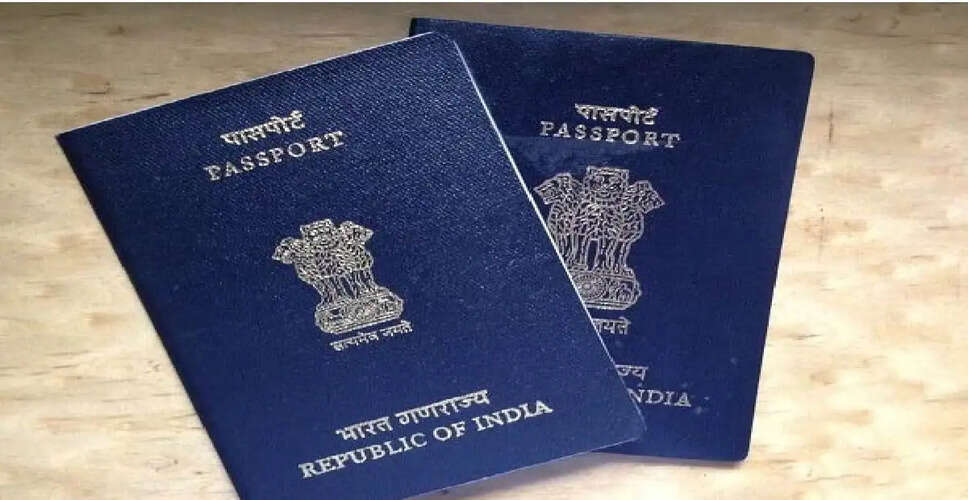
Passports are exclusively issued to Indian citizens. However, the Ministry of External Affairs has clarified that a passport does not serve as proof of citizenship. This announcement was made during the 14th 'Passport Seva Day', sparking significant debate on social media regarding what constitutes definitive proof of citizenship. This remains a vague issue, with the central government yet to take a clear stance. On Wednesday, the Ministry of External Affairs (MEA) stated that passports are primarily travel documents issued to facilitate international travel. This implies that possessing a passport does not automatically confirm one's citizenship.
This situation highlights a contradiction, as non-citizens are not issued passports. B.V. Rao, a consulting editor at a prominent media group, has elaborated on this matter effectively. Receiving a passport does not equate to ownership; the back of the passport notes that it is 'the property of the Government of India' and must be returned upon government request. Earlier this year, during hearings on the Special Intensive Revision (SIR) of the voter list, the Supreme Court remarked that Aadhaar is not definitive proof of citizenship, but merely an identification document. Similarly, a voter ID card is not considered a citizenship document; it primarily serves as proof of identity and address, allowing individuals to vote in elections.
Read More: Planning to Position India Against Its Close Ally Russia, But Modi... What Trump Revealed
According to citizenship laws, individuals born in India on or after January 26, 1950, but before July 1, 1987, are considered citizens by birth. For those born after July 1987, citizenship can be claimed if at least one parent is a citizen. Individuals born on or after December 3, 2004, can claim citizenship by birth only if both parents are Indian citizens, or if one parent is a citizen and the other was not an illegal immigrant at the time of birth. The Ministry of External Affairs (MEA) also highlighted the expansion of India's passport service network and several key achievements, including the successful launch of chip-enabled e-passports.
Read More: India's Major Strategic Move in China's Neighborhood, Jaishankar Showcases to the World, Beijing on Alert
An official from the Ministry stated, 'In 2025, 15 million passports and related services were provided, with 13.9 million being passports alone. Additionally, the MEA reported improvements in the average time taken to obtain a passport; excluding police verification, passports are now issued within six working days. The official noted that citizens now spend an average of less than 45 minutes at passport service centers.'