
CJP's Bold Initiative: Transforming Rural Education Ahead of Independence Day

Nationwide Campaign for Rural School Improvement
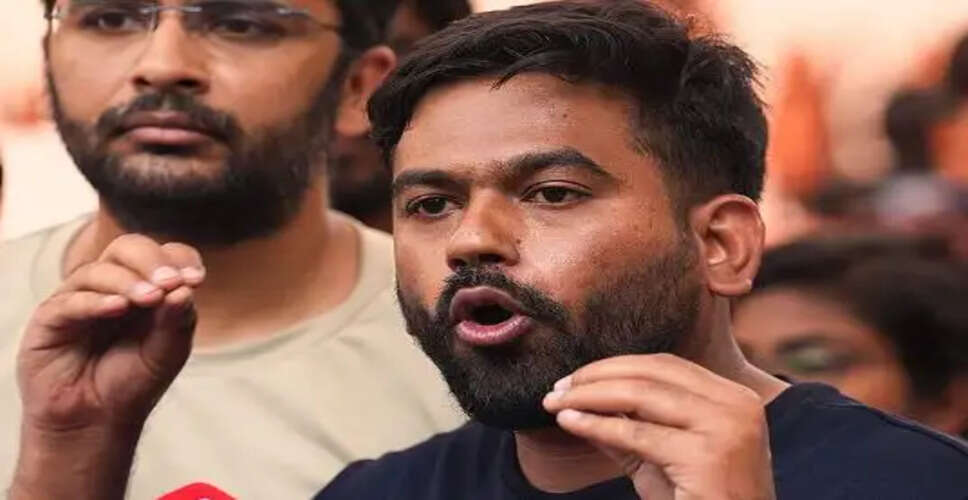
New Delhi: Abhijeet Dipke, the founder of the Cockroach Janta Party (CJP), has unveiled a nationwide initiative aimed at enhancing government schools in rural areas. He is urging parents to perform social audits of essential facilities and encouraging village leaders to take action to uplift these educational institutions.
Set to commence on August 15, the campaign calls for collaboration among citizens, parents, and village heads to tackle the longstanding issue of inadequate rural educational infrastructure.
In a video announcement, Dipke expressed his intention to kick off the initiative from his village, Hingoli in Maharashtra, by engaging with the local village chief to improve the local government schools.
"This August 15 marks our 80th Independence Day. However, the most overlooked aspect over these years has been the condition of government schools in our villages," Dipke remarked.
He questioned, "While we have constructed a new Parliament and a new Prime Minister's residence, why haven't we prioritized building new schools in our villages? Are the children of farmers and laborers not the future of our nation?"
Dipke highlighted the challenges faced by rural children, who often have to travel long distances to attend school, only to find basic amenities like drinking water and toilets lacking.
"Even today, children in villages walk significant distances to reach school, and upon arrival, they often find no water or toilet facilities," he noted, particularly emphasizing the struggles faced by girls.
"On this Independence Day, we should focus on making a fresh start by improving our government schools," he added.
The CJP has reached out to village heads across the nation, urging them to take responsibility for enhancing government schools in their areas.
Dipke plans to personally approach the village head in Hingoli and has encouraged other village leaders to join this initiative.
Dubbed the "Sarpanch Challenge," the campaign will publicly acknowledge village heads who successfully improve their schools by sharing before-and-after images on social media, giving credit to the respective sarpanches.
"We will recognize your efforts so that others may follow suit and enhance schools in their villages," Dipke stated.
Additionally, the CJP has announced a citizen-led social audit of government schools.
Parents are encouraged to visit their children's schools to assess the availability of electricity, clean drinking water, functional restrooms, and mid-day meals.
"Check if your children's schools have basic facilities like electricity and water. Are there washroom facilities? Are mid-day meals provided?" Dipke urged, asking parents to document any deficiencies.
The CJP plans to release a printable audit form for citizens to record the available and missing facilities in their children's schools.
This form will be accessible via a link in the campaign videos shared on the CJP's official social media channels. Completed forms and video evidence can be submitted via email.
The campaign aims to ensure that children of farmers and laborers in village schools have access to facilities comparable to those in urban areas.
"If not, document it. Your children's education is a fundamental right," Dipke emphasized.
"Let us commit to improving schools for the children in villages. Together, we can achieve this," he concluded, reinforcing the message that "Real India lives in villages."
Originally starting as an online satirical platform, the CJP has gained traction and transitioned to grassroots activism.
After a 36-day protest at Jantar Mantar in Delhi regarding examination irregularities, which concluded on July 25 following the resignation of the then Union Education Minister, the CJP has been strategizing its future direction.
Earlier this month, a two-day strategy meeting in Chhatrapati Sambhajinagar, Maharashtra, led to the decision to continue as a youth movement rather than entering electoral politics.
The CJP has also launched a campaign titled "Kya Bolti Public?" aimed at nationwide engagement.
Dipke previously urged Prime Minister Narendra Modi to address the youth of the nation during his Independence Day speech.