
CJI Surya Kant Advocates for Timely Establishment of Arbitration Council in India
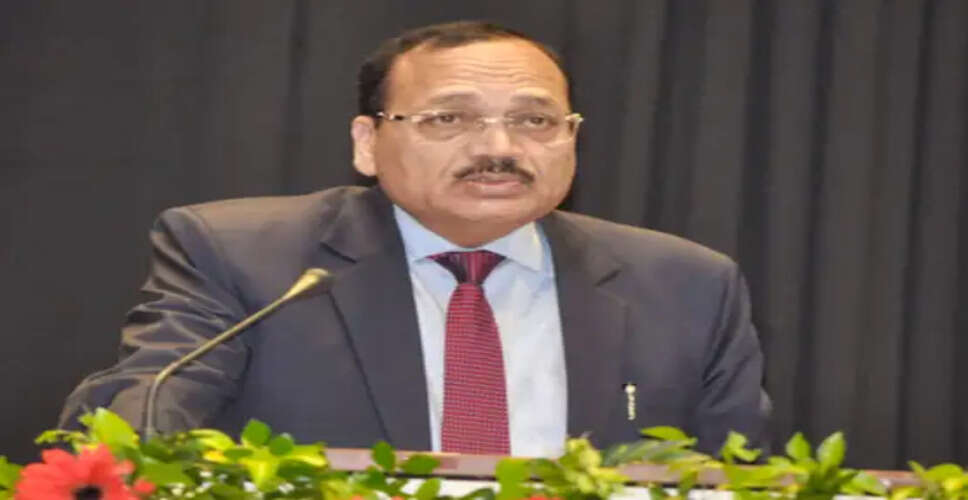

CJI Surya Kant Calls for Action on Arbitration Council
New Delhi: Chief Justice of India Surya Kant highlighted the ongoing delays in establishing the Arbitration Council of India, expressing optimism that a relevant bill will soon be presented to Parliament.
During the silver jubilee celebration of the Indian Institute of Arbitration and Mediation, CJI Kant emphasized that India is evolving to view alternative dispute resolution (ADR) as a legitimate and essential method of achieving justice, rather than a mere alternative.
The Arbitration Council of India was established through a 2019 amendment aimed at enhancing the quality of arbitration institutions and accrediting arbitrators.
However, six years later, it remains unformed. A Draft Arbitration and Conciliation (Amendment) Bill, which was shared for public feedback in October 2024 following the Viswanathan Committee's suggestions, is still pending, with hopes for its introduction in Parliament.
CJI Kant remarked that if India aspires to be a preferred arbitration hub, the existing gap between policy announcements and actual implementation reflects a significant credibility issue that cannot be resolved through legislation alone.
He pointed out that while courts are vital protectors of rights, the backlog of over five crore cases necessitates addressing some disputes outside traditional court settings.
The primary goal of arbitration, mediation, and digital dispute resolution is to create a trustworthy framework that assures disputing parties of fair, prompt, and enforceable resolutions outside the courtroom.
CJI Kant spoke on the theme of 'Reimagining ADR Innovation, Technology and the Future of Justice.'
He acknowledged that while courts are essential for safeguarding rights, not every conflict requires a judicial ruling; many disputes can be resolved through understanding and reconciliation.
It is promising to see India gradually recognizing ADR as a legitimate pathway to justice and a crucial support system.
The scale of the issue is significant, with Indian courts currently handling over five crore cases, half of which are actual backlogs, primarily in district and trial courts.
Government entities are estimated to be involved in about half of these cases, with land and property disputes making up a fifth of the total, often outlasting the original parties involved.
CJI Kant emphasized that no adjudicative model, regardless of its resources, can independently resolve such a vast backlog; it must be addressed partly outside the courtroom, not just for convenience but due to necessity.
He noted that the contemporary justice framework now encompasses arbitration centers, mediation organizations, online dispute resolution platforms, community mediation, and hybrid approaches.
These alternatives do not compete with courts but help alleviate their burden by resolving disputes that do not require judicial intervention, thereby allowing courts to focus on cases that necessitate a reasoned judgment.
Looking ahead, CJI Kant stated that the future of mediation in India hinges on three key factors: the professional development of mediator training and accreditation, corporate India's commitment to include mediation clauses in business contracts with the same seriousness as arbitration clauses, and India's ratification of the Singapore Convention on Mediation.