
Chinese Envoy Advocates for Stronger India-China Trade Relations Amid US Tariff Concerns
Strengthening Trade Ties
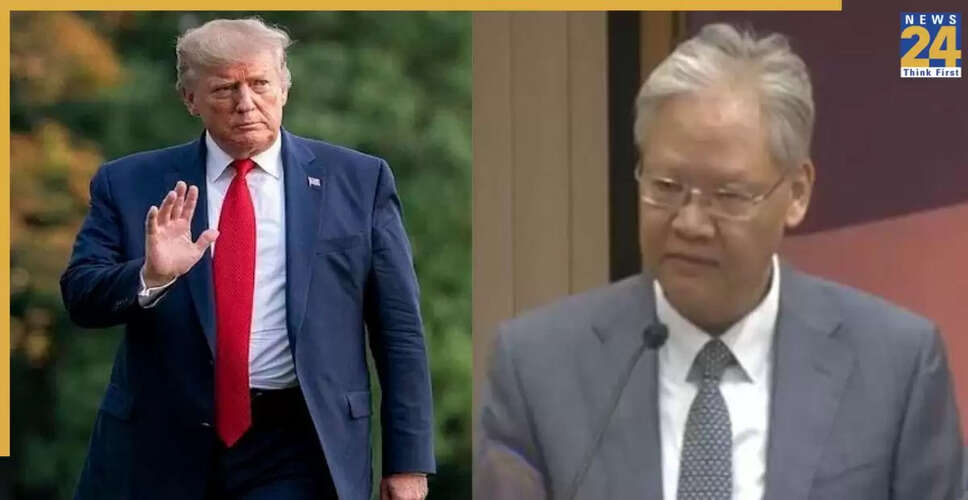
During a recent event in the capital, the Chinese ambassador expressed his nation's openness to Indian products entering the Chinese market. He criticized the ongoing tariff and trade wars, which he believes are undermining the global economic framework.
He remarked, "Power politics and a jungle law mentality are rampant, severely affecting international regulations and order."
The envoy emphasized the importance of cooperation between China and India, particularly in aiding developing nations to navigate challenges and uphold global fairness.
He stated that trade should focus on mutual benefits rather than a zero-sum game, cautioning against using trade as a means for selfish gains.
Xu Feihong pointed out that while the US has historically benefited from free trade, it is now leveraging tariffs to extract high prices from other nations, including imposing tariffs as high as 50% on Indian goods, which China opposes. He warned that remaining silent or accommodating such actions only encourages further bullying.
In July, the US announced a 25% tariff on Indian imports, which later escalated to 50% due to India's oil imports from Russia. Xu affirmed China's commitment to supporting India in maintaining a multilateral trading system centered around the World Trade Organization.
He also mentioned ongoing discussions between India and China regarding direct flights, expressing a desire for enhanced exchanges between the two nations.
India and the US began negotiations for a fair and balanced Bilateral Trade Agreement (BTA) in March, aiming for completion by late 2025, with the US seeking better access to India's agriculture and dairy sectors.
On April 2, 2025, President Trump enacted reciprocal tariffs on various countries, including India, and later extended the deadline for negotiations.
Commerce Minister Piyush Goyal indicated that the government is assessing the impact of these tariffs and will take necessary actions to protect national interests. Xu noted that Chinese Foreign Minister Wang Yi had productive discussions with India's National Security Advisor, leading to the formation of two groups to address border issues.
Wang Yi's visit included co-chairing the 24th round of talks on the boundary question with Ajit Doval and meetings with External Affairs Minister S. Jaishankar and Prime Minister Narendra Modi.
Xu emphasized that the border issue should not define the overall relationship between India and China, highlighting the importance of cooperation.
He also mentioned Prime Minister Modi's upcoming visit to China for the SCO Summit, which he believes will significantly impact bilateral relations. A working group is being established to ensure the visit's success.
During Wang Yi's visit, he conveyed a message from President Xi Jinping to Modi regarding the SCO Summit scheduled for late August.
Xu highlighted ten consensus points from the recent talks, noting the importance of maintaining peace along the border and addressing the boundary question through diplomatic means.
The two nations agreed to establish an Expert Group to explore boundary delimitation and improve border management, ensuring peace in the region.
They also discussed cooperation on trans-border rivers and agreed to reopen traditional border trading markets, while planning the next round of talks in China for 2026.
Both countries reaffirmed their commitment to multilateralism and maintaining a rules-based trading system, aiming to protect the interests of developing nations.