
China's Strategic Positioning in the Persian Gulf: The Role of Liaowang-1
Shifts in Maritime Signals
In recent days, vessels in the Persian Gulf have begun altering their transponder signals, indicating ownership and crew nationality as Chinese. This tactic serves as a protective measure against Iranian drones targeting perceived adversaries. Amid the ongoing conflict involving Iran and the coalition of Israel and the United States, sailors have quickly adapted to the new maritime hierarchy, even before analysts could finalize their evaluations.
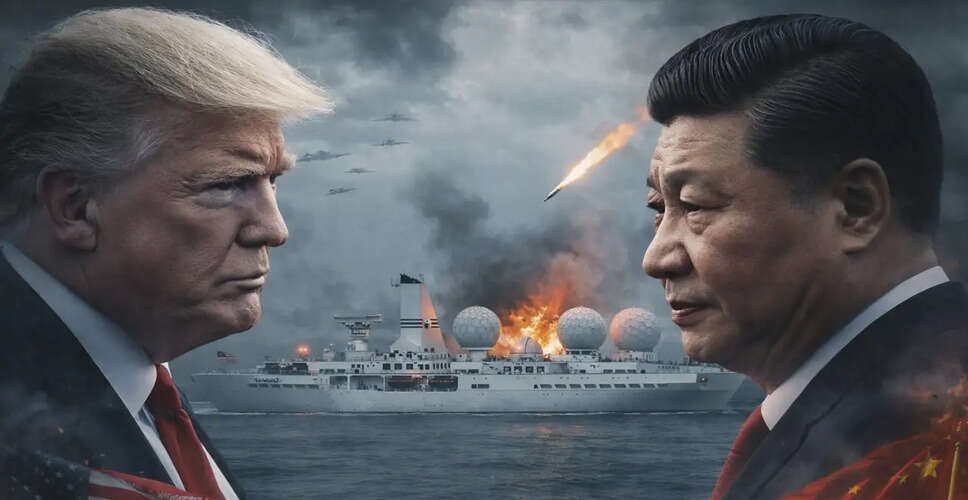
Currently stationed in the Gulf of Oman is the Liaowang-1, China's most sophisticated electronic reconnaissance ship, reportedly deployed at the request of Tehran. While it does not fit the traditional definition of a warship, having not engaged in combat or breached international law, it occupies a significant position in international waters, where it is legally permitted to operate.
Capabilities of the Liaowang-1
The Liaowang-1, according to Grey Dynamics, is equipped with multiple radar domes, high-gain antennas, and advanced signal processing systems designed for telemetry data collection, trajectory monitoring, and real-time military command support. This vessel, displacing over 30,000 tons and measuring 224 meters in length, is accompanied by Type 055 and Type 052D destroyers.
China officially categorizes these ships as satellite tracking and rocket telemetry vessels, a description that aligns with their operational capabilities. The Liaowang-1's mission includes providing a mobile platform for tracking satellites, missiles, and other space assets. Notably, the same technology used to monitor Chinese satellites can also track American naval carriers.
Intelligence Gathering and Implications
China's satellite network, comprising over 500 military and dual-use platforms, supports an intelligence-sharing framework that allows Iran to monitor U.S. military activities in the Indian Ocean, Gulf of Oman, and Persian Gulf. The presence of the Liaowang-1 and Type 055 destroyers in the Gulf of Oman grants Iran a continuous surveillance capability over U.S. Navy operations.
From a military standpoint, this development is significant for Tehran. With Iranian air defenses reportedly 80% compromised and limited radar coverage, the Liaowang-1's extensive sensor range can detect every carrier movement and missile launch corridor. While it remains unconfirmed whether intelligence is being actively shared with Iranian commanders, the ship's capabilities suggest a strategic advantage.
Historical Context and Current Dynamics
This situation echoes Cold War tactics, where Soviet AGI ships would shadow American carrier groups to gather intelligence. The introduction of Chinese destroyers and reconnaissance vessels in the Gulf of Oman has effectively diminished the U.S.'s ability to maintain operational secrecy. American strategists now face a critical question: while they can strike Iran, what counteractions can Iran take with real-time intelligence?
Recent satellite imagery released by Chinese sources, depicting a U.S. THAAD missile defense system in Jordan, may signal Beijing's willingness to showcase its intelligence capabilities.
China's Diplomatic Maneuvering
Although China has not directly engaged in the conflict, it has established itself as a crucial intelligence partner for one side while preserving diplomatic channels as a neutral entity. China's Foreign Minister, Wang Yi, emphasized the need for peace in the Middle East, stating that conflict should never have occurred.
Simultaneously, Beijing is engaging with foreign ministers from Tehran, Riyadh, and Washington, facilitating discussions on maritime passage through Hormuz. By positioning itself as a potential peacemaker, China is asserting its influence in the region, backed by the presence of the Liaowang-1, which continues to monitor developments closely.