
China's 'Dragon' and India's 'Elephant': A Soft Power Strategy in International Relations
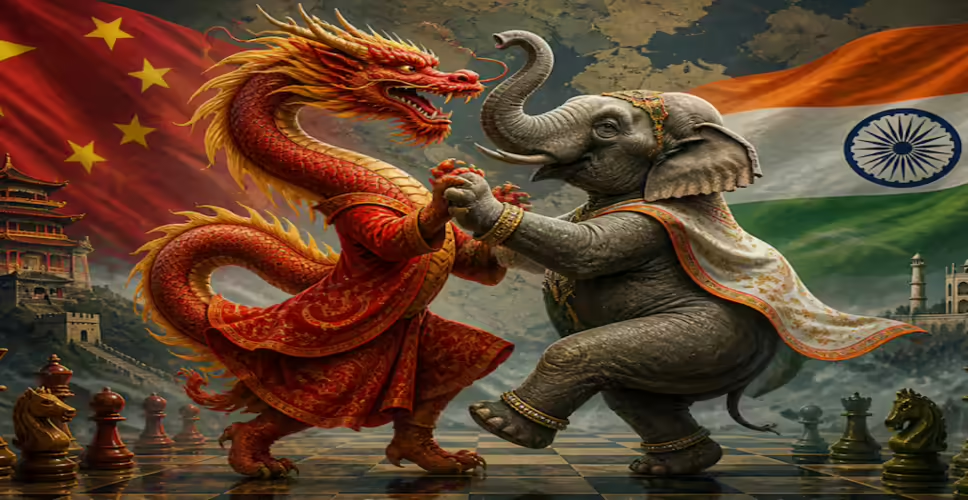

Understanding the Symbolism in International Relations
Experts in international relations and geopolitics suggest that China's portrayal of India as the 'Elephant' and itself as the 'Dragon' may not merely be cultural symbolism, but rather a calculated soft power strategy.
Analysts indicate that countries often shape their identities in global politics through symbols and imagery, which in turn influences their international image and impact. China has long employed narrative-building strategies that encompass media, cultural symbols, and diplomatic messages.
Furthermore, presenting India as the 'Elephant' reflects its ancient civilization, democratic framework, and cultural heritage, while simultaneously suggesting that it is a nation progressing at a slower pace. In contrast, the 'Dragon' image positions China as a symbol of strength, speed, and aggressive development.
Diplomatic experts assert that such imagery can be utilized to influence perceptions on global platforms. This approach aims to cultivate a specific mindset regarding a country's role and influence within the international community.
However, some specialists reject the notion of this being purely a strategic maneuver, advocating for a cultural interpretation. They argue that the use of animal symbols has historical and cultural significance in Asian civilizations, making it inappropriate to view this solely from a political lens.
In summary, the debate continues over whether the 'Dragon and Elephant' comparison is merely a cultural symbol or a potent soft power tool in international diplomacy aimed at shaping global perceptions.