
China Reaffirms Claims Over Shaksgam Valley Amidst India's Objections
China's Territorial Claims on Shaksgam Valley
On Monday, China reiterated its claims over the Shaksgam Valley, asserting that the infrastructure initiatives it has launched in the area are beyond criticism, according to reports from a news agency.
This statement follows India's declaration two days prior, where it emphasized its right to take necessary actions to protect its interests in the Shaksgam Valley. The spokesperson for India's Ministry of External Affairs, Randhir Jaiswal, affirmed on Friday that the territory is recognized as Indian land.
The Shaksgam Valley is a contested region that historically belongs to Jammu and Kashmir, which was ceded to China by Pakistan in 1963—a move that India has never acknowledged.
India has consistently raised objections to the infrastructure developments being carried out by China in this territory.
During a press briefing on Friday, Jaiswal reiterated that India does not recognize the so-called China-Pakistan boundary agreement from 1963, labeling it as 'illegal and invalid.'
He further stated, 'We do not acknowledge the so-called China-Pakistan Economic Corridor, which traverses Indian territory that is under illegal occupation by Pakistan.'
Jaiswal emphasized that the entire regions of Jammu and Kashmir and Ladakh are integral parts of India.
He noted that this position has been communicated to both Pakistani and Chinese officials multiple times, adding, 'We reserve the right to take necessary measures to protect our interests.'
The China-Pakistan Economic Corridor is a significant infrastructure project initiated in 2015 as part of China's Belt and Road Initiative, aimed at enhancing economic ties between China and Pakistan through a network of roads, railways, and energy projects.
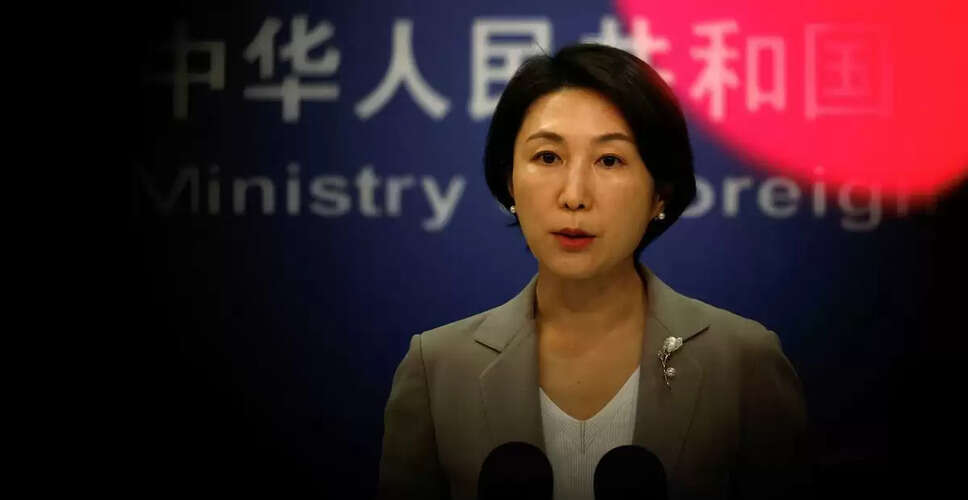
In response to Jaiswal's comments during a press conference in Beijing, Chinese Foreign Ministry spokesperson Mao Ning stated that the area in question is part of 'China's territory.'
Ning asserted that China's infrastructure projects in this region are justified, citing a long-standing agreement between China and Pakistan that has defined their border since the 1960s. She emphasized that these are the rights of both nations as sovereign entities.
Mao reiterated that the China-Pakistan Economic Corridor is intended to foster local economic growth and improve living standards.
She also clarified that such agreements and the CPEC do not alter China's stance on the Kashmir issue, which remains unchanged.
China has consistently argued that the Jammu and Kashmir dispute is a historical remnant that should be resolved peacefully in accordance with the UN Charter and relevant Security Council resolutions.