
China Faces Triple Threat: Economic Struggles, Political Turmoil, and Resource Challenges

China's Growing Challenges
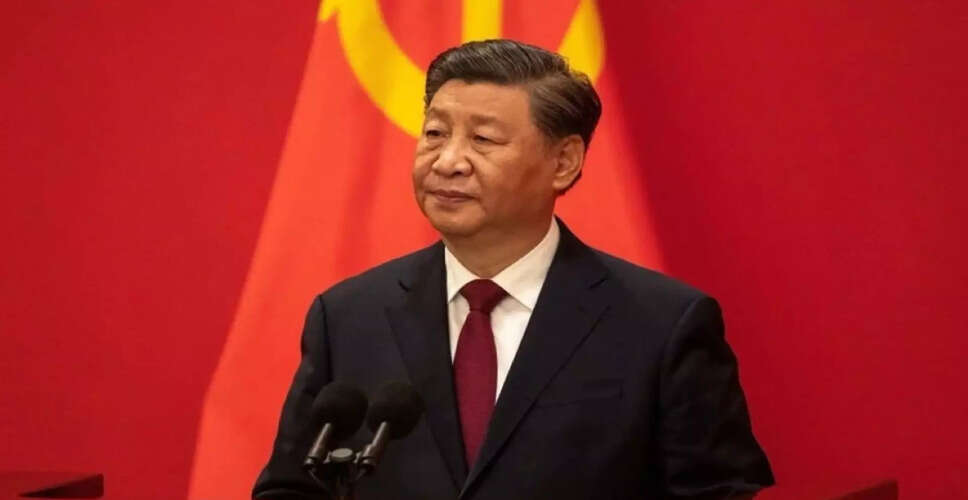
File image of China President Xi Jinping(Photo: @GlobalNewsGeo/X)
Kuala Lumpur, Nov 14: A recent report highlights that China is grappling with a trifecta of significant challenges: a potential leadership crisis, an economy in decline, and inadequate resources to maintain its domestic authority and international influence.
This situation threatens not only the nation’s economic growth and financial strategies but also the social contract between the government and its citizens, which has historically traded material prosperity and stability for limited freedoms and a muted public voice.
“While few are willing to openly discuss it, a political and economic storm is approaching China. Politically, President Xi Jinping has systematically removed any opposition and consolidated power within his own hands. His actions have left a legacy of resentment and turmoil within the state, party, provincial, and military leadership, despite the opaque nature of the Communist Party of China (CPC), which complicates definitive assessments,” the report from 'Free Malaysia Today' (FMT) states.
The economic forecast remains uncertain, with increasing risks looming on the horizon.
Some analysts still regard China as an unstoppable economic force, blending technological advancement with extensive manufacturing capabilities. However, others perceive a nation on the brink of a structural slowdown, hindered by an aging demographic, a prolonged downturn in the property sector, rising youth unemployment, and growing antagonism towards private businesses.
“Compounding these issues, the traditional engine of Chinese growth—exports—faces vulnerabilities due to policy shifts from the US and Europe, which are under pressure to respond to the latest economic challenges posed by China. More concerning is the country's weakening fiscal health. Concerns regarding unsustainable public debt are becoming increasingly pronounced, particularly in China, where taxation management is faltering,” FMT reported.
Over the past decade, personal income tax revenues have contributed an average of only 1.2 percent to GDP.
Ironically, despite its ideological stance on collective ownership, the Chinese government has increasingly relied on land sales for funding, thereby relinquishing control over a crucial asset.
While the CPC has shown its capability to suppress dissent, it has struggled to effectively collect revenue from its citizens, as noted in the report.
Moreover, government revenues and tax collections have been on a downward trend for almost ten years, regardless of the metrics applied.
“For instance, taxes (excluding social insurance contributions) plummeted by nearly six percentage points from 2012 to 2025, dropping from 18.4 percent of GDP to 12.6 percent. These figures are indicative of a struggling, lower-middle-income nation rather than an aspiring global superpower,” the report emphasized.
It underscored that any evaluation of the risk of China descending into chaos must consider the CPC’s history of maintaining control through coercive measures.
“A gradual decline characterized by sluggish growth, increasing discontent, and deteriorating public services seems more probable. However, even if the Chinese economic miracle concludes quietly rather than explosively, the repercussions could trigger another global shock,” it concluded.