
China Faces Criticism for Censorship Amid Flood Disaster
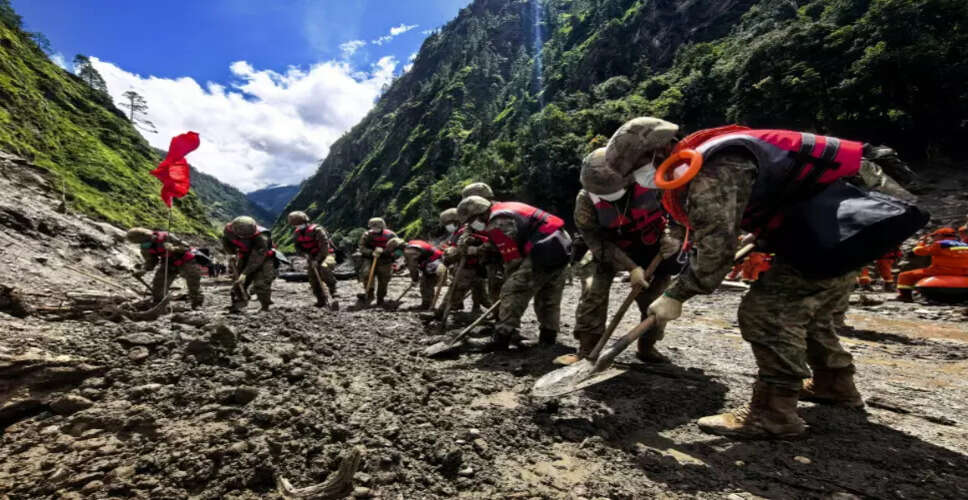

Censorship During a Crisis
Photo: @ians_india/X
New York, September 1: Human Rights Watch (HRW), a prominent advocacy organization based in the United States, has accused the Chinese government of implementing stricter censorship and controlling information flow in the wake of devastating flash floods affecting Nepal and Tibet.
HRW reported that the Chinese social media platform Weibo, which operates under strict government censorship, highlighted a memorial hashtag—'Mourning the victims of the Gyirong mudslide disaster'—among its trending topics, alongside several other disaster-related hashtags.
The leading post featured a news anchor from China Central Television (CCTV) reading a statement from the Politburo, where President Xi Jinping allegedly urged top officials to observe a moment of silence for the victims.
According to HRW, the voices of the victims are notably missing from the trending discussions, which primarily focus on the death toll, rescue efforts, and the details of the disaster.
Reports indicate that journalists have been prohibited from accessing the disaster area and interviewing affected families, forcing them to rely solely on official narratives. The organization claimed that at least ten individuals have faced punishment for spreading rumors related to the incident.
Furthermore, HRW pointed out that state media in China utilized AI-generated images and videos to depict the supposed causes of the mudslide. It noted that international media had circulated original footage showing the Gyirong Port overwhelmed by floodwaters, which is now being censored in China.
HRW emphasized that the censorship surrounding the floods in Tibet complicates efforts for families to find missing loved ones and obstructs a comprehensive understanding of the disaster and future responses. The organization remarked, "The pattern is familiar: restrict information, control the narrative, and commend the leadership's efforts. While AI may enhance the presentation, the underlying script remains unchanged."
HRW has consistently documented widespread censorship and self-censorship in China, especially in Tibetan regions. It highlighted that individuals can face imprisonment for allegedly threatening national security by sharing information with outsiders, while foreign journalists and independent investigators are often denied entry into Tibet without prior approval.
The catastrophic flood that impacted Nepal's Rasuwa district originated from the Tibetan region of China on August 26, traversing the Bhote Koshi River and resulting in hundreds of fatalities and extensive destruction in the Himalayan region.