
China Advances AI Independence Ahead of Trump-Xi Summit

China's Strategic Move in AI Technology
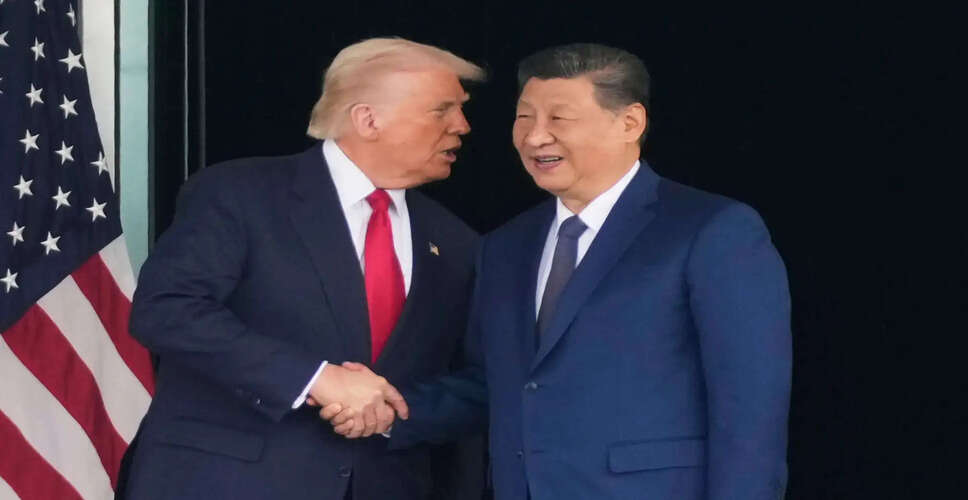
In a significant development just before President Trump's meeting with Chinese President Xi Jinping in Beijing, China has made strides to lessen its reliance on American technology in artificial intelligence. Recently, the Chinese startup DeepSeek revealed that its latest AI model has been tailored to operate on Huawei-made chips, marking a crucial step in China's quest for technological self-reliance.
A Major Milestone
While leading AI systems globally still depend on powerful semiconductors from Nvidia, Chinese firms are increasingly opting for domestic solutions. DeepSeek's achievement is particularly noteworthy as it demonstrates that Chinese AI models can now function effectively on local hardware for inference, which is essential for AI systems to respond swiftly and accurately to user inputs. Although the model was initially trained using Nvidia chips, its optimization for Huawei hardware signifies substantial progress toward establishing a fully independent Chinese AI ecosystem.
Strategic Timing Enhances China's Position
This announcement comes at a pivotal time, bolstering China's confidence ahead of the Trump-Xi summit. It indicates that U.S. restrictions on advanced chips have not hindered China's AI advancements. Analysts suggest that this growing self-sufficiency could reduce Washington's influence in future discussions. If China can effectively operate high-performing AI systems without American semiconductors, the impact of U.S. export controls will be significantly lessened.
Long-Term Consequences
For years, Beijing has invested heavily in minimizing its dependence on foreign technology. This recent progress suggests that these efforts are starting to yield results, even though China still trails behind in producing chips that match the scale and performance of Nvidia's offerings. As Trump and Xi engage in discussions, the dynamics of U.S.-China technological rivalry and the actual leverage each side possesses will be a crucial underlying theme, even if not overtly addressed. This situation continues to evolve as the summit in Beijing unfolds.