
Challenges Posed by Iran's Shahed Drones to US Defense Systems
Concerns Over Drone Threats
On Thursday, US officials informed Congress that Iran's Shahed drones present a significant challenge to American defense capabilities. They cautioned that air defenses may not be able to intercept every drone, leading lawmakers to express concerns that the situation could evolve into a logistical dilemma as interceptor supplies dwindle. Senator Mark Kelly emphasized that the US does not possess an infinite stock of defensive weapons, acknowledging that the drones are causing more complications than anticipated.
During a confidential briefing on Capitol Hill, officials from the previous Trump administration provided insights to lawmakers. Defense Secretary Pete Hegseth and Joint Chiefs Chairman Dan Caine noted that the drones operate at low altitudes and slow speeds, enabling them to evade radar detection. A report from a news outlet indicated that the briefers attempted to alleviate concerns by reminding lawmakers that US allies in the Gulf have a substantial number of interceptors stored.
Escalating Tensions with Iran
As tensions with Iran escalate, officials addressed Congress regarding the potential impact on global energy supplies. Trump stated that the US has successfully targeted numerous Iranian military installations and conducted strikes against Iranian leadership. However, officials clarified that their primary objective is not to prevent Iran from becoming a failed state but rather to dismantle its missile capabilities, halt its nuclear ambitions, and curb the arming of militant factions.
According to a source, officials did not disclose their expectations regarding the next supreme leader following the recent death of former leader Ali Khamenei, which occurred during a US-Israeli operation. Trump mentioned that many potential successors have also perished, prompting Iran to initiate its intricate succession process.
Duration of the Conflict
How Long Could Conflict Last?
Lawmakers expressed varying opinions on the potential duration of the conflict. Republican Senator Tommy Tuberville mentioned that officials, including Secretary of State Marco Rubio, estimated that the conflict might conclude within three to five weeks. Conversely, Senator Josh Hawley remarked that the meeting did not provide a definitive end date, suggesting an open-ended conflict.
House Minority Leader Hakeem Jeffries noted that the briefers indicated the war could persist for several weeks, but the administration failed to provide a clear rationale for initiating the conflict. He criticized the administration for not seeking Congressional approval prior to military action, emphasizing the need for lawmakers to restore Congressional authority over war matters.
Concerns Over Ammunition and Defense
Democrats expressed concerns regarding the quantity of ammunition utilized thus far and its implications for US defenses globally. Senator Kelly warned that the US cannot indefinitely supply interceptors, as Iran possesses the capability to produce numerous drones and missiles, leading to a potential logistical challenge for US defenses.
House Speaker Mike Johnson characterized the US involvement as an 'operation' rather than a war, asserting that military actions were taken in response to an imminent threat, while noting that Congress has not formally declared war. The lack of Congressional authorization for the conflict has drawn comparisons to the military actions in Afghanistan and Iraq, where Congress did approve military engagement.
Understanding Shahed Drones
What Is A Shahed Drone?
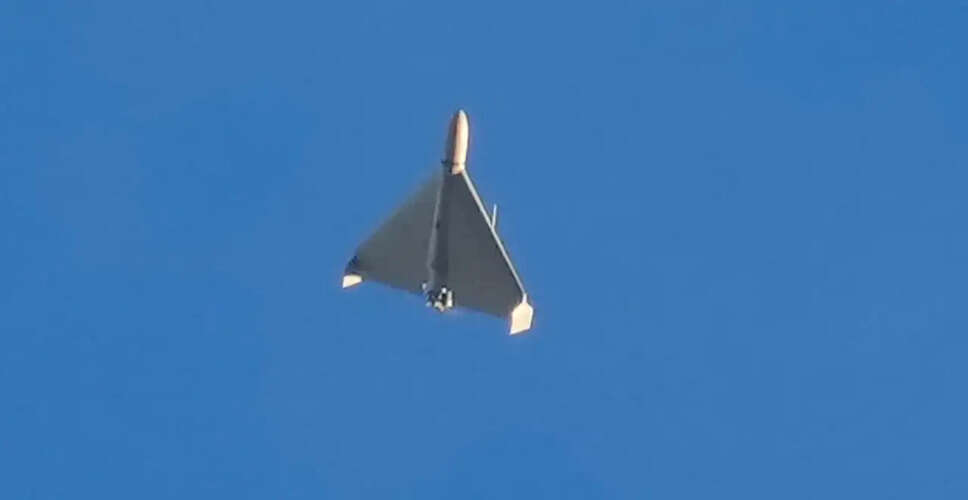
A Shahed drone is an Iranian-designed one-way attack drone utilized for long-range strikes. These drones are relatively simple and cost-effective, often referred to as 'loitering munitions' due to their ability to fly towards a target and detonate upon impact. Iran manufactures various models, including the Shahed-131 and Shahed-136.
- Operates at low altitudes and slow speeds, making radar detection challenging.
- Capable of long-range travel, covering hundreds of miles.
- Economical to produce, allowing Iran to deploy multiple drones simultaneously.
- Features a loud engine that produces a distinctive buzzing sound.