
Challenges of a Ground Invasion in Iran: Analyzing Operation Epic Fury

Overview of Operation Epic Fury
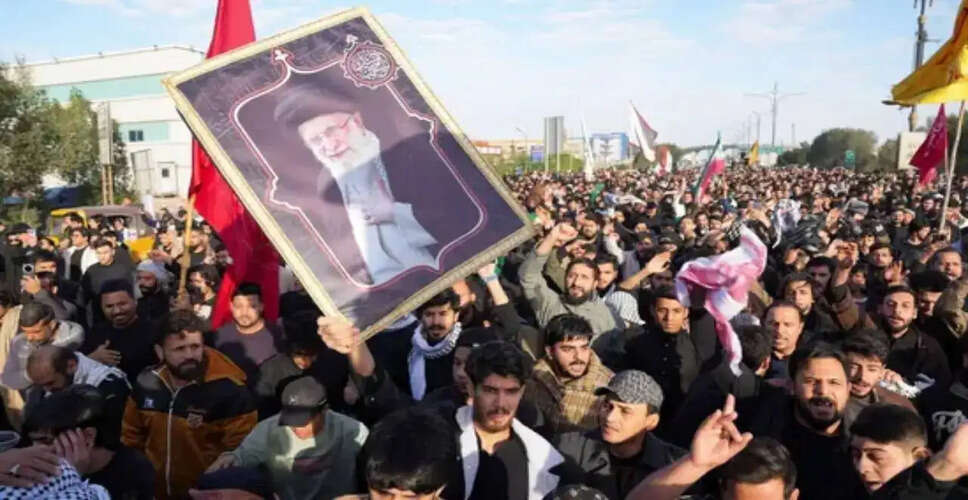
On February 28, 2026, the United States initiated Operation Epic Fury in collaboration with Israel, targeting the leadership of Iran due to concerns over its uranium enrichment and missile programs. By the following day, the operation had successfully eliminated key figures, including Supreme Leader Ayatollah Ali Khamenei, through airstrikes. However, a significant question arises regarding the feasibility of a ground invasion of Iran. Experts warn that Iran's vast size—three times larger than Iraq—along with its population and military capabilities, could complicate any military efforts, potentially transforming a US-led operation into a prolonged conflict rather than a swift victory.
Iran's Size and Military Strength
Size, Population and Military Capacity
Iran's territory is approximately three and a half times that of Iraq, housing over 90 million inhabitants compared to Iraq's 40 million before the 2003 invasion. This immense size presents significant challenges for any invading force. Iran boasts a substantial military presence, including regular army units, paramilitary forces, and the Revolutionary Guard, totaling hundreds of thousands of personnel. Additionally, Iran possesses a considerable arsenal of missiles and drones capable of targeting US bases and allied nations.
The geographical features of Iran, including extensive mountain ranges and deserts, create natural barriers that complicate military operations. Analysts suggest that the terrain favors insurgent tactics over traditional warfare, making any invasion more difficult.
Iran's Proxy Networks
Iran's Regional Networks Of Proxies
Iran is bolstered by a network of proxy militias, including Hezbollah in Lebanon, Houthis in Yemen, Hamas in Gaza, and various factions in Iraq. These groups enhance Iran's military capabilities with their drone and rocket technology, posing additional challenges for any invading forces. They have a history of targeting US and allied troops, adding complexity to the military landscape that an invading army would face.
Air Power Limitations
Air Power vs Ground Forces
The US-Israel operation, dubbed Operation Epic Fury, has primarily utilized air strikes. While Washington has stated it does not intend to engage in a prolonged conflict, military leaders recognize that there is no definitive timeline for the operation's conclusion. Experts argue that air power alone is insufficient for achieving regime change or maintaining control over such a vast area with a deeply rooted clerical governance structure. A military assessment indicates that the US lacks the necessary ground troops to effectively occupy and manage a country as large as Iran. Furthermore, a drawn-out conflict would impose significant economic and strategic burdens on the US, depleting munitions reserves and necessitating ongoing investments in advanced weaponry and defense systems.
Political Challenges Ahead
Political and Strategic Implications
Even if the US were to achieve military success against Iran, reshaping its political landscape to align with American interests would be a formidable challenge. Analysts caution that without clear objectives, the conflict could devolve into an indefinite struggle reminiscent of previous engagements in Iraq and Afghanistan. Iran's leadership has long anticipated potential disruptions, implementing measures to ensure continuity even in the face of targeted strikes, which diminishes the chances of a swift regime collapse.
The Risks of Ground Invasion
The Hard Math
The realities suggest that Iran's size and preparedness may render a quick conquest improbable. A full-scale ground invasion would entail significant risks for both the US and Israel, as they would confront challenging terrain, a formidable military force, intricate proxy networks, and a population that is largely nationalistic and resistant to foreign occupation. Without a well-defined exit strategy or a viable plan for governance post-conflict, the situation risks becoming protracted, potentially lasting for months or longer.