
Challenges Facing Tripura's Manu Valley Tea Estate Amid Climate Change
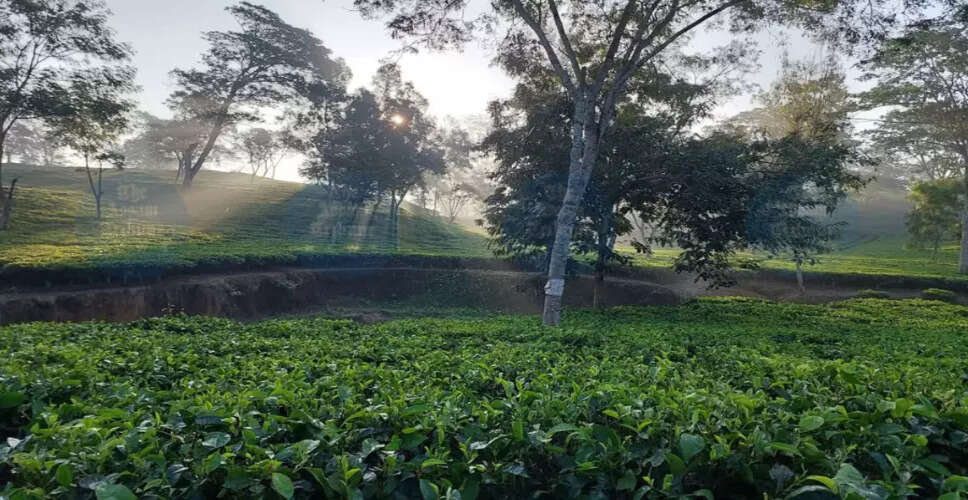
Impact of Climate Change on Tea Production
Kailashahar (Tripura), July 15: The Manu Valley tea estate, located in the Unakoti district of Tripura, is a significant contributor to the state's tea production, accounting for approximately 25% of the total output. However, the estate is currently grappling with the adverse effects of climate change and a severe labor shortage, leading to a decline in production over the past three years, as reported by an official on Tuesday.
Prabir Dey, the estate's HR Manager, noted that climate change poses a substantial threat to the garden's future. He explained that the average rainfall and its inconsistent distribution have negatively impacted tea production.
Tripura's annual processed tea output stands at 90 lakh kg, but the largest garden's production has dropped from 24 lakh kg in 2022 to 22 lakh kg in 2023 and further to 21 lakh kg in 2024, creating uncertainty for the management.
In response to the declining production, the estate has ceased green tea production and is now concentrating solely on the orthodox variety.
Dey highlighted that previously, tea gardens would receive rainfall starting in January or February, but now it begins in April. Excessive rainfall during May and June hampers the growth of tea bushes, which require evenly distributed rainfall for optimal growth.
The estate is also facing challenges due to a lack of skilled laborers, with only 300 of the 900 registered workers showing up regularly.
To address the labor shortage, the management has introduced tea plucking machines. Dey mentioned that they have acquired 50 machines, although manual plucking remains the best method for producing high-quality tea. Training has been provided to around 100 tribal villagers for tea plucking, but a gap in skilled labor persists.
Currently, tea laborers earn a daily wage of Rs 204, along with benefits such as provident fund, bonuses, gratuity, medical allowances, and free rations for their families. Many registered laborers opt for MGNREGA work or other jobs due to low wages in tea estates, exacerbating the shortage of pluckers.
Dey pointed out that the cost of tea production has been rising annually, while auction market prices have remained stagnant. The current selling price of tea from Tripura is Rs 206 per kg, while the production cost exceeds Rs 180 per kg.
He also mentioned that the government had previously withdrawn transport subsidies, increasing the financial burden on tea planters. In contrast, Assam planters receive a subsidy of about Rs 10 for producing green tea, a benefit that is minimal in Tripura.
Dey believes that establishing an auction center in Agartala would greatly benefit local planters by eliminating the need to transport finished tea to Kolkata or Guwahati.
The tea estate spans approximately 318 hectares and contains around 40 lakh tea bushes, with an average natural mortality rate of 2% among the bushes. To address this, the estate replants 5 to 10 hectares annually to maintain the garden's viability, emphasizing the importance of replanting for the survival of tea gardens.