
Challenges Faced by Street Children in Assam: A Call for Comprehensive Rehabilitation
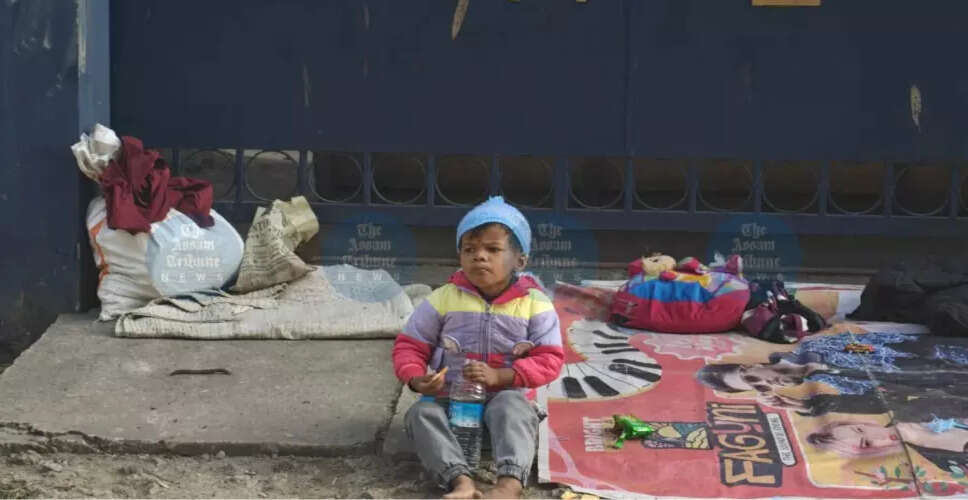

The Harsh Reality of Street Life for Children
A glimpse into the lives of children growing up on the margins of a city (Image)
For numerous children in Guwahati and various regions of Assam, the streets have become their workplaces and, at times, their homes, despite being unsuitable for their age.
These children spend their days scavenging for food, soliciting money from passersby, selling small items, or accepting any available work.
Separated from their families and educational institutions, they encounter dangers that can significantly impact their lives long before they reach adulthood.
Rescue teams step in, children's homes offer refuge, and various organizations strive for rehabilitation.
However, for child protection officials, the act of rescuing a child is merely the initial step.
The more challenging aspect lies in ensuring the child's safety, facilitating their return to education, providing ongoing care, and preventing them from reverting to the circumstances that led them to the streets or labor.
The Complexity of Child Rescue Operations
Rescue is only the start
The Assam State Commission for Protection of Child Rights reports that children are rescued from various locations within the state, including those involved in labor and those who have faced abuse.
"Children are currently working in numerous areas across Assam. We conduct rescues every month, and many have also been victims of abuse. We act promptly whenever we receive information," stated a representative from the commission, who preferred to remain anonymous.
The commission categorizes child labor cases into two groups: children under 14 years and adolescents aged 14 to 18.
While employing children under 14 is illegal, adolescents face specific restrictions regarding the nature and conditions of their work, including hours, breaks, and wages.
District Labour Task Forces and District Child Labour Task Forces collaborate with child protection authorities, while NGOs play a crucial role in identifying children, reporting cases, and facilitating rescue efforts.
Their involvement is particularly vital when children are dispersed across various locations or moving between districts.
Childline, the state's 24-hour emergency helpline for children aged 0-18, reportedly rescues around 100 children monthly. However, the continuous influx of cases highlights that mere rescue is insufficient to address the issue.
Challenges Post-Rescue
When children resist shelter
One of the most significant challenges arises after a rescue. Children who have spent a considerable amount of time on the streets may be hesitant to stay in children's homes, where the institutional environment can feel foreign and confining. Some express a desire to return to their families, while others prefer to go back to the familiar surroundings of their previous lives.
Rita Barman, district project coordinator of the Assam Centre for Rural Development (ACRD), explained that children with parents are typically counseled before being reunited with their families, while those without parental support are placed in children's homes.

For some children, the streets become an early introduction to life's harsh realities (Image)
However, keeping these children in shelters can be challenging. "These children often resist staying in children's homes. Some threaten to run away, expressing a desire to leave. We must exert significant effort to ensure they remain and receive the necessary support," Barman noted.
She emphasized the importance of formalities such as opening bank accounts to help rescued children access financial aid and other benefits.
Poverty and parental neglect are significant factors driving children to the streets or into exploitative work situations, according to Barman.
In some instances, parents themselves encourage their children to work due to financial difficulties, claiming they would struggle to provide adequate food otherwise.
For a rescued child, rehabilitation begins with the Child Welfare Committee (CWC), the statutory body responsible for children in need of care and protection.
ACRD State Coordinator Apurba Sarma explained that the child's statement is recorded before the CWC, which evaluates the case's circumstances.
“If parents or guardians can be located, they are notified, and the possibility of reuniting the child with the family is explored. If suitable family support is unavailable, the child may be placed in a children's home,” Sarma added.
The Path to Rehabilitation
The road after rescue
Counseling is another crucial aspect of the rehabilitation process, especially for children who have faced abuse, neglect, or challenging living conditions.
Sarma acknowledged that some children resist institutional placement, complicating their rehabilitation. “Financial assistance is available through a central fund to support children in need of care and protection and help secure their future,” he stated.
However, immediate protection does not necessarily address the underlying issues that led a child to the streets initially.
For children from economically disadvantaged families, simply sending them home may not suffice. Without financial support, parental counseling, and ongoing monitoring, the same pressures can drive them back into labor or begging.
Children lacking suitable guardians face additional challenges, necessitating sustained institutional and financial support.
Those who have experienced substance abuse or exploitation may require specialized counseling, medical treatment, and rehabilitation.
There is also the added complexity of children brought into Assam from other states. Authorities must establish their identities, trace their families, and coordinate with relevant agencies for safe restoration or rehabilitation.
The increasing number of vulnerable children raises concerns about the capacity of shelter facilities, the availability of trained counselors, and the ability of district-level child protection mechanisms to monitor children over the long term.
The reports from the Assam State Commission for Protection of Child Rights and ACRD highlight a problem that cannot be resolved through rescue operations alone.
Poverty and neglect remain central to why children find themselves in vulnerable situations, while rehabilitation requires ongoing intervention after the initial rescue.
For many children, the street is not merely a place to work or seek food; it may be the only environment they have ever known. This reality makes rehabilitation more than just providing a bed and a roof.