
Challenges Faced by Flood-Affected Families in Upper Assam

Impact of Floods on Families
Severe destruction and loss of life due to unprecedented flooding in Upper Assam regions (Photo: @himantabiswa/X)
For families affected by floods in Upper Assam, the initial relief of Rs 15,000 is insufficient compared to the expenses required for rebuilding.
In Sivasagar, the cost of 2,000 bricks delivered to impacted areas like Nazira has surged to approximately Rs 22,000, while cement prices have reached up to Rs 490 per bag, and a truckload of sand is priced around Rs 4,500.
“Currently, cement prices in Sivasagar vary from Rs 430 to Rs 490. The cost of bricks is about Rs 1,000, and delivering 2,000 bricks to areas like Nazira costs around Rs 22,000 per truck. Sand prices have increased to Rs 4,500 due to scarcity, up from Rs 3,800,” stated a local construction material supplier.
The rising costs underscore the significant disparity between the relief provided to flood-affected families and the actual expenses involved in restoring their homes.
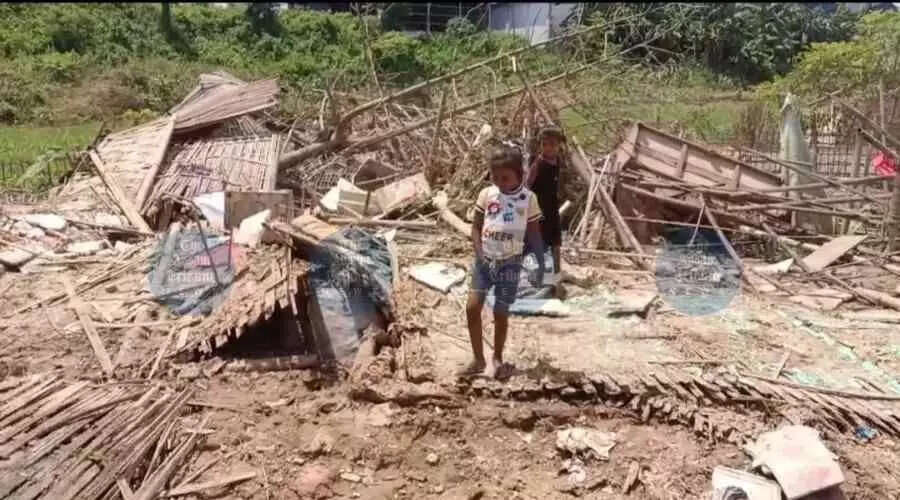
Children amidst the ruins of their former home, devastated by floods
For those who have received the Assam government's Rs 15,000 aid, the funds are being stretched thin across various needs, including home repairs, lost livestock, essential household items, and disrupted livelihoods. Many families, however, have yet to see this initial support.
This situation forces families to make tough decisions on how to allocate their limited resources—whether to fix a damaged house, replace lost animals, or purchase essential items to restart their lives.
In Sivasagar, the disparity in relief distribution is evident. Residents from some remote areas reported that regions receiving more media attention were better supported by NGOs and other organizations, while less visible villages continued to struggle.
“NGOs have constructed temporary shelters and provided supplies like furniture and household items. The Gorkha Union has built homes in Nepalikhuti. We haven’t received any government compensation,” remarked Dipankar Baruah, a local resident.
Baruah noted that the visibility of Nepalikhuti through media coverage led to substantial relief for families there, while many remote villages still awaited adequate support.
For some families, the issue is not whether Rs 15,000 is sufficient; they have not received any assistance at all.
In Jorhat, a flood-affected family shared that they have been living on an embankment for over a month after losing their cattle.
“We’ve been on the embankment for more than a month. We lost our cattle and have no other option but to stay here,” the resident explained.
While they received food essentials, they have not seen the Rs 15,000 compensation or any other government aid they anticipated.
“We haven’t received any compensation, the Rs 15,000, elder pension, or Orunodoi. We don’t understand why. We are getting food essentials, but no other support,” the resident added.
For those who have received the funds, the assistance has provided some immediate relief, but it must be divided among competing needs.
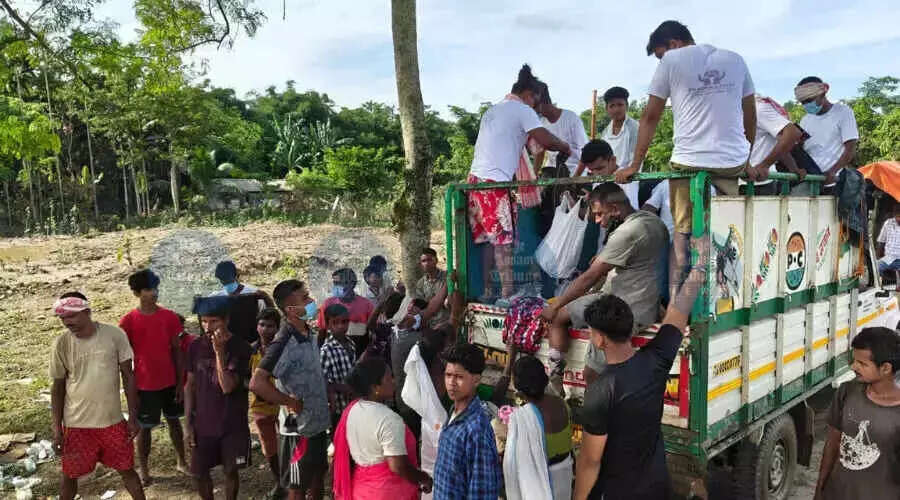
Residents from some remote areas noted that regions receiving more media coverage received better support from NGOs
In Golaghat, beneficiaries acknowledged that while the funds helped address some immediate needs, they fell far short of covering their total losses.
“The floodwaters not only damaged homes but also devastated crops on agricultural land. Many people lost livestock, including cows, goats, and buffaloes,” said Nilima Dutta, a local resident who received the relief funds.
The government claims that assistance has reached most affected households.
According to official reports, the first installment of Rs 15,000 has been distributed to approximately 1.17 lakh flood-affected families, with most households reportedly receiving aid.
On September 2, the government allocated an additional Rs 25.12 crore under Phase IV of interim flood relief, benefiting 16,746 families in Sivasagar, Charaideo, and Jorhat.
This assistance was directly transferred to beneficiaries' bank accounts through Direct Benefit Transfer.
The state is also evaluating the extent of the damage. In Sivasagar, the district administration is conducting a Rapid Damage Assessment Survey to assess flood-related losses.
At the national level, the Centre has approved housing assistance of approximately Rs 5,000 crore under the Pradhan Mantri Awas Yojana-Gramin for families affected by floods in Assam, along with initiatives to bolster agricultural and rural development support.
Union Minister for Ports, Shipping and Waterways Sarbananda Sonowal has assured that the Centre will provide all possible assistance to rehabilitate those affected by floods in the three most severely impacted districts.
However, the gap between immediate relief and sustainable recovery persists.
For families working to rebuild homes, replace livestock, and restore agricultural activities, Rs 15,000 serves as a starting point rather than a comprehensive solution. For those still awaiting inclusion in relief programs or assistance, even this initial support remains elusive.
While floodwaters have receded in much of Upper Assam, for thousands of families, recovery is just beginning, and the costs associated with rebuilding are proving to be significantly higher than the initial relief amount suggests.