
Challenges and Strategies in Flood Rescue Operations in Upper Assam

Understanding the Flood Rescue Dynamics
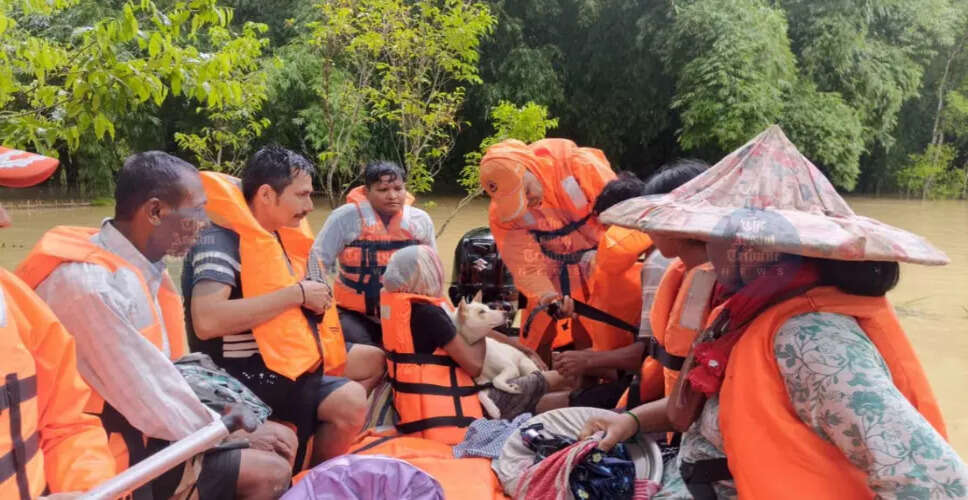
NDRF personnel evacuate flood-affected residents to safety during recent floods in upper Assam
Rescue operations during floods extend beyond merely reaching those in distress; a significant challenge lies in convincing individuals to evacuate before conditions escalate to life-threatening levels, as highlighted by personnel from the NDRF and SDRF amid one of Upper Assam's most severe floods in sixty years.
Rescue teams faced treacherous terrains, rising waters, and chaotic circumstances, with the reluctance to evacuate and inadequate household preparedness posing substantial obstacles.
In an interview, Kuldeep Sharma, Second-in-Command of the 1st Battalion NDRF, and Aditya Borgohain, an SDRF emergency rescuer, shed light on the complexities of flood rescues, the necessity of early preparedness, evacuation priorities, and the critical role of community awareness in saving lives.
Key Challenges in Flood Rescue Operations
AT: What are some of the biggest challenges NDRF teams face during floods in Upper Assam?
Kuldeep Sharma: One of the primary challenges is convincing residents to evacuate. While they recognize the seriousness of the situation, many tend to wait until the last possible moment. We empathize with their emotional ties to their homes, often built over many years. However, when water levels rise swiftly, evacuation becomes the safest choice. Additionally, the geographical landscape can change drastically when submerged, complicating navigation and rescue efforts.
Response Time and Prioritization in Rescues
AT: How quickly does NDRF respond when flood conditions worsen suddenly?
Sharma: On August 19, a team was already stationed in the area, and our alert unit responded within approximately 20 minutes. However, this quick response does not guarantee immediate rescue, as reaching affected locations during floods can be extremely challenging due to altered geography.
AT: How do you prioritize rescues when multiple distress calls are received?
Sharma: We typically encounter two types of situations: individuals in genuine immediate danger and those who may be panicking. Both groups may urgently call for help. Our personnel must evaluate the actual level of risk and determine which areas require immediate intervention, prioritizing women, children, and the elderly.
The Importance of Community Preparedness
AT: What role does community preparedness play when rescue teams cannot reach affected areas immediately?
Sharma: Community preparedness is vital. While we and the authorities are available, immediate access to every affected individual is not always possible. Therefore, it is crucial for people to take basic precautions. They should actively engage in awareness programs conducted by government agencies and emergency responders. Although various agencies hold camps and awareness sessions, it is essential for individuals to implement what they learn. Instead of merely reacting, proactive measures are necessary.
Preparation Before Floods Arrive
AT: What should residents in flood-prone areas do before the water arrives?
Aditya Borgohain, SDRF: Residents should undertake basic preparations ahead of time. This includes having bamboo rafts ready and creating simple floating devices using plastic bottles and other locally sourced materials. While we conduct awareness programs, participation does not always equate to preparedness. Many remain unprepared when floods actually occur.
Understanding Risks and Limitations
AT: Why do individuals continue to take risks despite knowing the dangers of floodwaters?
Borgohain: A frequent mistake is that individuals observe a strong current, recognize their inability to swim or manage themselves in such conditions, yet still enter the water to rescue someone. Tragically, lives have been lost in these scenarios. It is crucial for people to acknowledge their limitations. If the current is powerful and one cannot swim, entering the water poses a significant risk to their life.
Broader Disaster Preparedness in Assam
AT: Is disaster preparedness in Assam limited to floods?
Borgohain: No, Assam is also susceptible to earthquakes, so residents should ensure their homes are disaster-ready and take necessary precautions during construction. Preparedness should encompass various types of disasters.
Manpower and Response Challenges
AT: Does SDRF have sufficient manpower?
Borgohain: Currently, there are approximately 533 SDRF personnel in Assam, but more manpower is essential. Although the government recruits annually, additional personnel are needed.
AT: What occurs when numerous individuals require assistance simultaneously?
Sharma: Chaos and panic present significant challenges. When multiple rescue calls come in from various locations, responders must assess who is genuinely in immediate danger. Experience plays a crucial role in this process, as we evaluate the situation and prioritize those needing urgent help.
Final Thoughts on Flood Preparedness
AT: What is the most important message for residents in flood-prone areas?
Sharma: Do not wait until the last moment to evacuate. When water levels rise rapidly, prioritizing survival is essential. Residents should maintain a basic disaster kit, engage in awareness programs, and avoid assuming that rescue teams will always be able to reach them promptly.
AT: What is the biggest lesson learned from the recent floods?
Sharma: While a rescue team can save lives, preparedness can save critical time before help arrives. Rescue agencies will continue to monitor alerts and coordinate with district administrations, but individuals also have a role to play. When water begins to rise, it may already be too late to start preparing.
Borgohain: Disaster preparedness should not commence post-disaster. Individuals must prepare in advance to ensure their homes and families are ready. The goal should be to act before an emergency escalates into a crisis.