
Challenges and Opportunities in Himalayan Tourism: A Call for Sustainable Practices

The Himalayan Region: A Natural Wonder
The Himalayas, often referred to as 'the roof of the world,' are among the most extraordinary natural formations globally. Spanning across India, Nepal, Bhutan, China, and Pakistan, these mountains are not only a vital geographical feature but also a source of water, biodiversity, and cultural significance. Over recent decades, this region has transformed into a prominent international tourist hotspot, attracting numerous visitors each year who come to hike, worship, and immerse themselves in nature. However, the burgeoning tourism sector presents significant challenges, threatening the delicate environment and local communities. The current scenario necessitates a reevaluation of tourism practices to maximize economic benefits while minimizing harm.
Surge in Himalayan Tourism
In recent years, tourism in the Himalayas has surged dramatically. Improved connectivity, the influence of social media, and rising disposable incomes have made even the most secluded destinations accessible. Popular spots like Shimla, Manali, Leh-Ladakh, and various hill stations in Uttarakhand are witnessing a significant influx of tourists, especially during peak seasons. Adventure activities such as trekking, mountaineering, river rafting, and skiing have further enhanced the region's appeal. Millions flock to pilgrimage sites like Kedarnath, Badrinath, Amarnath, and Vaishno Devi, adding another layer to the tourism landscape. While this influx generates economic benefits and job opportunities, it has also exceeded the area's carrying capacity.
Environmental Concerns Arising from Mass Tourism
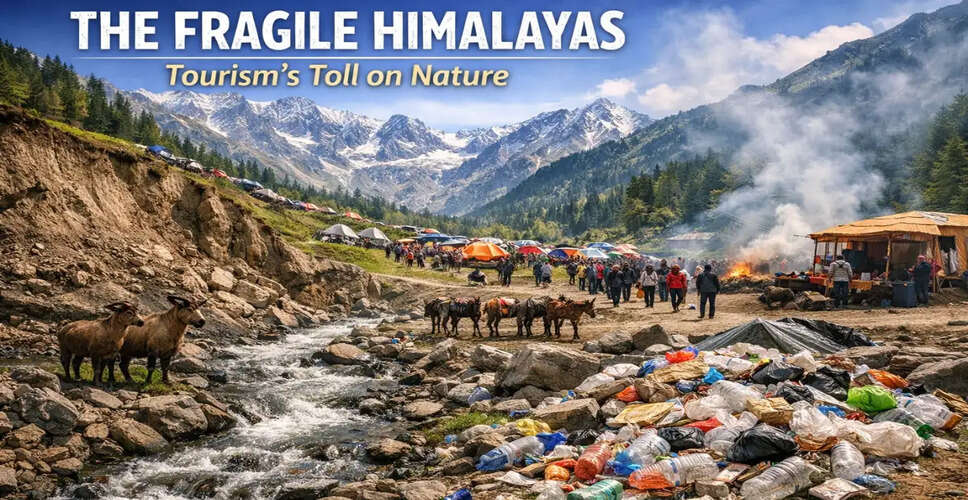
A major consequence of increased tourism in the Himalayas is environmental degradation. The region's ecosystems are highly vulnerable, and even minor disturbances can have lasting effects. Unfortunately, these ecological limits are frequently ignored in the pursuit of tourism. Waste management has become a critical issue, with plastic bottles, packaging, and other non-biodegradable materials accumulating along trekking routes, rivers, and campsites. Many areas lack proper waste disposal infrastructure, leading to soil and water contamination from improper waste disposal methods.
Deforestation is another pressing environmental issue, as forests are cleared to accommodate hotels, resorts, and infrastructure for tourists. This not only disrupts wildlife habitats but also destabilizes mountainsides, increasing the risk of landslides. Additionally, air and noise pollution are on the rise due to the growing number of vehicles in these alpine regions.
Water Scarcity and Resource Management
Water scarcity is a significant challenge in many Himalayan tourist destinations. Despite being home to numerous rivers and glaciers, the region faces severe water shortages. Factors such as overconsumption, mismanagement, and unequal distribution contribute to this crisis. Hotels and resorts require substantial water for various activities, and during peak tourist seasons, demand often exceeds supply, leading to restrictions imposed by local authorities. In some cases, water must be transported from distant sources, increasing costs and harming the environment.
Local residents bear the brunt of this issue, often finding themselves with insufficient water for personal use while tourism-related businesses thrive. This disparity can lead to conflicts between locals and tourism enterprises. Energy consumption is another concern, as many remote areas rely on diesel generators, contributing to pollution.
Climate Change and Its Impact on Tourism
The Himalayas are particularly susceptible to the effects of climate change. Rising temperatures are causing glaciers to melt, altering river water levels and increasing the risk of Glacial Lake Outburst Floods (GLOF). Changes in snowfall patterns are affecting local livelihoods and winter tourism. Ironically, tourism itself contributes to climate change, as increased travel generates higher greenhouse gas emissions, particularly from flights and road transport. Deforestation and construction activities further diminish the region's capacity to absorb carbon dioxide.
Moreover, the interplay between tourism and climate change can create a vicious cycle. As environmental degradation diminishes the scenic beauty of popular destinations, new tourist attractions emerge, extending the negative impacts to previously untouched areas.
Overcrowding and Infrastructure Challenges
Overtourism is a significant issue in the Himalayan regions, particularly during holidays and peak travel periods, leading to overcrowding and traffic congestion. The existing infrastructure is often ill-equipped to handle such high volumes of visitors, with limited transport networks and roads that are prone to damage. This strain on infrastructure increases the likelihood of accidents and disasters. Unplanned urbanization exacerbates the situation, with constructions frequently violating environmental and safety regulations.
Cultural Impact on Local Communities
While tourism has brought economic benefits to Himalayan villages, creating jobs in crafts, transport, and hospitality, these advantages are not evenly distributed. Local residents often receive minimal compensation, as many hotels and tourism businesses are owned by outsiders. Additionally, the benefits of tourism tend to be temporary and undermined by low wages and part-time employment.
Cultural degradation is another concern, as the demands of tourists can lead to the commercialization of local traditions, languages, and lifestyles. The essence of crafts, festivals, and rituals may become diluted, and rising living costs associated with tourism can strain local communities, driving up prices for food, housing, and services.
Disaster Risks Linked to Tourism
The Himalayas, due to their geological youth, are highly vulnerable to natural disasters such as earthquakes, floods, and landslides. Tourism activities can exacerbate these risks, with construction on slopes, deforestation, and inadequate drainage systems increasing the likelihood of landslides. Encroachments near rivers can heighten flood risks. Recent disasters in Himachal Pradesh and Uttarakhand illustrate the potential consequences of unchecked tourism growth. Tourists may unknowingly venture into hazardous areas without proper guidance.
Policy and Governance Challenges
Ineffective policy implementation and governance issues are significant contributors to the challenges facing the Himalayan tourism sector. While policies exist, they are often poorly enforced. Carrying capacity assessments are rarely conducted, and Environmental Impact Assessments (EIAs) may be inadequately performed or ignored altogether. Coordination among government agencies is often lacking, and political influence and corruption can compromise sustainable development initiatives. Local communities are frequently excluded from decision-making processes, resulting in ineffective policies.
Towards Sustainable Tourism in the Himalayas
Despite the challenges, achieving sustainable tourism in the Himalayas is possible. First, it is crucial to regulate tourist numbers based on the region's carrying capacity. Implementing a system that encourages visits during off-peak seasons can help alleviate pressure. Second, waste management systems must be improved to address the growing waste crisis.
Third, prioritizing green infrastructure is essential, including the construction of eco-friendly buildings, the use of alternative energy sources, and effective water management practices. Initiatives such as homestays and community-based tourism should be promoted to ensure that local populations benefit from tourism. Fourth, education and awareness are vital; locals should be trained in sustainable practices, while tourists need to be informed about responsible behavior. Lastly, the proper implementation and monitoring of policies are critical for long-term success.
Preserving the Himalayan Heritage
The Himalayas represent more than just a mountain range; they are a crucial part of the world's natural and cultural heritage. The region's biodiversity, water resources, and climate regulation extend beyond its borders. When managed correctly, tourism can serve as a powerful tool for conservation and development. However, neglecting these responsibilities could lead to disastrous consequences for this precious region. It is imperative that all stakeholders—governments, businesses, local communities, and tourists—take collective responsibility to safeguard this fragile environment. If not, future generations may inherit a diminished version of the Himalayas, losing their unique character, balance, and purity.
Contributors
Dr. Aman Kumar Bhardwaj
Dr. Shikha Sharma
Apex Institute of Management-Chandigarh University