
Centre Proposes Eco-Sensitive Zone Around Bherjan-Borajan-Padumoni Wildlife Sanctuary
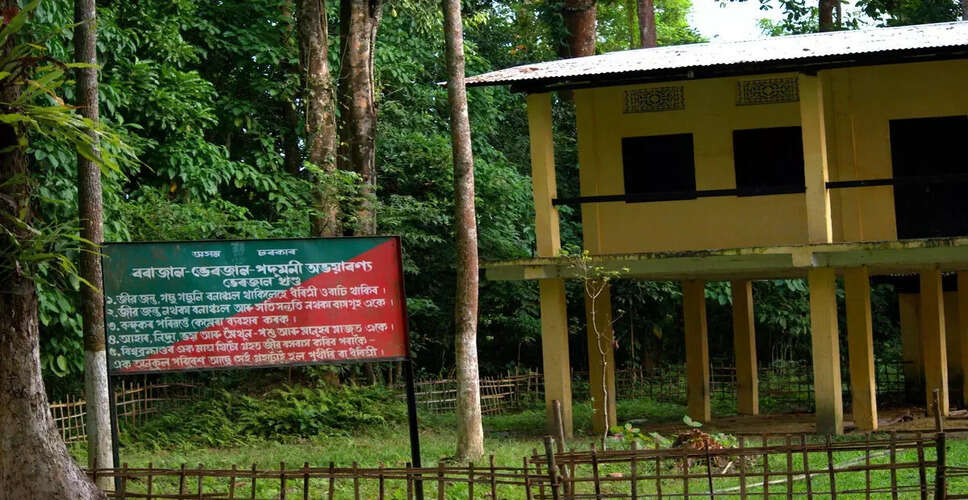

New Eco-Sensitive Zone Proposal
Bherjan-Borajan-Padumoni Wildlife Sanctuary (Photo: Tripadvisor / Google)
New Delhi, Nov 5: The government has put forward a plan to designate a uniform one-kilometre radius around the Bherjan-Borajan-Padumoni Wildlife Sanctuary in Assam's Tinsukia district as an Eco-Sensitive Zone (ESZ). This initiative aims to enhance the protection of the area's rich biodiversity while regulating development activities in proximity to the sanctuary.
The Ministry of Environment, Forest and Climate Change has issued a draft notification under the Environment (Protection) Act, 1986, inviting feedback and objections from the public who may be impacted by this proposal.
Officials indicated that the goal of this proposal is to find a balance between conserving biodiversity and addressing the livelihood needs of local communities by integrating development activities within a controlled ecological framework.
Covering an area of 7.21 square kilometres, the sanctuary consists of three distinct forest patches: Bherjan (1.06 sq km), Borajan (1.76 sq km), and Padumoni (4.39 sq km). These areas were collectively designated as a wildlife sanctuary by the Assam government on October 13, 1999, primarily to safeguard the region's primate population.
The proposed ESZ is designed to act as a protective buffer around the sanctuary, where specific industrial, commercial, tourism, and land-use activities will be either restricted or regulated to reduce their ecological footprint.
The sanctuary is home to remnants of Assam Valley Tropical Wet Evergreen Forest, Eastern Seasonal Swamp Forest, and Assam Alluvial Plains Semi-Evergreen Forest. Its flora includes species such as Mekai, Morhal, Hingori, Uriam, and Tezpat, which support a diverse array of wildlife.
Notable fauna in the sanctuary includes the hoolock gibbon, pig-tailed macaque, Assamese macaque, capped langur, stump-tailed macaque, leopard, golden jackal, wild pig, and barking deer.
The area also hosts various bird species, such as the lesser adjutant stork, crested serpent eagle, hill myna, and green magpie.
According to the draft framework, the Assam government must develop a Zonal Master Plan within two years following the final notification's publication in the Official Gazette.
This plan will be created in collaboration with local communities and relevant government departments, including those focused on environment and forests, agriculture, revenue, tourism, urban and rural development, irrigation, flood control, and public works.
The plan will identify existing land uses, including forests, agricultural land, settlements, water bodies, and horticultural areas, while incorporating strategies for ecological restoration, watershed management, groundwater conservation, and soil and moisture preservation.
The draft notification suggests that forests, horticultural areas, agricultural land, parks, and recreational open spaces should not be transformed into large commercial or residential complexes or industrial zones.
However, certain activities that cater to local residents' needs may be allowed, provided they meet specified safeguards and receive necessary approvals.
These activities may include upgrading existing roads, developing essential civic infrastructure, establishing non-polluting small-scale and cottage industries, and providing local amenities that support ecotourism, such as homestays.
Tourism activities within the proposed ESZ will be regulated by a Tourism Master Plan developed in line with the area's ecological carrying capacity.