
Central Government to Review Bengaluru Metro Proposals After Karnataka Approval
Bengaluru Metro Developments
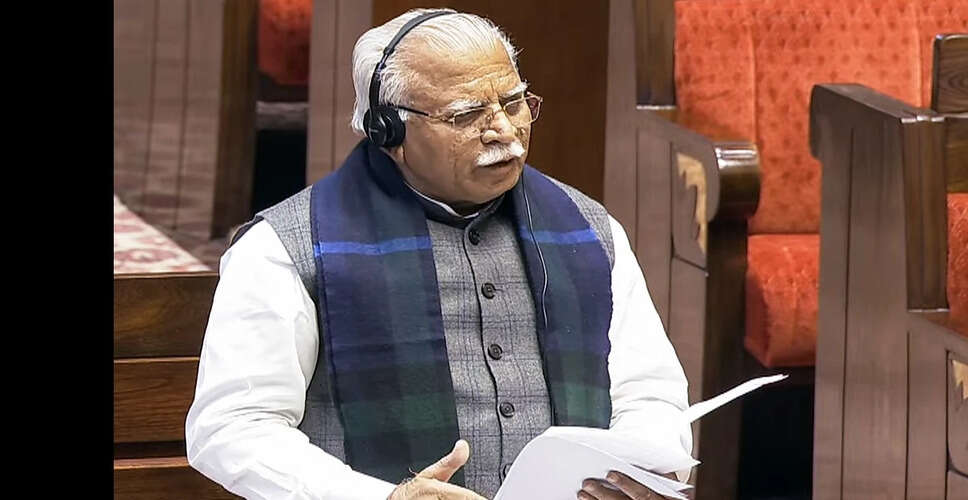
The Union Minister for Housing and Urban Affairs, as well as Power, Manohar Lal Khattar, announced on Friday that the central government will consider proposals for phases two and three (A) of the Bengaluru Metro once it receives approval from the Karnataka government.
During a review of various urban initiatives in Bengaluru, Khattar urged the state government to prioritize waste management inherited from previous administrations and to take advantage of the Special Assistance Scheme for Capital Investment (SASCI) for urban reforms.
Expressing satisfaction with the progress of various missions, he mentioned that the revised cost of the Bengaluru Metro (Phase Two) project will be evaluated once it receives approval from the state cabinet.
According to an official statement, Bengaluru currently has around 75 kilometers of operational metro network, with an additional 145 kilometers under construction. Recently, the central government approved a 45-kilometer Phase Three metro network at a cost of ₹15,600 crores.
The state government has submitted a proposal for approximately 37 kilometers of the Bengaluru Metro Phase Three (A), with an estimated cost of around ₹28,400 crores.
Khattar stated that the project will receive approval from the central government following a response from the Karnataka government. He also encouraged the state to focus on inherited waste management and promote water reuse.