
Central Government Launches Sarthak-PDS Scheme to Enhance Food Security
The Indian government has introduced the Sarthak-PDS scheme, aimed at enhancing food security for over 81 crore beneficiaries. With a substantial budget of ₹25,530 crore allocated until 2031, this initiative seeks to modernize the public distribution system through AI-driven solutions. The program includes the launch of three key modules designed to improve beneficiary management and grievance redressal. The government anticipates significant benefits, including reduced food grain transportation distances and annual savings in logistics costs. This comprehensive approach marks a pivotal step towards a more transparent and efficient food distribution system in India.
| May 27, 2026, 18:43 IST

Introduction of Sarthak-PDS Initiative
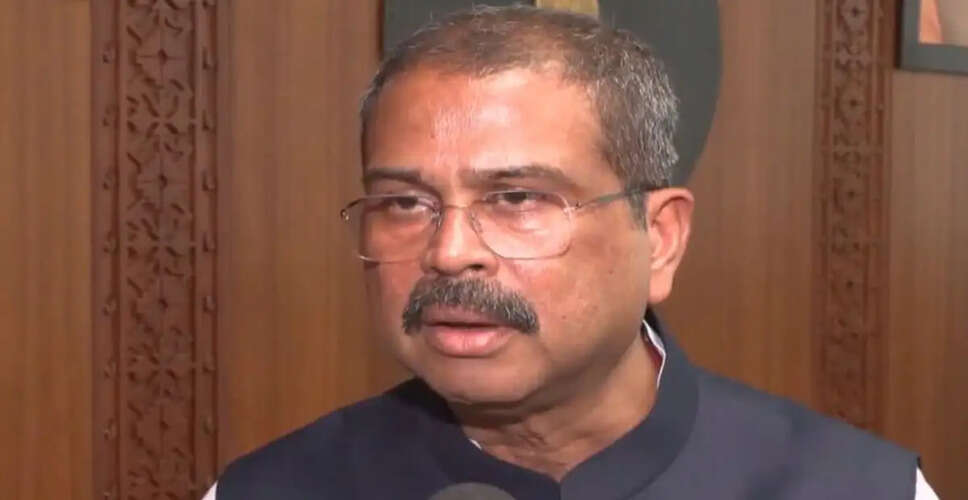
The Union Education Minister, Dharmendra Pradhan, announced on Wednesday that the Sarthak-PDS initiative aims to bolster food security for 81.35 crore beneficiaries under the National Food Security Act (NFSA). A central allocation of ₹25,530 crore has been designated for this initiative, which will remain in effect until March 31, 2031. The Minister emphasized that the integration and continuity of this scheme represent a significant step towards establishing a transparent and citizen-centric Public Distribution System (PDS).
Cabinet Approval and Objectives
He stated, "The Cabinet has approved the integration and continuation of Sarthak-PDS as a comprehensive scheme, marking a crucial step towards building an integrated, transparent, and citizen-focused public distribution system under the leadership of Prime Minister Narendra Modi." The government unveiled the Sarthak-PDS scheme with a total outlay of ₹25,530 crore on Wednesday. This initiative aims to modernize the PDS, enhance logistics, and implement AI-based systems for beneficiary management and grievance redressal. This announcement was made during a Cabinet briefing by the Union Minister for Information and Broadcasting, Ashwini Vaishnaw. According to the details shared during the briefing, the Sarthak-PDS scheme will be operational from April 1, 2026, to March 31, 2031, for a duration of five years. It includes support for state agencies in inter-state food grain transportation, assistance for fair price shops, and modernization of the public distribution system.
AI-Enabled Modules for Smart PDS
As part of the next phase of Smart PDS, the government also announced the launch of three key AI-enabled modules named Nirmal, Asha, and Saksham.
Functionality of New Platforms
The Nirmal platform will serve as an AI-driven real-time beneficiary registry for PDS, facilitating inter-ministerial integration and coordination among various schemes. The Asha module is designed as a multilingual AI grievance redressal and citizen engagement platform, operating through calls, WhatsApp, IVRS, and chatbots. According to the government, this system will be capable of handling up to 300,000 interactions daily. The Saksham platform will function as an AI-enabled supply chain system, featuring vehicle tracking, QR traceability, demand forecasting, and route optimization capabilities. The government anticipates that this new technology-driven system will enhance the identification of eligible beneficiaries and increase citizen satisfaction levels.
Expected Benefits and Improvements
As per the information presented during the Cabinet briefing, the Asha AI food security assistant will aid in the swift resolution of complaints in citizens' preferred languages. The government also mentioned that this scheme is expected to reduce the travel distance for food grains by 15 to 50 percent, leading to savings in food costs and promoting local procurement. Improvements in logistics under this program are estimated to save around ₹280 crore annually, along with a projected 35 percent reduction in carbon emissions. Additionally, QR code tags will be implemented on grain bags and vehicle location systems, enhancing transparency and monitoring within the supply chain.