
Celebration of Durga Puja Begins at Historic Billeswar Temple in Nalbari
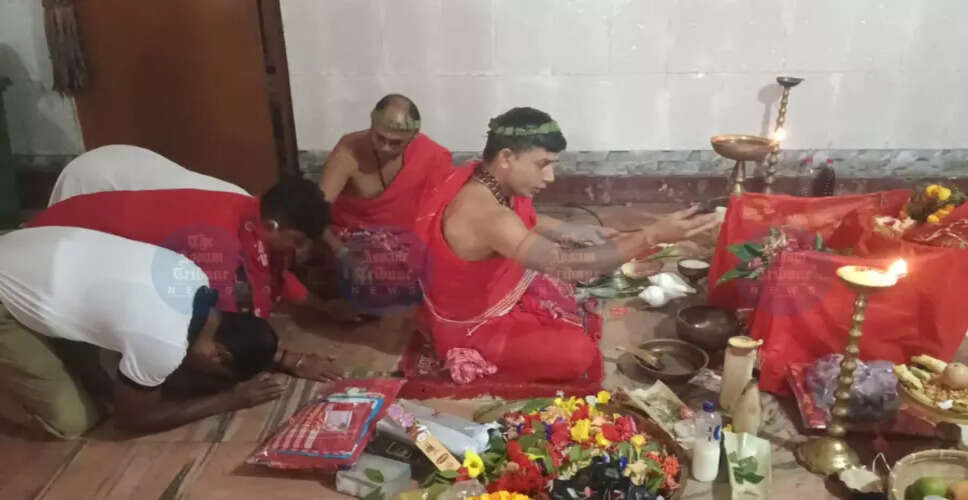

Inauguration of Durga Puja Festivities
11-day Durga Puja begins at ancient Billeswar Temple in Nalbari (Photo: AT)
Nalbari, October 11: The ancient royal tradition was revived at Sri Sri Billeswar Devalaya in Belsor, located in Assam’s Nalbari district, as the 11-day Durga Puja commenced on Sunday, following Mahalaya.
The festivities kicked off with prayers dedicated to Maa Shailputri, the first of the nine forms of Goddess Durga, in the temple's main sanctum, where a golden idol of the goddess is revered.
“Today marks the inaugural day of Devi Utsav post Mahalaya. We honor Shailputri on this day, a practice that has been upheld at this temple for many years,” stated Biswajyoti Barman, the secretary of the Temple Management Committee.
Subsequent prayers will be offered to Maa Brahmacharini, Maa Chandraghanta, Maa Kushmanda, Maa Skandamata, Maa Katyayani, Maa Kalaratri, Maa Mahagauri, and Maa Siddhidatri throughout the celebrations.
As per Ranjit Mishra, the temple’s Doloi, the priests began their prayers on Sunday morning and will adhere to dietary restrictions during the worship period.
While the temple does not formally observe Mahalaya, devotees welcomed the Goddess on Saturday with aarti and earthen lamps.
Additionally, a diha naam competition will be part of the Sunday festivities.
Traditional animal sacrifices will play a significant role in the festival in the upcoming days.
Barman noted that 49 buffaloes have already been registered for sacrifice on Maha Navami, with expectations for this number to rise in the following days.
The rituals will also encompass Chandi Puja, Kali Puja, Lakshmi Puja, Vishnu Puja, Vidhi Puja, Graha Puja, and Homa Yajna.
On Maha Ashtami, goats, ducks, and pigeons will be sacrificed. The Maha Navami will commence with the traditional Panchabali ritual, where a duck, pigeon, goat, pumpkin, and buffalo will be offered on behalf of the public by the temple authorities.
Buffaloes provided by devotees will be sacrificed afterward.
On October 16, the sixth day of the festivities, devotees from Belsor will participate in a ceremonial procession to Sahpur to bring a banana plant, traditionally adorned as a bride, to the temple. This plant will be placed at the Shashthi altar in the mandap, as explained by Barman.
Vedic scholars from Kashi Vishwanath in Varanasi will conduct evening Durga aarti on Shashthi, Saptami, Ashtami, and Navami.
Nalbari District Commissioner and president of the Temple Management Committee, Nibedan Das Patowary, mentioned that the district administration has convened two meetings with puja committees and issued guidelines to ensure the celebrations proceed peacefully.
“We will maintain a peaceful atmosphere and monitor any disturbances during this devotional period,” he added, noting that approximately 70 to 73 public Durga Puja celebrations are being organized across the district, in addition to private worship at homes.
The temple is renowned for its tradition of communal harmony, with both Hindu and Muslim community members actively participating in the celebrations.
Mishra remarked that the festival has historically symbolized fraternity, with some Muslim families traditionally waiting for Durga Puja to purchase new clothes and celebrate with the community instead of during Eid.
Dedicated to Lord Shiva, Billeswar Devalaya is a significant religious site in Nalbari district, attracting devotees and receiving royal patronage over the years. According to the Nalbari district administration, the temple is believed to have been established around 500 years ago.
Local legend states that a Shiva Linga was discovered at the site after a cow was seen releasing milk over a patch of virina grass, leading to the establishment of the temple at that location.