
Celebration and Change: The Impact of BJP's Victory in West Bengal
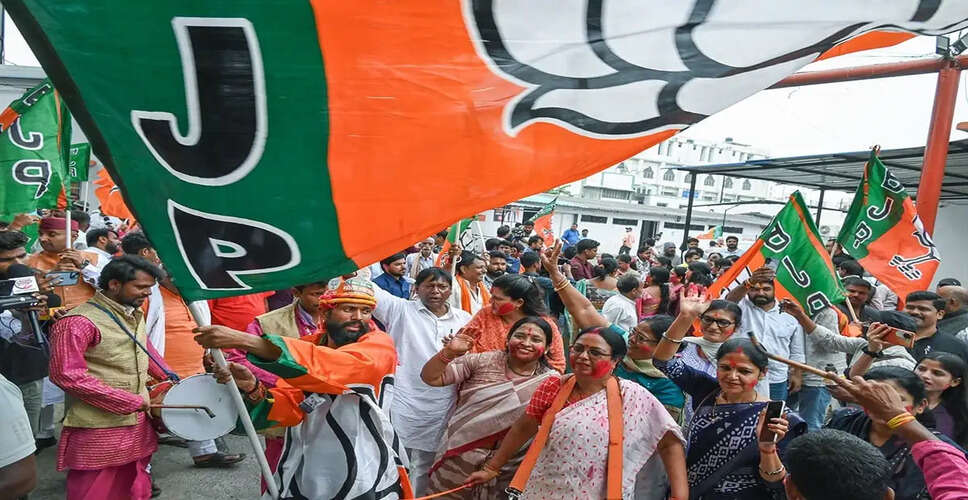

Post-Election Celebrations in West Bengal
Following the remarkable and historic victory of the Bharatiya Janata Party (BJP) in the West Bengal Assembly elections, a festive atmosphere continues to thrive among the Hindu community across the state. From rural areas to urban centers, chants of 'Jai Shri Ram' resonate everywhere. Numerous temples are hosting special prayers, devotional songs, and religious events. Additionally, several ancient temples that had remained closed during the Trinamool Congress (TMC) regime are now being reopened, signaling a shift in the political and social landscape of the state.
Reopening of Ancient Temples
In this context, an ancient Durga temple managed by the Shri Shri Durga Mata Charitable Trust in the Asansol region has reopened its doors to devotees after many years. The reopening has attracted a significant number of locals who are returning to worship. The sound of bells ringing and the influx of worshippers have created an atmosphere of excitement in the area.
Political Symbolism of the Temple's Reopening
Local BJP leaders have interpreted the temple's reopening as a reflection of the changing political climate in the state. Agnimitra Paul, who won the Asansol South seat by a margin of 40,849 votes, is also associated with this event. Neelu Chakraborty, a local BJP leader and member of the temple committee, expressed that the reopening has brought significant relief to the Hindu community. Previously, access to the temple for worship was limited to certain festivals, leading to disappointment among regular devotees.
Political Changes and Community Sentiment
Chakraborty further claimed that appeals regarding this issue had been made to political leaders in Delhi for years. He linked the temple's reopening to the recent change in power in the state, stating that the Hindu community now feels more secure and respected. Newly elected MLA Krishnendu Mukherjee also visited the temple to offer prayers after his victory, having promised during his campaign that the temple would remain open for devotees throughout the year. His visit marked the formal commencement of the temple's operations, symbolizing not just a religious revival but also a significant political transformation.
Implications of BJP's Victory
The BJP's impressive win in the West Bengal Assembly elections has indicated a major realignment in the state's politics. Supporters of the BJP assert that this victory will enhance the development of religious sites, cultural identity, and traditional beliefs.
Controversies Surrounding Religious Practices
Meanwhile, a board at the Kankalitla temple in Bolpur, Birbhum district, has sparked discussions, stating that only Hindus are permitted to worship there. Local residents report that this board was placed by unidentified youths. The temple priest, Baidyanath Chakraborty, clarified that the temple administration neither removed nor endorsed the board, emphasizing that there are no restrictions on entry, although traditionally, only Hindu devotees worship the deity. In contrast, Pulak Chatterjee, a senior priest at the Tarapith temple, noted that there has never been a verification of a devotee's religious identity, and non-Hindu individuals have previously visited the temple without any issues. Additionally, the district BJP president has demanded the closure of a public toilet built next to the Shakti Peeth, locking it up.
Emerging Religious and Cultural Discourse
Overall, the political changes in West Bengal are accompanied by a rapidly emerging discourse on religion and culture. The reopening of temples, the increasing number of religious events, and the shifting political dynamics suggest the beginning of a new chapter in the state.