
Celebrating Tradition: The Vibrant Song Krittan Festival in Garo Hills
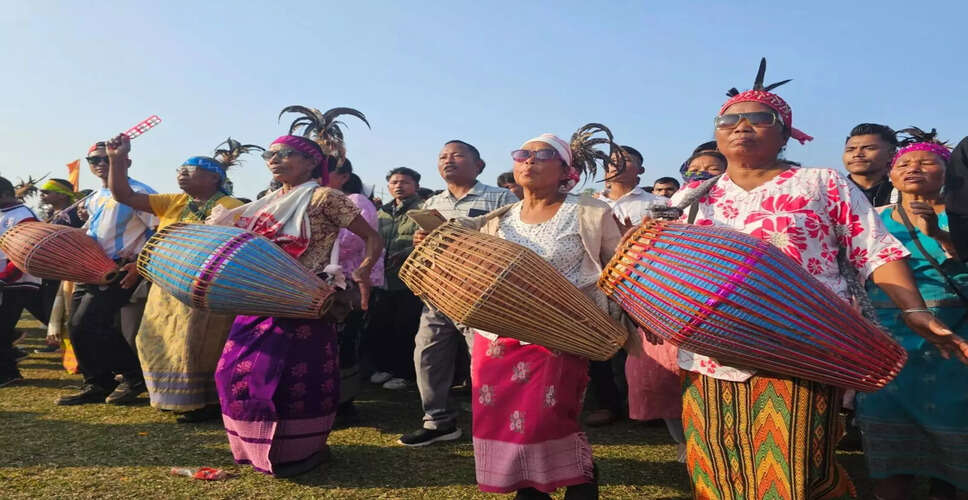
A Colorful Celebration in Dainadubi
On January 3, a large crowd gathered at the Bangsi Apal Government School's playground near Dainadubi village in North Garo Hills to celebrate the conclusion of the holiday season with lively song and dance during the annual event known as ‘Song Krittan’.
This festival, organized by the 2nd Jan Song Kristan Committee, takes place every year on January 2 and is open to everyone.
This year marked the 17th edition of the event.
The term ‘Song Krittan’ is derived from kirtan, a practice common in various states. The early Garos, primarily nature worshippers known as Songsareks, embraced this tradition and infused it with their unique cultural elements, resulting in what is now celebrated as Song Krittan.
During the festival, Garo communities engage in singing and dancing, accompanied by various instruments to honor the Almighty. Although the tradition originated with the Songsareks, it has persisted even as many Garos transitioned to Christianity.
The festivities continued into the evening, filled with music from drums and cymbals.
The event organizers reaffirmed their dedication to preserving the Song Krittan tradition for future generations.
Since 2005, they have worked to maintain this cultural practice, although the celebrations were interrupted by the COVID-19 pandemic.
On the day of the event, vendors quickly sold out their products, and parking areas were packed. Participants joyfully played drums, cymbals, and flutes while singing traditional melodies.
A local resident from Nishangram remarked, “Previously, Song Krittan commenced on December 3 of the previous year and lasted until January 1 of the New Year. This program signifies the end of our holiday season as we prepare for another year of work.”
Individuals from across the state, including all districts of Garo Hills and parts of Khasi Hills, joined in the festivities, with some attendees traveling from Assam.
Jaffrey Momin, the president of the organizing committee, emphasized, “Our goal is to authentically revive our old traditions. We promote this through our program.”
Despite the enthusiastic turnout, the organizers expressed their disappointment regarding the lack of support from state or district authorities, as all funding was sourced from donations and stall rentals.